


Jaw clicking is something many people notice while eating, talking, or yawning. At first, it may feel like a small sound that comes and goes. But over time, it can start to feel more frequent or even slightly uncomfortable. That small sound is often the jaw joint trying to tell you that something is not working smoothly.
The jaw is one of the most active joints in the body. It moves constantly throughout the day, so even small changes inside it can show up early. Understanding what that clicking means can help you avoid bigger discomfort later.
What’s the Jaw Joint and How Does Clicking Happen
The jaw joint is where your lower jaw and skull are joined together. It is more like a hinge, as you can close and open your mouth. Inside the joint is a small disc that helps movement stay smooth.
In case this disc moves out of its usual location, the movement becomes uneven. It is at this point that a clicking or popping sound can be heard. The sound in most instances occurs when the jaw is open or when it is closed after chewing.
Not all of the clicks imply something serious. However, it does imply that the joint is not moving in a completely smooth fashion.
Common Reasons Behind Jaw Clicking
Jaw clicking can be caused by several factors in everyday life. These tend to accumulate gradually, which is why people usually notice the sound before any other symptoms. Teeth grinding, especially when sleeping, is one of the most frequent causes. This causes an additional burden on the jaw joint without your awareness.
It can also be caused by stress. When individuals are stressed, they may clench their teeth without knowing it. This close pressure on the joints over time influences the joint movements. The other cause is bite alignment. When there is uneven contact between the upper and lower teeth, the jaw can be made to move each time you chew.
In others, clicking sounds may also be the result of injury to the jaw or the area of the joint. Even a history of a small influence can influence the functioning of the joint in the future. The other factor is arthritis, particularly among the aged. It has the ability to gradually influence the movement of the joints and produce noise when moving.
Signs That May Come with Jaw Clicking
Jaw clicking may not necessarily be seen on its own. It may be accompanied by other signs that will provide a better understanding of the process that is occurring. Others experience a slight pain next to the ear or along the jawline. Stiffness is observed by other people, particularly during the morning or after a lengthy discussion.
Headaches might also be experienced, most often around the temples. This occurs when the jaw muscles remain at the same level of pressure. In more developed cases, one may find it restrictive to open the mouth wide. Eating harder foods may start to feel tiring or uncomfortable over time.
All these are indications that the joint requires action and not mere observation.
Why Ignoring Jaw Clicking Can Lead to More Issues
A small clicking sound may seem harmless, but ignoring it for too long can allow the condition to progress.
When the jaw joint stays under strain, the surrounding muscles start working harder to compensate. This can lead to muscle fatigue around the face and neck.
Chewing may also become less balanced, which can affect how teeth wear down over time. Uneven pressure on teeth can slowly create discomfort while eating.
In some situations, the jaw may begin to lock briefly, making it harder to open or close fully. This can interfere with daily eating habits and speech comfort. Catching the issue early helps avoid these complications.
Simple Habits That Can Help Reduce Jaw Strain
Minor modifications of the everyday routine can relieve the stress on the jaw joint. Taking softer foods in the short run can help in decreasing strain during the chewing process. This provides the joint with an opportunity to take a rest.
It is also beneficial to avoid gum chewing, as it will keep the jaw in constant motion. A warm compress applied to the side of the face can help loosen tight muscles and alleviate pain.

It is helpful to be aware of jaw tension during the day as well. It is common to find many individuals clenching their jaw when working, driving, or when deeply focusing. Maintaining a loose position of the jaw, with teeth slightly open when not eating, can make a difference over time.
Even good posture is a factor. Sitting with a straight neck and shoulders minimizes pressure on the facial muscles.
When It Is Time to See a Dentist
If jaw clicking continues for weeks or starts getting louder or more frequent, it is a good idea to get it checked. Pain while chewing is another clear sign that should not be ignored. The same applies if the jaw feels tight or hard to move in the morning.
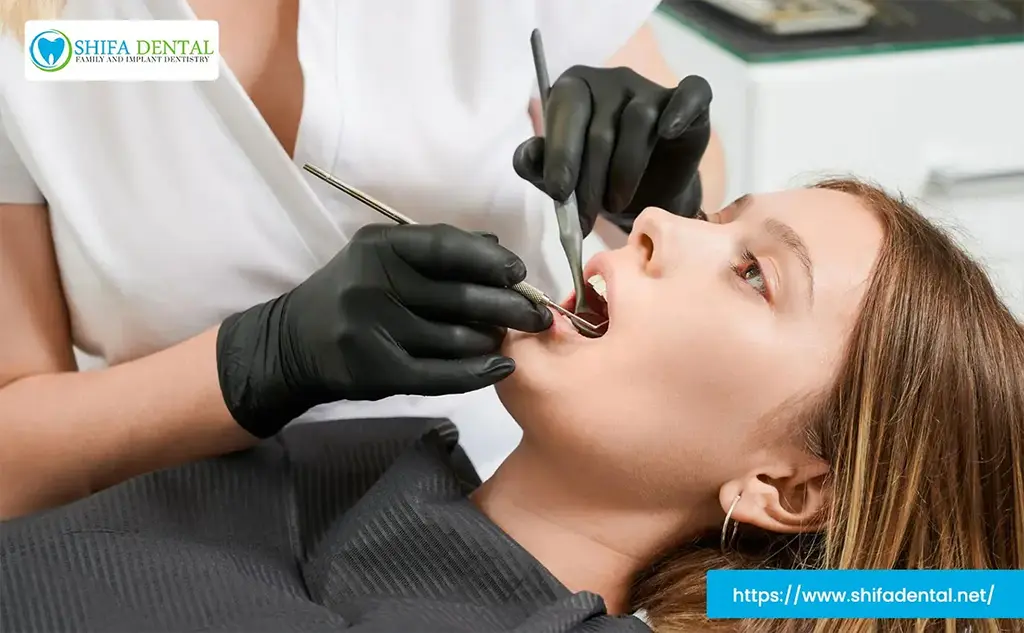
A dental check can help identify whether the issue is related to alignment, grinding, or joint stress. During a dental oral exam, dentists may also evaluate for temporomandibular joint (TMJ) disorders (TMD), checking jaw alignment, joint movement, and muscle tension. Early evaluation makes treatment simpler and avoids long-term discomfort.
Oral Health Concerns Seen in Plano Residents
In areas like Plano, daily routines often involve long working hours, screen time, and busy schedules. These habits can increase jaw tension without people noticing it.

Many individuals tend to clench their jaw while concentrating or dealing with stress. Over time, this creates pressure on the jaw joint and leads to clicking sounds.
Regular dental visits can help identify these early signs. It also helps people understand how their daily habits are affecting their oral health.
Why Shifa Dental Is a Reliable Choice for Jaw Concerns
Getting the right dental care makes a real difference when dealing with jaw clicking or related discomfort. A proper check-up helps identify whether the issue is mild muscle strain or a deeper joint concern.
Shifa Dental focuses on careful evaluation of jaw and bite issues. The approach is simple and patient-focused, with attention given to both symptoms and underlying causes.
The clinic also helps patients understand their condition in clear terms, without confusion or unnecessary complexity. This makes it easier to follow treatment steps and daily care advice.
People searching for an affordable dentist near me in the Plano, TX area often prefer places where both care and clarity are balanced. That is where consistent dental support becomes important, especially for ongoing jaw concerns.
Taking the Next Step for Jaw Comfort
Jaw clicking should not be ignored when it keeps coming back or starts feeling uncomfortable. Simple habits may reduce pressure for a short time, but they do not replace a proper dental check that can show what is happening inside the joint.
Ongoing jaw sounds, stiffness, or discomfort are signs worth checking early on. This helps prevent the problem from getting worse and keeps everyday actions like eating and speaking more comfortable.
For anyone searching for an affordable dentist near me in Plano, Shifa Dental offers a clear starting point. A proper check-up can help identify the cause of jaw clicking and guide the next steps in a simple and practical way.
FAQs
Not always. In many cases, it is mild and linked to muscle tension or bite pressure. But if it continues, it should be checked.
Yes. Stress often leads to clenching or grinding, which affects jaw movement over time.
Sometimes it reduces with better habits, but persistent cases usually need dental attention.
Tough or chewy foods can increase strain, so softer options may help reduce discomfort.
If clicking is present, it is better to avoid very wide mouth movements until the jaw is checked.