

Sedation Dentistry in Plano TX offers patients a way to manage dental anxiety and complete necessary procedures comfortably. Whether you experience mild nervousness or severe dental phobia, sedation options available at modern Plano dental offices—including nitrous oxide (laughing gas), oral conscious sedation, and IV sedation—can help you relax while your dentist works. Most patients receiving this care remain awake and responsive, though deeply relaxed and unaware of discomfort, making it an ideal solution for lengthy procedures, complex restorations, or patients with gag reflex sensitivity.
What Is Sedation Dentistry in Plano, TX?
This type of care refers to the use of medications—typically oral sedatives, inhaled nitrous oxide, or intravenous drugs—to help patients feel calm and comfortable during dental procedures. Unlike general anesthesia, where you’re completely unconscious, sedation dentistry in Plano keeps you awake and responsive but deeply relaxed and largely unaware of discomfort or the passage of time. This approach is sometimes called “conscious sedation” or “twilight sleep.”
For many North Dallas residents, dental anxiety is a real barrier to care. According to dental health research, approximately one in five adults avoid or delay dental treatment due to fear. This option removes that barrier, making it possible for anxious patients to receive the care they need—whether that’s a routine cleaning, a root canal, or comprehensive restorative work.
Shifa Dental’s Plano and Garland locations offer multiple sedation options tailored to your comfort level and procedure type. Whether you’re a nervous first-timer or someone with a history of dental avoidance, a consultation can help determine which approach is right for you.
The Three Levels of Sedation Dentistry Available in Plano
Nitrous Oxide (Laughing Gas) – Minimal Sedation
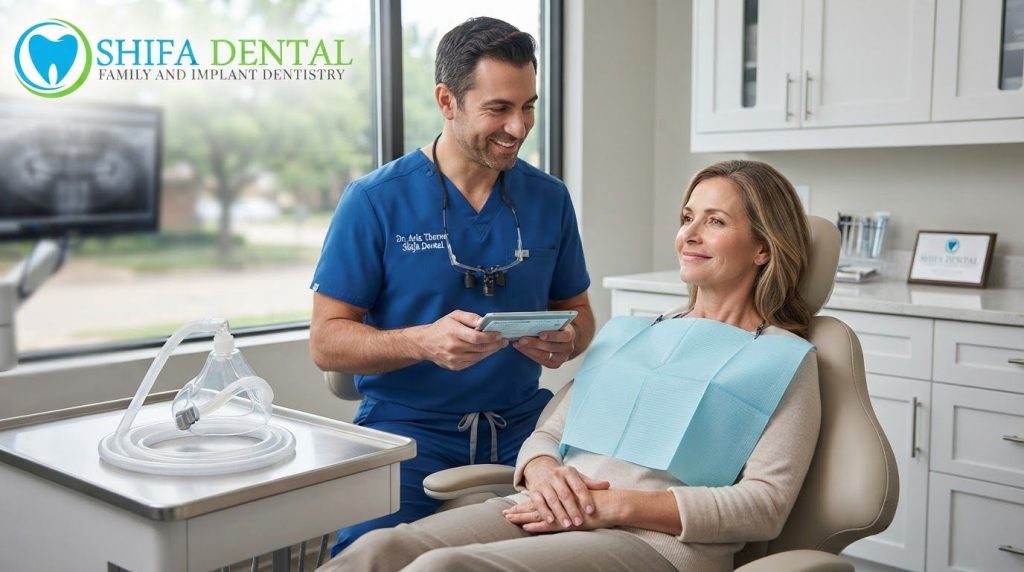
Nitrous oxide is the mildest form of this care and one of the most commonly used in dental offices. You inhale the gas through a small mask or nosepiece placed over your nose. Within three to five minutes, you’ll begin to feel calm, relaxed, and slightly euphoric—hence the nickname “laughing gas.”
During the procedure, your Plano dentist monitors the nitrous oxide concentration and adjusts it as needed. When your appointment is complete, they’ll administer pure oxygen through the mask, which rapidly flushes out the nitrous oxide from your system. This quick reversal is one of nitrous oxide’s biggest advantages.
Recovery from nitrous oxide is remarkably fast: You’ll feel normal within 15 to 30 minutes and can drive yourself home immediately after your appointment. There’s no lingering grogginess or memory loss. You’ll remember the appointment and can return to work or your daily routine right away. This makes nitrous oxide ideal for patients with mild to moderate dental anxiety who want minimal downtime.
Oral Conscious Sedation – Moderate Sedation
Oral conscious sedation involves taking a prescription medication (typically a benzodiazepine like triazolam or diazepam) about 45 to 60 minutes before your procedure. Your Plano dentist will prescribe the medication and provide detailed pre-appointment instructions.
As the medication takes effect, you’ll feel increasingly drowsy and relaxed. Many patients fall asleep during the procedure, though your dentist can easily wake you if needed for communication or positioning. Unlike general anesthesia, you maintain your airway reflexes and can respond to gentle stimulation, making this form of care both safe and effective.
Recovery from oral conscious sedation takes longer: Plan for 1 to 2 hours of monitoring in the dental office as the medication wears off. You’ll feel groggy and may have difficulty with coordination, so you must arrange for someone to drive you home. You should not operate machinery, drive, or make important decisions for the remainder of the day. Many patients appreciate the deeper relaxation that oral sedation provides, especially for longer or more complex procedures.
IV Sedation – Deep Sedation
Intravenous (IV) sedation is the deepest form of conscious sedation available in a dental office setting. A trained anesthesia provider (often a dental anesthesiologist or oral surgeon) inserts an IV line into your arm and administers sedative medication directly into your bloodstream. Your dentist then performs the procedure while the anesthesia provider monitors your vital signs—heart rate, blood pressure, oxygen saturation—throughout.
IV sedation in Plano is ideal for patients with severe dental anxiety, those undergoing complex procedures like dental implant placement or wisdom tooth extraction, or anyone who wants to complete multiple procedures in a single visit. Many patients fall into a deep sleep and have little to no memory of the procedure afterward—a benefit for those with significant dental phobia.
Recovery from IV sedation requires careful monitoring: You’ll need to remain in the office for several hours as the medication wears off and you regain full alertness. Your dentist will not discharge you until they’re confident you’re stable and safe. You must arrange for a responsible adult to drive you home, and you should not operate machinery, sign important documents, or make major decisions for the rest of the day. Some patients experience mild grogginess or headache the following day, but these side effects typically resolve quickly.
Why Choose Sedation Dentistry in Plano, TX?
This option isn’t just for patients with anxiety. There are many practical reasons why your Sedation Dentistry in Plano dentist might recommend it:
- Severe dental anxiety or phobia: If you’ve avoided dental care for years due to fear, this option can help you get the treatment you need without panic or distress.
- Sensitive gag reflex: A hyperactive gag reflex can make even routine cleanings uncomfortable. Sedation relaxes this reflex, allowing your dentist to work efficiently.
- Low pain tolerance or sensitive teeth: Some patients experience heightened pain sensitivity. This option, combined with local anesthesia, ensures complete comfort.
- Claustrophobia or difficulty sitting still: Patients with claustrophobia or those who struggle to remain still in the dental chair benefit from the deep relaxation sedation provides.
- Complex or lengthy procedures: Root canals, dental implants, periodontal surgery, or full-mouth restorations can take several hours. This option makes these longer appointments more tolerable and allows your dentist to work more efficiently.
- Multiple procedures in one visit: If you need several treatments, this approach can allow your dentist to complete more work in a single appointment, reducing the total number of visits you need.
- Special needs or behavioral concerns: Children or adults with developmental disabilities, autism spectrum disorder, or other behavioral challenges may benefit from this option to ensure they receive necessary care.
How Does Sedation Dentistry Work? The Clinical Process
Understanding what happens during this type of care can reduce anxiety about the process itself. Here’s what to expect:
Pre-Appointment Preparation
Before your sedation dentistry appointment in Plano, your dentist will review your medical history, current medications, and any allergies. Certain medications can interact with sedatives, so honesty about what you take is critical. Your dentist may ask you to stop taking specific medications for a few days before your procedure.
You’ll also be instructed to fast (avoid food and drink) for a specific period before your appointment—typically 6 to 8 hours for IV sedation or oral conscious sedation, though nitrous oxide may not require fasting. Your dentist will provide clear written instructions. Following these guidelines is essential for your safety.
During the Procedure
Once you arrive at your Plano dental office, your vital signs will be monitored. For nitrous oxide, you’ll breathe through a mask. For oral sedation, you’ve already taken medication at home. For IV sedation, an IV line is placed in your arm.
As sedation takes effect, your dentist will administer local anesthesia (numbing shots) to your teeth and gums. Because you’re relaxed, these injections feel less intimidating. Your dentist then proceeds with the planned procedure—cleaning, filling, extraction, implant placement, or whatever work you need.
Throughout the procedure, your dentist monitors your comfort level and adjusts sedation as needed. For IV sedation, an anesthesia provider continuously tracks your vital signs and medication levels.
Post-Procedure Recovery
As the procedure ends, sedation is reduced or reversed. For nitrous oxide, pure oxygen reverses the effect within minutes. For oral or IV sedation, you’ll gradually awaken in the recovery area. A staff member will monitor you until you’re alert enough to be discharged.
You’ll receive post-operative instructions, including any bite-block guidance, dietary restrictions, or medication instructions. If you had oral or IV sedation, your responsible adult will pick you up and drive you home.
Sedation Dentistry Safety and Side Effects
When administered by a trained, certified dentist following American Dental Association guidelines, this type of care is safe and well-tolerated. The ADA updated its sedation guidelines in 2025 to reflect current best practices, including monitoring protocols and oxygen supplementation for deeper sedation levels.
Common Side Effects
Most side effects from this option are mild and temporary:
- Drowsiness: Lingering grogginess is common with oral and IV sedation, typically resolving within a few hours.
- Dry mouth: Sedatives can reduce saliva production; drinking water after recovery helps.
- Nausea or vomiting: Some patients experience mild nausea, especially with IV sedation; your dentist can provide anti-nausea medication if needed.
- Headache: Mild headaches may occur the day after sedation; over-the-counter pain relief usually helps.
- Arm bruising (IV sedation only): A small bruise at the IV site is normal and fades within a few days.
Most side effects resolve within 24 hours. Serious complications are extremely rare when sedation is administered by qualified professionals in a properly equipped dental office.
Who Should Not Use This Approach?
This option is not appropriate for everyone. Your Plano dentist will discuss contraindications during your consultation. Patients with certain medical conditions—uncontrolled sleep apnea, severe respiratory disease, unmanaged high blood pressure, or certain heart conditions—may not be candidates for this type of care. Pregnant women should avoid elective sedation dentistry, though emergency procedures may be necessary. A thorough health history and possibly a consultation with your physician will determine if it’s safe for you.
Comparing Sedation Types: A Quick Reference Table
| Sedation Type | Relaxation Level | Recovery Time | Can Drive After? | Best For |
|---|---|---|---|---|
| Nitrous Oxide | Mild relaxation; you stay alert | 15–30 minutes | Yes, immediately | Mild anxiety, routine procedures, patients who want minimal downtime |
| Oral Conscious Sedation | Moderate relaxation; may fall asleep | 1–2 hours | No; requires driver | Moderate anxiety, longer procedures, patients comfortable with deeper relaxation |
| IV Sedation | Deep relaxation; often no memory | 2–4+ hours | No; requires driver | Severe anxiety, complex procedures, implants, extractions, multiple procedures in one visit |
Costs and Insurance Coverage in Plano & Garland
The cost of this option varies based on the type of sedation, the complexity of your procedure, and your dentist’s experience level. While exact pricing depends on individual treatment plans, understanding the general cost structure helps you budget and explore financing options.
Nitrous oxide sedation is typically the most affordable option, often added as a modest fee to your procedure cost. Oral conscious sedation and IV sedation carry higher fees because they require additional provider time, monitoring equipment, and anesthesia expertise.
Insurance Coverage in Plano
Many dental insurance plans cover this option when it’s deemed medically necessary—for example, when anxiety is severe enough to prevent you from receiving needed care, or when you have a documented behavioral or developmental condition. However, coverage varies significantly by plan.
Before scheduling this type of care in Plano, contact your insurance provider to ask:
- Does your plan cover this option?
- What types of sedation are covered (nitrous oxide, oral, IV)?
- Are there specific procedures or diagnoses that qualify?
- What is your out-of-pocket cost or copay?
- Do you need pre-authorization from your insurance company?
Shifa Dental’s billing team can help verify your coverage and submit pre-authorization requests. We accept most major insurance plans, including children’s Medicaid and CHIP, and we’re transparent about all costs before treatment begins—no hidden fees, ever.
Financing Options for Uninsured Patients
If you don’t have dental insurance or your plan doesn’t cover this option, Shifa Dental offers several affordable options:
- 0% Interest Financing: Spread your procedure costs over time with no interest charges, making treatment more manageable month-to-month.
- CareCredit: A healthcare credit card that offers promotional financing periods for dental and medical procedures.
- Shifa Dental Saving Plan: Our in-house membership plan for uninsured patients, offering significant discounts on procedures, including this option.
- Flexible Payment Plans: We work with you to create a payment schedule that fits your budget.
This option shouldn’t be out of reach due to cost. Contact Shifa Dental’s Plano office at (469) 507-3786 to discuss your options and get a transparent cost estimate for your specific procedure.
Preparing for Your Appointment in Plano
Proper preparation is crucial for a safe and successful experience with this option. Here’s your pre-appointment checklist:
Before Your Appointment
- Provide complete medical history: List all medications, supplements, vitamins, and any medical conditions, especially sleep apnea, heart disease, high blood pressure, or respiratory issues.
- Disclose allergies: Tell your dentist about any drug allergies, especially to medications used in sedation (benzodiazepines, opioids, local anesthetics).
- Follow fasting instructions: If you’re having oral or IV sedation, eat nothing for 6–8 hours before your appointment (water is usually okay up to 2 hours before). Your dentist will provide specific guidance.
- Wear comfortable clothing: Loose-fitting clothes make it easier for your dentist to monitor vital signs and place an IV if needed.
- Arrange transportation: If you’re having anything beyond nitrous oxide, arrange for a trusted adult to pick you up and drive you home. Plan for them to stay with you for at least a few hours after your appointment.
- Plan your day: Schedule your appointment when you can rest afterward. Avoid scheduling important meetings, driving, or operating machinery for the rest of the day.
- Ask about pre-medication: If you have oral conscious sedation, your dentist will prescribe the medication and provide timing instructions. Take it exactly as directed.
Day-of Appointment
- Arrive 10–15 minutes early to check in and review consent forms.
- Wear your comfortable, loose-fitting clothes.
- Bring your insurance card and photo ID.
- Confirm your driver is present and ready to take you home.
- Leave valuables at home or with your driver.
Post-Procedure Care
Recovery care depends on the type of sedation you received:
After Nitrous Oxide
- You can drive yourself home immediately.
- You can eat and drink normally once you leave the office.
- Resume your normal activities right away.
- No special precautions needed.
After Oral Conscious or IV Sedation
- Rest at home: Plan to rest for the remainder of the day. Avoid strenuous activity for 24 hours.
- Avoid driving and machinery: Do not drive, operate machinery, or make important decisions for at least 24 hours.
- Avoid alcohol: Do not consume alcohol for at least 24 hours after sedation, as it can interact with residual medication.
- Eat soft foods: Stick to soft, cool foods (yogurt, smoothies, applesauce, ice cream) for the first few hours as you recover. Once fully alert, you can resume normal eating, though avoid very hot foods if your mouth is still numb.
- Stay hydrated: Drink plenty of water to help flush sedative medications from your system.
- Take pain medication as directed: If your dentist prescribed pain medication, take it as instructed. Over-the-counter pain relievers may also help with minor discomfort.
- Watch for side effects: Mild drowsiness, headache, or nausea may persist into the evening. These typically resolve overnight. If you experience severe or prolonged side effects, contact your dentist.
Frequently Asked Questions
Is this option safe?
Yes, this option is safe when administered by a trained, licensed dentist or oral surgeon following American Dental Association guidelines. All sedation methods have been used in dentistry for decades with excellent safety records. Your dentist will monitor your vital signs throughout the procedure and adjust medication as needed. Serious complications are extremely rare.
Will I be asleep during the procedure?
It depends on the type of sedation. With nitrous oxide, you’ll be awake and alert but deeply relaxed. With oral conscious sedation, you may fall asleep but can be easily awakened. With IV sedation, you’ll likely fall into a deep sleep and may have little memory of the procedure. Your dentist will discuss which level is appropriate for your procedure and anxiety level.
How long does the procedure take?
The procedure itself takes as long as your specific dental work requires—a filling might take 30 minutes, while a dental implant placement could take 1–2 hours. However, plan to spend additional time for pre-procedure monitoring, sedation administration, and post-procedure recovery. Nitrous oxide appointments may take 15–30 minutes longer than a non-sedated procedure. Oral and IV sedation appointments require 1–4 hours total, including recovery time.
Can children use this option?
Yes, this option is commonly used in pediatric dentistry for anxious children or those with special needs. Nitrous oxide and oral sedation are frequently used for children. IV sedation for children is typically reserved for complex procedures or severe anxiety and may require a pediatric anesthesiologist. Your child’s dentist will recommend the safest, most appropriate option based on age, health, and the procedure needed.
What if I have a bad reaction?
Serious allergic reactions to sedatives are rare. Your dentist has training and medications on hand to manage any adverse reactions immediately. Always disclose your full medical history and any previous reactions to medications. If you experience unusual symptoms during recovery—severe nausea, difficulty breathing, chest pain, or extreme drowsiness—contact your dentist or seek emergency care immediately.
How much does this option cost in Plano, TX?
Costs vary based on the type of sedation and your specific procedure. Nitrous oxide is the most affordable option; oral and IV sedation carry higher fees due to provider expertise and monitoring requirements. Your dentist will provide a detailed cost estimate before your appointment. Many insurance plans cover this option when medically necessary. Shifa Dental offers 0% interest financing, CareCredit, and our Saving Plan for uninsured patients to make it affordable.
Conclusion: Making Dental Care Accessible in Plano
Dental anxiety, complex procedures, and special needs should never prevent you from receiving the care you deserve. This option—whether through gentle nitrous oxide, oral conscious sedation, or IV sedation—removes these barriers and allows you to get the treatment you need in comfort and safety.
At Shifa Dental Plano location, we understand that every patient’s comfort needs are different. Our experienced team offers all three sedation options, tailored to your specific anxiety level, procedure type, and personal preferences. We’re committed to transparent pricing, flexible financing, and compassionate care—because your dental health matters, and you shouldn’t have to suffer through appointments or avoid treatment due to fear.
Whether you’re a nervous first-time patient, someone with a history of dental avoidance, or a parent seeking options for your anxious child, this option in Plano can transform your dental experience. Ready to take the first step? Call Shifa Dental today.