


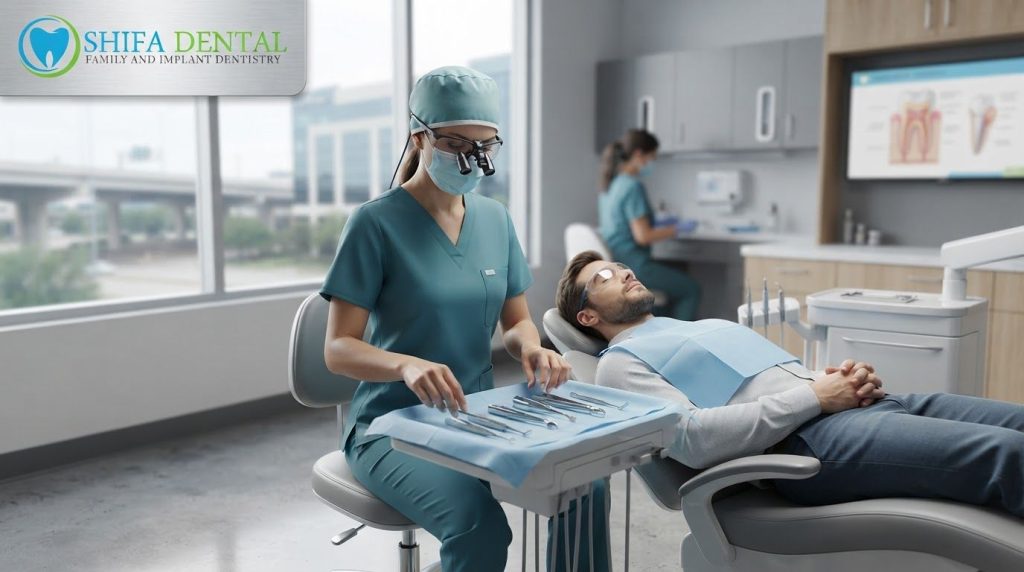
An Emergency Wisdom Tooth Extraction in Garland, TX is often the fastest path to relief when a wisdom tooth becomes severely infected, cracked, or causes unbearable pain. If you’re experiencing acute dental pain from an impacted or damaged wisdom tooth, same-day extraction may be your best option—and it’s something Shifa Dental can often accommodate at our Garland location. This guide walks you through what the extraction procedure involves, why it’s sometimes necessary, what to expect during the procedure, recovery timelines, and how to access affordable emergency care in North Dallas.
When Is Emergency Wisdom Tooth Extraction Necessary in Garland, TX?
Not every wisdom tooth problem requires emergency extraction, but certain conditions make immediate professional intervention critical. Understanding the difference between routine discomfort and a true emergency helps you make informed decisions about seeking same-day care in Garland and surrounding North Dallas communities.
Pericoronitis: The Most Common Emergency Trigger
Pericoronitis—inflammation and infection of the gum tissue surrounding a partially erupted or impacted wisdom tooth—is the leading reason patients seek emergency wisdom tooth extraction in Garland, TX. When a wisdom tooth only partially breaks through the gum line, a flap of tissue can trap bacteria, food debris, and plaque beneath it. This creates an ideal environment for anaerobic bacterial growth, triggering acute pain, swelling, difficulty swallowing, and sometimes fever.
According to clinical research, pericoronitis affects 10-15% of impacted third molars at some point. When acute pericoronitis develops, antibiotics may provide temporary relief, but definitive treatment requires extraction of the problematic wisdom tooth. Emergency extraction in Garland, TX becomes necessary when pain and swelling are severe enough to interfere with eating, sleeping, or daily function.
Abscess Formation and Deep Infection
A dental abscess—a localized collection of pus caused by bacterial infection—around a wisdom tooth represents a true emergency. Symptoms include severe, throbbing pain; facial or jaw swelling; difficulty opening your mouth; fever; and sometimes swollen lymph nodes. An abscess can spread to deeper tissues and spaces in the head and neck if left untreated, making same-day evaluation critical.
When an abscess is present, your dentist may prescribe antibiotics first to reduce acute inflammation, but emergency wisdom tooth extraction in Garland, TX is typically the definitive solution. Antibiotics alone cannot resolve the problem permanently; the infected tooth must be removed to eliminate the infection source.
Cracked, Broken, or Severely Decayed Wisdom Teeth
A wisdom tooth that is deeply cracked, broken, or severely decayed may not be restorable and can become acutely painful. If decay has penetrated the pulp (the nerve-containing center of the tooth), you’ll experience sharp, radiating pain that may worsen when biting or when the tooth is exposed to temperature changes. In these cases, emergency extraction offers faster relief than attempting root canal therapy, especially if the tooth is already impacted or difficult to access.
Damage to Adjacent Teeth
An impacted wisdom tooth that is actively damaging the second molar (the tooth in front of it) may require emergency extraction. Signs include pain in both the wisdom tooth and second molar, visible decay or damage on the second molar’s surface, or radiographic evidence of bone loss around the second molar. Removing the problematic wisdom tooth stops the damage and allows the second molar to heal.
Signs That Require Immediate Professional Evaluation
Contact an emergency dentist in Garland, TX right away if you experience:
- Severe, unrelenting jaw or facial pain
- Facial swelling that is rapidly worsening or asymmetrical
- Difficulty swallowing or opening your mouth
- Fever above 101°F (38.3°C) combined with dental pain
- Visible pus or drainage from the gum around a wisdom tooth
- A broken or cracked wisdom tooth with sharp edges causing injury to your cheek or tongue
- Pain radiating to your ear, neck, or throat
Understanding Impacted Wisdom Teeth and Why They Become Emergencies
Wisdom teeth—also called third molars—are the last set of teeth to erupt, typically appearing between ages 17 and 25. According to the American Academy of Oral and Maxillofacial Surgeons, approximately 90% of people have at least one impacted wisdom tooth. Impaction occurs when a wisdom tooth becomes partially or fully trapped in the jawbone or gums, unable to erupt normally.
Impacted wisdom teeth are classified by depth and angulation. A tooth may be impacted because there simply isn’t enough space in the jaw for it to erupt, or because it’s angled incorrectly—tilted forward (mesial impaction, the most common type), backward (distal impaction), or lying horizontally beneath the gums. The deeper and more severely angled the impaction, the higher the risk of complications that may eventually require emergency wisdom tooth extraction in Garland, TX.
Why do impacted wisdom teeth become emergencies? Because they’re nearly impossible to clean. Trapped beneath the gums or only partially visible, they accumulate bacteria and plaque. This leads to decay that can spread beneath the gum line, infection in the surrounding tissues, or pericoronitis. Over time, the pressure from an impacted wisdom tooth can also damage the adjacent second molar, creating a secondary emergency.
The Emergency Wisdom Tooth Extraction Procedure: What to Expect
Understanding what happens during an emergency extraction can help ease anxiety and set realistic expectations for your appointment in Garland.
Pre-Extraction Evaluation and Imaging
When you arrive for your emergency appointment in Garland, TX, your dentist or oral surgeon will review your symptoms, medical history, and any medications you’re taking. They’ll perform a visual and tactile examination of the affected area and typically take dental X-rays or a CBCT (cone-beam CT) scan to assess the wisdom tooth’s position, root structure, and relationship to surrounding bone and nerves.
This imaging is critical for surgical planning. It shows whether the wisdom tooth is superficially impacted (easier to extract) or deeply impacted (requiring bone removal and possibly tooth sectioning). It also identifies any anatomical considerations—such as proximity to the inferior alveolar nerve—that influence surgical approach and risk.
Anesthesia and Pain Management
The procedure is performed under local anesthesia, IV sedation, or general anesthesia, depending on the complexity and your anxiety level. Shifa Dental offers sedation dentistry options to help anxious patients feel comfortable during the procedure.
- Local anesthesia alone: The dentist injects anesthetic around the tooth and surrounding tissues. You remain awake but feel no pain—only pressure and vibration.
- IV sedation (twilight sleep): You receive medication intravenously that produces deep relaxation and partial or complete amnesia of the procedure. You’re not fully asleep but are unaware of most of what’s happening.
- General anesthesia: For complex cases or highly anxious patients, full general anesthesia may be used in a hospital or surgical center setting.
Extraction Techniques for Impacted Wisdom Teeth
The surgical approach depends on how deeply impacted the wisdom tooth is. For a simple extraction of a wisdom tooth that has erupted or is only slightly impacted, the dentist uses forceps to grasp and rock the tooth until it loosens from its socket, then removes it.
For a surgical extraction of a deeply impacted wisdom tooth, the dentist must remove bone covering the tooth and sometimes section (cut) the tooth into multiple pieces for removal. This involves:
- Flap elevation: An incision is made in the gum tissue, and the tissue is gently lifted back to expose the bone.
- Bone removal: Using a dental handpiece (drill) and burs, the dentist carefully removes bone covering the wisdom tooth.
- Tooth sectioning (if needed): For deeply impacted teeth, the tooth is cut into sections—typically coronal (crown) and radicular (root) pieces—which are then removed individually. This reduces trauma to surrounding bone and tissues.
- Socket cleaning and closure: The extraction socket is cleaned of debris, and the gum flap is sutured closed with dissolvable or removable stitches.
The entire procedure typically takes 20-45 minutes for a single impacted wisdom tooth, though complex cases may take longer.
What Happens Immediately After Extraction
After the tooth is removed, you’ll bite down on gauze for 30-45 minutes to help form a blood clot in the socket. This clot is essential for healing; it protects the bone and nerves beneath and prevents a painful complication called dry socket. You’ll receive post-operative instructions emphasizing the importance of protecting this clot.
If you received IV sedation or general anesthesia, you’ll recover in a monitored area for 30-60 minutes before being discharged. You must arrange for someone to drive you home—you cannot drive yourself after sedation.
Recovery Timeline After Extraction in Garland, TX
Recovery from wisdom tooth extraction in Garland, TX follows a predictable timeline, though individual variation is normal.
| Recovery Phase | Timeline | What to Expect |
|---|---|---|
| Immediate (0-24 hours) | First day post-extraction | Bleeding may continue intermittently; swelling begins; numbness from anesthesia wears off; pain develops as local anesthetic effect fades. |
| Acute inflammation (1-3 days) | Days 2-3 post-extraction | Peak swelling occurs; pain is typically most intense; bruising may develop on face or jaw; difficulty opening mouth fully (trismus) may occur. |
| Early healing (4-7 days) | Days 4-7 post-extraction | Swelling and pain gradually diminish; gum tissue begins to close over the socket; stitches may be removed if non-dissolvable; most patients can return to light activities. |
| Intermediate healing (1-2 weeks) | Weeks 2-3 post-extraction | Most visible swelling and bruising resolve; pain is minimal; gum tissue continues to fill in; normal diet can usually resume. |
| Bone remodeling (3-6 months) | Weeks 4-26 post-extraction | Bone gradually fills the extraction socket; the socket becomes less visible; complete remodeling takes months; no symptoms typically present. |
Managing Pain and Swelling
Pain after emergency wisdom tooth extraction in Garland, TX is normal and expected. Your dentist will prescribe or recommend pain management:
- Over-the-counter options: Ibuprofen (400-600 mg every 4-6 hours) and acetaminophen (500-650 mg every 4-6 hours) are effective for mild to moderate pain. Alternating between them often provides better relief than either alone.
- Prescription pain medication: For moderate to severe pain, your dentist may prescribe an opioid or stronger NSAID. Use as directed and only for the first few days; most patients transition to over-the-counter medication by day 3-4.
- Ice application: Apply ice packs (20 minutes on, 20 minutes off) for the first 24-48 hours to reduce swelling and numb pain.
- Heat application: After 48 hours, warm compresses can help relax muscles and ease discomfort.
Potential Complications After Emergency Wisdom Tooth Extraction
While most extractions heal without complications, it’s important to recognize warning signs that require follow-up care.
Dry Socket (Alveolar Osteitis)
Dry socket occurs when the protective blood clot in the extraction socket dissolves prematurely, exposing bone and nerves. This is the most common post-extraction complication, affecting roughly 2-5% of simple extractions and up to 20% of surgical wisdom tooth extractions. Symptoms include severe, throbbing pain beginning 3-5 days after extraction; a foul odor or taste; and visible bone in the socket.
Dry socket is treated by your dentist, who will clean the socket and place medicated dressing inside it. Pain typically resolves within 24-48 hours of treatment. To prevent dry socket, avoid smoking, using straws, rinsing vigorously, or spitting forcefully for at least one week after extraction.
Infection and Abscess
While antibiotics prescribed before or after extraction reduce infection risk, infection can still develop if bacteria contaminate the socket. Signs include fever, increasing pain after initial improvement, swelling that worsens after day 3, pus or foul drainage, and difficulty swallowing.
If you suspect infection, contact your dentist or seek emergency care immediately. Treatment typically involves antibiotics and, if an abscess has formed, drainage and possible additional intervention.
Nerve Injury
The inferior alveolar nerve (which provides sensation to the lower lip, chin, and teeth) runs close to the lower wisdom teeth. Temporary nerve irritation causes numbness or tingling in these areas for days to weeks after extraction. Permanent nerve injury is rare (occurring in less than 1% of routine extractions) but is more common with deeply impacted teeth or extraction in older patients.
Most temporary nerve injuries resolve spontaneously within weeks to months. If numbness persists beyond 3 months, discuss long-term management options with your dentist.
Excessive Bleeding
Some bleeding immediately after extraction is normal. However, if bleeding continues heavily beyond 2-3 hours despite biting on gauze, or if bleeding recurs days later, contact your dentist. Patients taking blood thinners (like warfarin or aspirin) should inform their dentist beforehand, as bleeding may be prolonged.
Cost of Emergency Wisdom Tooth Extraction in Garland, TX and Insurance Coverage
The cost of emergency wisdom tooth extraction in Garland, TX varies based on the complexity of the extraction, whether sedation is used, and your specific dental plan.
What Affects the Price
- Extraction complexity: Simple extractions (tooth fully erupted) cost less than surgical extractions (impacted teeth requiring bone removal and sectioning).
- Anesthesia type: Local anesthesia only is less expensive than IV sedation or general anesthesia.
- Number of teeth: Extracting multiple wisdom teeth at once may offer per-tooth savings compared to individual procedures.
- Diagnostic imaging: X-rays or CBCT scans add to the total cost but are often necessary for surgical planning.
Insurance Coverage
Most dental insurance plans cover emergency wisdom tooth extraction, typically at 50-80% of the allowed amount after your deductible is met. Emergency treatment often has less restrictive waiting periods than elective procedures. Contact your insurance provider to confirm your coverage before your appointment.
Shifa Dental’s Affordable Options
If you don’t have dental insurance or your coverage is limited, Shifa Dental offers several affordability solutions:
- Shifa Dental Saving Plan: Our in-house membership plan for uninsured and underinsured patients provides discounts on services, including emergency extractions.
- 0% Interest Financing: We offer interest-free payment plans through CareCredit, allowing you to spread costs over time without added interest.
- Transparent Pricing: We quote all costs before treatment, with no hidden fees or surprise charges.
- Free Second Opinion: If you’re unsure about extraction, we provide a free consultation to discuss your options.
Post-Operative Care Instructions After Emergency Wisdom Tooth Extraction in Garland, TX
Proper aftercare is essential for smooth healing and preventing complications. Follow these guidelines carefully:
First 24 Hours (Critical Period)
- Bite on gauze: Bite firmly on the gauze pack for 30-45 minutes to form a blood clot. Replace if bleeding continues.
- Rest: Avoid strenuous activity, exercise, and heavy lifting for at least 3-5 days.
- Head elevation: Sleep with your head elevated on 2-3 pillows to reduce swelling.
- Ice application: Apply ice packs (20 minutes on, 20 minutes off) for the first 24-48 hours.
- Avoid: Smoking, alcohol, straws, vigorous rinsing, spitting, and hot foods or beverages.
Days 2-7
- Gentle rinsing: Starting day 2, gently rinse with warm salt water (1/2 teaspoon salt in 8 oz water) after meals and before bed. Do not rinse vigorously.
- Soft diet: Eat soft, cool foods like yogurt, applesauce, mashed potatoes, and smoothies. Avoid hot, hard, crunchy, or sticky foods.
- Medication: Take prescribed antibiotics as directed, even if you feel better. Take pain medication as needed.
- Oral hygiene: Avoid brushing or flossing near the extraction site for at least one week.
- Heat application: After 48 hours, warm compresses can help with discomfort.
Weeks 2-4
- Gradual return to normal: Slowly resume normal activities and diet as comfort allows.
- Stitch removal: If non-dissolvable stitches were placed, return for removal around day 7-10.
- Oral hygiene: Gently resume brushing and flossing, being careful around the extraction site.
Frequently Asked Questions About Emergency Wisdom Tooth Extraction in Garland, TX
How quickly can I get same-day emergency care in Garland, TX?
Shifa Dental accommodates same-day emergency appointments at our Garland location (1918 N Plano Rd, Garland, TX 75042). Call us at (972) 992-1744 to explain your symptoms, and we’ll work to fit you in as soon as possible. We’re open Monday, Friday, and Saturday 10 AM–5 PM, and Tuesday 9 AM–1 PM, with emergency availability outside standard hours when clinically necessary.
Will the extraction be painful?
The procedure itself is not painful because local anesthesia numbs the area completely. You may feel pressure, vibration, and hear sounds during the procedure, but not pain. After anesthesia wears off (usually 2-4 hours), you’ll experience soreness and discomfort, which is managed with prescribed or over-the-counter pain medication.
How long does recovery take?
Most patients can return to light activities within 3-5 days and resume a normal diet within 1-2 weeks after emergency wisdom tooth extraction in Garland, TX. However, complete bone healing takes 3-6 months. Peak pain and swelling typically resolve within the first week.
Can I be sedated for the procedure?
Yes. Shifa Dental offers IV sedation (twilight sleep) and other sedation options to help anxious patients feel comfortable during emergency wisdom tooth extraction in Garland, TX. Discuss your anxiety or previous negative dental experiences with your dentist, and we’ll tailor the anesthesia plan to your needs.
What should I do if I think I have an emergency wisdom tooth problem?
Contact Shifa Dental immediately. Call our Garland office at (972) 992-1744 or our Plano office at (469) 507-3786 to describe your symptoms. We can often provide phone guidance on first-aid measures (ice, over-the-counter pain relief) while you’re waiting for your appointment. If you’re experiencing signs of severe infection—fever above 101°F, difficulty swallowing, facial swelling spreading toward your eye or neck—seek emergency room care.
What’s the difference between emergency and routine wisdom tooth removal?
Emergency extraction addresses an acute problem (infection, severe pain, damage) that requires immediate relief. Routine removal is elective, performed on asymptomatic or mildly symptomatic teeth as a preventative measure. Emergency cases may be performed with less advance planning and imaging, while routine extractions allow time for comprehensive pre-operative assessment and optimization.
Why Choose Shifa Dental for Emergency Wisdom Tooth Extraction in Garland, TX
When you need urgent care for a problematic wisdom tooth in Garland, you deserve a practice that combines clinical expertise with compassionate, patient-centered care. Here’s why Shifa Dental is your trusted choice:
- Same-day emergency appointments: We understand that dental emergencies can’t wait. Our Garland location accommodates urgent cases quickly.
- Experienced surgical team: Our dentists and oral surgeons have extensive training in complex extractions and emergency oral surgery.
- Sedation options: For anxious or fearful patients, we offer IV sedation and other comfort measures to make the experience less stressful.
- Multilingual staff: Our team speaks English, Urdu, Punjabi, Telugu, Kannada, and Spanish—ensuring clear communication and comfort for all North Dallas patients.
- Transparent pricing: No hidden fees. We quote all costs upfront and explain your options before treatment begins.
- Flexible financing: 0% interest payment plans through CareCredit, Shifa Dental Saving Plan for uninsured patients, and acceptance of most insurance plans including children’s Medicaid and CHIP.
- Convenient locations: In addition to our Garland office, we have a Plano location serving Allen, Frisco, McKinney, Richardson, and surrounding North Dallas communities.
- Free second opinion: Unsure about extraction? We provide a complimentary consultation to discuss all your options.
Next Steps: Schedule Your Emergency Wisdom Tooth Extraction in Garland, TX
If you’re experiencing severe wisdom tooth pain, swelling, or signs of infection, don’t wait. Emergency Wisdom Tooth Extraction in Garland, TX is available at Shifa Dental.