


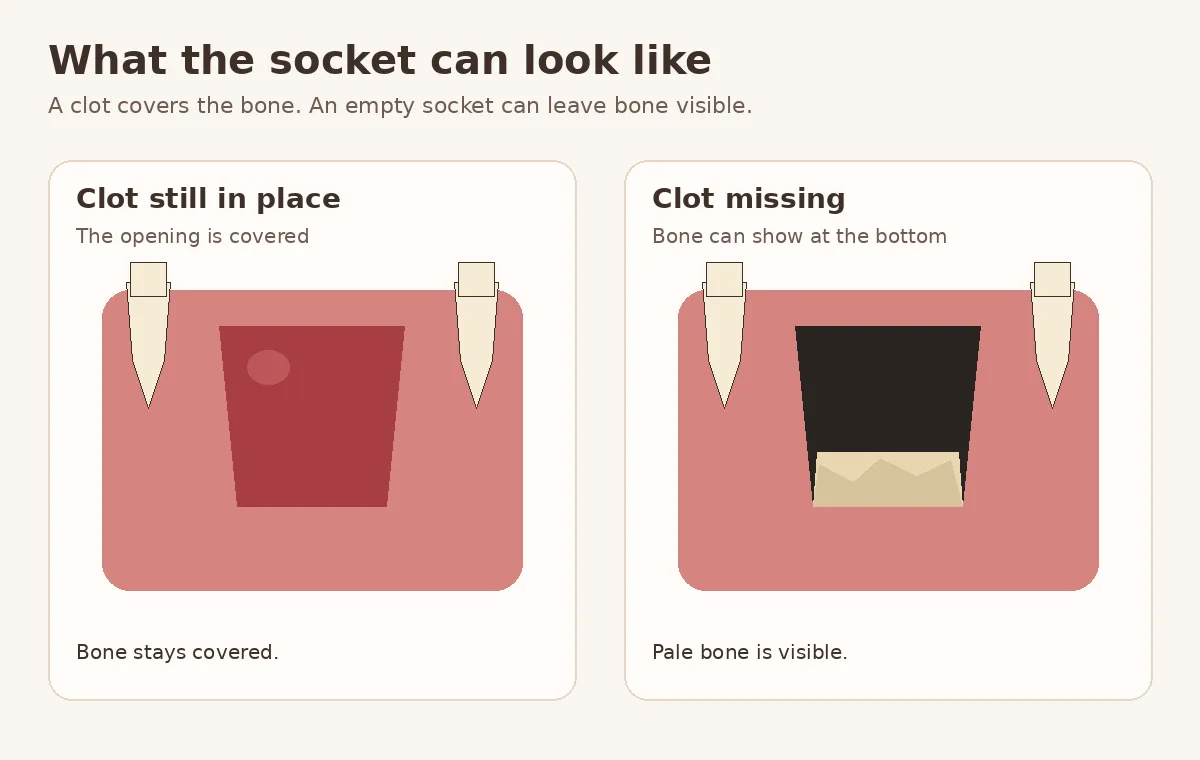
Dry socket is a complication after a tooth extraction, not ordinary soreness. Dentists also call it alveolar osteitis. It happens when the blood clot does not form, falls out, or dissolves before the socket has healed. That clot is supposed to cover the bone and nerve endings. Without it, bone can be exposed and the pain can become severe. Pain is the main symptom. It is not the diagnosis. A dentist has to look at the site.
The pain usually starts one to three days after the tooth comes out, not while you are still in the chair. Mayo Clinic uses that window. Do not wait out a calendar day if the pain is already severe or climbing. If a tooth was removed at Shifa Dental, or you need an exam in Plano or Garland, contact the office and say what changed. Same-day treatment is not guaranteed.
Contact Shifa Dental if pain after an extraction is severe or getting worse. To request a time, schedule a Plano appointment or schedule a Garland appointment. Choose the emergency visit when pain is why you are coming in.
What should you watch for?
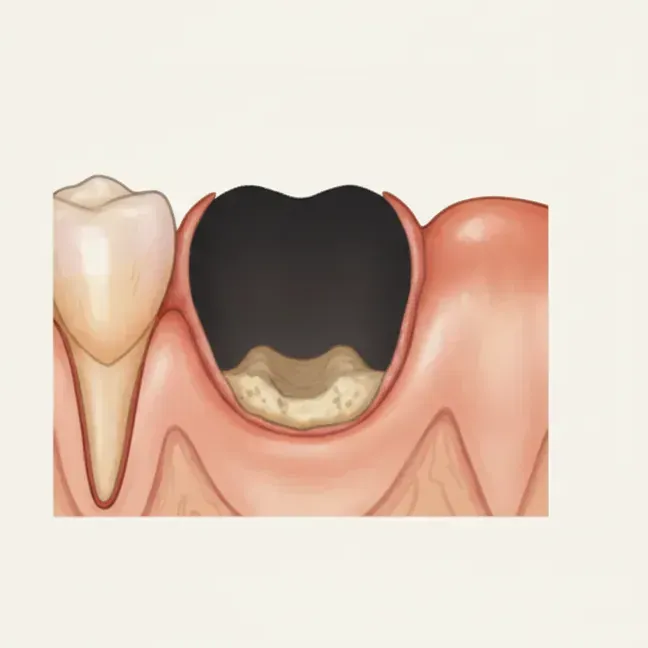
Severe pain that starts or worsens a few days after the extraction is the clearest warning. The ache is often deep or throbbing, and it can travel toward the ear, eye, temple, or neck on the same side. Sleep and eating may become hard. A bad taste, a foul odor, an empty-looking opening, or bone you can see are other possible signs. Mayo Clinic lists those findings, and the American Association of Oral and Maxillofacial Surgeons says patients with this pattern should contact their surgeon. Use the list as a reason to call, not as a self-test.
Do not poke, scrape, or shine a light into the site. Touching it will not confirm the cause, and it can irritate the wound. Fever, increasing facial swelling, pus, and trouble swallowing are separate warnings and need prompt care. Trouble breathing is an emergency, not a wait for a dental appointment.
Wisdom teeth are a common setting, especially when a tooth is impacted, but any extraction can be followed by this complication. A simple removal and a surgical removal can also heal on different schedules. The written instructions from your own visit are the guide for your tooth. If you are still planning the removal, surgical tooth removal explains how that procedure differs from a simple one.
How is this different from ordinary healing?
Mild soreness, some swelling, and light oozing can be part of early healing. Mayo Clinic says typical pain should be manageable with the reliever from your visit and should lessen with time. The concerning change is pain that turns severe, spreads, or returns after it had started to settle. Judge the first few days by that direction, not by one bad hour.
| What you notice | What it may mean | What to do |
|---|---|---|
| Mild soreness that is slowly easing. | This may fit ordinary early healing. | Stay on your aftercare plan and watch for a change. |
| Severe or increasing pain, possibly spreading to the ear, eye, or temple. | This needs an exam. A lost clot is one possible cause. | Call and say when the pain changed. |
| An opening that looks empty, with a bad taste or odor. | This can occur with a lost clot, but it is not a self-test. | Leave the site alone and ask for an evaluation. |
| Fever, worsening facial swelling, pus, or trouble swallowing. | This may be more urgent than routine soreness. | Seek prompt care. Trouble breathing is an emergency. |
A bad taste or an empty-looking socket adds concern. Neither one proves the cause. Infection, trapped food, or a nearby tooth can hurt too. If the pain is severe, contact the office instead of waiting to see whether the next hour is better.
What raises the chance of dry socket?
This can happen even when you follow every instruction. A difficult removal, a past episode, and personal healing factors can raise the chance. None of them makes a complication certain. Mayo Clinic notes that bacteria in the socket, and injury during a difficult removal such as an impacted wisdom tooth, are among the factors still being studied.
Smoking and other tobacco use matter for two reasons. Drawing on a cigarette creates suction that can pull the clot loose, and tobacco chemicals can slow healing. Vaping is not a safe substitute unless your dentist says otherwise. Birth-control pills and other sources of higher estrogen may also affect healing. Tell the dentist about every medicine and supplement, including anything that affects clotting. Do not stop a prescribed medicine on your own.
The goal on the first day is to leave the clot alone. Follow the written instructions from the clinician who removed the tooth. These points are a backup when those instructions are clear. They are not a replacement when a step is confusing.
- Use gauze only as directed, and do not keep lifting it to look at the site.
- Skip straws, smoking, vaping, and forceful spitting for the period your dentist names.
- Do not rinse hard or brush the socket on the first day, unless your instructions say otherwise.
- Choose soft foods, chew on the other side, and avoid very hot food or drink until you are told it is fine.
- Keep the rest of your mouth clean. Do not place aspirin, oils, powders, or home remedies in the socket.
Salt water is a later step, not a first-hour step. Many instructions allow a gentle warm salt-water rinse only after the first day, and only if the dentist described it. Swish softly and let the water fall out. Do not spit hard. If food feels stuck before you have those instructions, leave it. A toothpick, a water flosser, or a finger can pull the clot out. A little pink saliva can be ordinary. Bleeding that soaks fresh gauze, or will not slow, should be reported. Rest with your head slightly raised, and skip heavy lifting until the office says it is fine.
Skipping straws and hard rinsing lowers risk. It does not promise the clot will stay. Meal ideas for the first days are on what to eat after a tooth extraction. Day-to-day healing routines live on the Plano extraction aftercare page and the Garland extraction aftercare page. Those pages own the full recovery routine. This section only names the steps that protect the clot.
What can you do while you wait to be seen?
Nothing you do at home confirms or rules out a lost clot. Until a dentist looks at the socket, stay with the pain plan from the extraction visit unless the office tells you to change it. Do not start a new medicine, including leftover antibiotics, because a friend used it after a removal.
Keep following the clot-protection steps above. Do not add a second rinse, a home paste, or a new food rule while you wait. A soft meal on the other side is fine if you can eat. Write down the extraction date, the hour the pain changed, and every dose you have already taken. Those notes are more useful at the visit than a photo of the socket.
Go to emergency care instead of waiting if breathing or swallowing becomes difficult, or if swelling is rising quickly and you feel unwell. For severe dental pain without those warning signs, call the treating office first. An online request is the backup when that office cannot be reached. It is not a promise that a same-day visit is open.
How is dry socket treated?
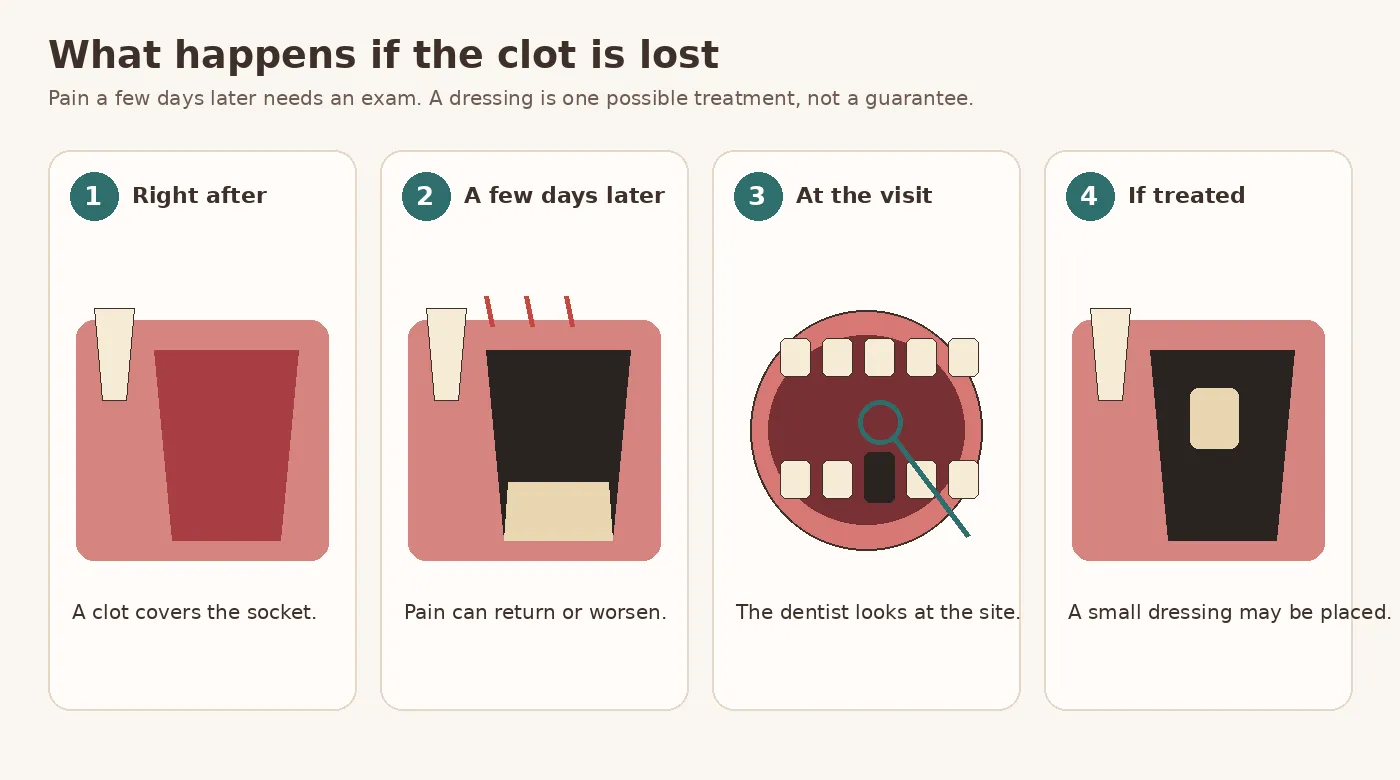
Treatment starts with an exam. The dentist looks for a clot or for exposed bone and asks when the pain began. An X-ray is sometimes used to check for infection or a small piece of tooth or bone left in the site. Care is aimed at easing pain and keeping the area clean while tissue repairs. A result, or a number of days, cannot be promised in advance.
Mayo Clinic’s treatment page says care may include flushing the socket, placing a medicated dressing or paste, and choosing a pain medicine that fits your health. Dressings are not automatic. Some need a return visit to be changed or removed. Antibiotics are not routine. A clinician prescribes them only when there is a separate reason, such as a suspected infection. Do not use leftover antibiotics.
Bring the extraction date, your aftercare sheet, and a list of every medicine you take, including birth control and anything that affects clotting. Say whether you smoke or vape. If a dressing is placed, ask whether it needs to be changed or removed, and what rinsing is allowed afterward. Once treatment starts, pain often begins to ease over the next few days. That is a typical course, not a promise for every site. Keep the follow-up even if you feel better.
Shifa Dental provides dental extractions in Plano and dental extractions in Garland, including wisdom tooth extraction when that is the procedure being planned. Those pages explain the removal itself. This article is about pain after the tooth is already out.
What should you tell the office?
You do not need a diagnosis before you call. If pain is severe, spreading, or getting worse, call the office that treated you before you wait on an online slot. Use the phone number printed on your aftercare sheet. Same-day treatment is not guaranteed. A short description helps the team decide whether you should be seen and what to do while you wait.
- Give the extraction date, the tooth if you know it, and whether the removal was simple or surgical.
- Say when the pain started or returned, and whether it is easing, steady, or worse.
- Note whether it spreads to the ear, eye, temple, or neck, and whether it affects sleep or eating.
- Mention fever, swelling, bleeding, drainage, odor, or a bad taste.
- List medicines already taken, plus allergies, pregnancy, or conditions that affect pain medicine.
- Ask which symptoms should send you to urgent or emergency care instead of a scheduled visit.
A useful call sounds like this: “My lower tooth was removed three days ago. The soreness was easing, and today it is stronger and travels toward my ear. I can still swallow, but eating is hard. Should I be examined?” If the treating office is closed, use the contact path on your aftercare sheet. A general page about urgent dental concerns in Plano is background only. It does not show who is open right now.
Request an exam in Plano or Garland
If you cannot reach the treating office, request the next visit and choose Plano or Garland when the scheduler asks for a location. Choose the emergency visit when pain is the reason you are coming in. Shifa Dental sees patients at the Plano office on Pleasant Valley Drive and at the Garland office on North Plano Road. Schedule an appointment in Plano or schedule an appointment in Garland. Bring your aftercare instructions and a list of what you have taken for pain. Before a planned extraction, review questions to ask before tooth extraction so the clot-care steps are clear before you leave.
Frequently asked questions
Can dry socket heal on its own?
The tissue can close over time, but the pain often needs professional care. Medicine from a store may not be enough. A dentist can rinse the socket and, when appropriate, place a medicated dressing. Do not wait out severe pain on your own.
Can I prevent dry socket completely?
No. Following aftercare lowers risk, especially avoiding smoking, straws, and hard rinsing, but it cannot remove the chance. Tell your dentist about tobacco use, birth control, and any medicine that affects clotting so the plan fits you.
Should I rinse after an extraction?
Not at first, and not vigorously. Many instructions say to avoid strong rinsing and brushing on the site for the first day. Later, rinse only the way your dentist describes. If you think food is stuck, call instead of digging it out.
Is a bad taste always dry socket?
No. A bad taste or odor can happen with a lost clot, but it can also come from debris or another healing issue. Describe the change to a dentist. It is not proof of a diagnosis.
Where can I be seen in Plano or Garland?
Shifa Dental can evaluate extraction-site pain at its Plano and Garland offices. Call the office that treated you if the pain is severe, or request a visit and choose Plano or Garland when the scheduler asks for a location. Availability is not guaranteed for the same day. Trouble breathing needs emergency care.