
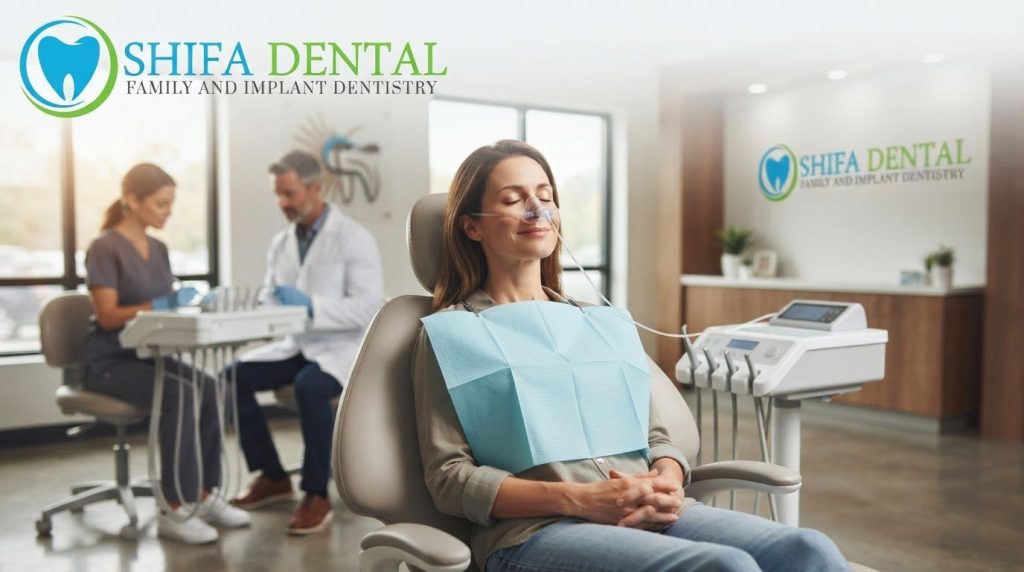
Sedation dentistry in Garland, TX helps anxious patients receive the dental care they need without stress or fear. If you’ve been avoiding the dentist because of anxiety, a strong gag reflex, or fear of pain, sedation dentistry offers a safe, proven way to complete necessary procedures while remaining calm and comfortable. At Shifa Dental in Garland, we offer multiple sedation options tailored to your comfort level and the complexity of your treatment — from light nitrous oxide relaxation to deeper IV sedation for more involved cases. Many North Dallas patients discover that sedation dentistry transforms their entire relationship with dental care, making it possible to address issues they’ve postponed for years.
What Is Sedation Dentistry and Why Do North Dallas Patients Choose It?
Sedation dentistry refers to the use of medications — usually anti-anxiety drugs and pain relievers — to help you relax during dental procedures. It’s sometimes called “twilight sleep” or “conscious sedation” because you remain awake and able to respond to your dentist’s instructions, but you’re in a deeply relaxed state where anxiety melts away and pain signals are muted. For many Garland, TX patients, sedation dentistry is the difference between avoiding the dentist entirely and finally getting the care they need.
Dental anxiety affects an estimated 36% of the U.S. population, according to the American Dental Association, and about 12% experience severe anxiety that prevents them from seeking care. In Garland and surrounding North Dallas communities, sedation dentistry has become increasingly popular as practices recognize that anxiety is a legitimate barrier to oral health. Whether you fear needles, have a sensitive gag reflex, worry about pain, or simply feel claustrophobic in the treatment chair, sedation dentistry creates a pathway to the care you deserve.
The Three Main Types of Sedation Dentistry Available in Garland
Sedation dentistry in Garland isn’t one-size-fits-all. Your dentist will recommend the type of sedation dentistry best suited to your anxiety level, medical history, and the complexity of your procedure. Here’s how the three primary options compare:
Nitrous Oxide (Minimal Sedation / “Laughing Gas”)
Nitrous oxide, commonly called “laughing gas,” is the lightest form of sedation dentistry. You inhale a mixture of nitrous oxide and oxygen through a small mask placed over your nose. Within a few minutes, you’ll feel a gentle euphoria and deep relaxation — your limbs may feel heavy, and you’ll be less aware of sounds and sensations in your mouth. Importantly, you remain fully conscious and can respond to your dentist’s questions.
Nitrous oxide is ideal for patients with mild anxiety or those undergoing simple procedures like cleanings or small fillings. One major advantage: the effects wear off within minutes of removing the mask, so you can drive yourself home immediately (though some dentists recommend a brief recovery period). According to the American Dental Association, approximately 70% of dental practices that offer sedation dentistry use nitrous oxide, making it the most common choice.
Oral Conscious Sedation (Moderate Sedation)
Oral conscious sedation involves taking a prescribed anti-anxiety medication (usually a benzodiazepine like triazolam or midazolam) before your appointment. You take the pill at home, and by the time you arrive at your Garland dental office, you’re already deeply relaxed. A local anesthetic is still used to numb the treatment area, so you won’t feel pain — but you’ll feel very little anxiety either.
Many patients report that time seems to pass quickly and they have only a hazy or fragmented memory of the appointment — a phenomenon sometimes called “conscious sedation amnesia.” This makes oral conscious sedation excellent for patients with moderate to severe dental anxiety, strong gag reflexes, or those needing multiple procedures in one visit. However, because the medication takes time to metabolize, you must have a responsible adult drive you home and should plan to rest for the remainder of the day. You shouldn’t drive or operate machinery for at least 24 hours after oral conscious sedation.
Intravenous (IV) Sedation (Moderate to Deep Sedation)
IV sedation involves administering sedative medications directly into your bloodstream through an intravenous line. This allows your dentist to adjust the depth of sedation in real-time, making it ideal for complex procedures, multiple extractions, dental implant placement, or patients with severe anxiety. With IV sedation, you may drift in and out of consciousness, though you can still respond to verbal cues from your dental team.
IV sedation requires additional training and credentials for the dentist, and it must be administered in a properly equipped clinical setting with continuous monitoring of your vital signs, oxygen levels, and heart rate. Recovery is similar to oral conscious sedation — you’ll need a driver and should rest for 24 hours post-procedure. IV sedation is the deepest form of conscious sedation commonly used in dental offices (general anesthesia is reserved for hospital or surgical center settings).
How Does Sedation Dentistry Work? The Clinical Process
Understanding what happens during Sedation Dentistry in Garland can ease your anxiety before your appointment. Here’s the typical sequence:
- Pre-Appointment Consultation: Your Garland dentist reviews your medical history, current medications, allergies, and anxiety level. This is critical because certain conditions or medications can interact with sedatives. You’ll discuss your goals for sedation and any previous experiences with anesthesia.
- Pre-Sedation Instructions: Depending on the type of sedation dentistry you’ll receive, you’ll receive specific instructions. For nitrous oxide, there are usually no restrictions. For oral sedation, you’ll be instructed not to eat for a few hours before your appointment. For IV sedation, fasting is typically required (similar to before surgery).
- Monitoring Setup: Before sedation begins, the dental team will attach a pulse oximeter to your finger to monitor your oxygen levels and heart rate throughout the procedure. For IV sedation, an IV line is placed.
- Medication Administration: Sedation dentistry medications are administered according to the type chosen. Your dentist monitors your response and adjusts as needed.
- Procedure: Once you’re adequately sedated, local anesthesia is applied to numb the treatment area, and your dentist proceeds with the planned procedure. You won’t feel pain, though you may feel pressure or vibration.
- Recovery: After the procedure, you’ll be monitored until the sedative effects wear off enough for safe discharge. For nitrous oxide, this is quick. For oral or IV sedation, you’ll remain in the recovery area for 30–60 minutes.
Sedation Dentistry vs. Other Pain Management Options: A Comparison
You may wonder how sedation dentistry compares to other comfort options. Here’s a practical comparison:
| Option | Anxiety Relief | Pain Control | Recovery Time | Best For |
|---|---|---|---|---|
| Local Anesthetic Only | None | Complete (numbing) | None | Routine cleanings, simple fillings, anxious patients with mild concern |
| Nitrous Oxide | Mild to Moderate | Partial (numbing + euphoria) | Minutes | Mild anxiety, simple procedures, patients who need to drive home |
| Oral Conscious Sedation | Moderate to Severe | Complete (numbing + sedation) | 24 hours | Moderate to severe anxiety, multiple procedures, strong gag reflex |
| IV Sedation | Moderate to Severe | Complete (numbing + deep sedation) | 24 hours | Severe anxiety, complex procedures, implants, extractions, deep sedation control needed |
Is Sedation Dentistry Safe? What You Need to Know
Safety is a top concern for patients considering Sedation Dentistry in Garland, and rightfully so. The good news: when administered by a trained, credentialed dentist in a properly equipped clinical setting, sedation dentistry is very safe.
According to the American Dental Association’s updated 2024 guidelines, dentists who administer sedation must complete specific training (typically 16+ hours for minimal sedation, more for moderate or IV sedation) and maintain current certification in cardiopulmonary resuscitation (CPR). At Shifa Dental in Garland, our team follows all ADA guidelines and uses modern monitoring equipment to track your vital signs continuously during sedation dentistry procedures.
That said, sedation dentistry does carry some risks, particularly for patients with certain medical conditions (heart disease, sleep apnea, uncontrolled diabetes, or respiratory issues). This is why your pre-appointment consultation is so important — it allows your dentist to screen for contraindications and adjust the sedation plan accordingly. Pregnant patients, patients on certain medications, or those with a history of adverse reactions to sedatives should discuss these factors openly with their dentist.
Common, minor side effects of sedation dentistry include grogginess, dizziness, nausea, or a dry mouth — all of which resolve within hours. Serious complications are rare when proper protocols are followed.
Recovery and Aftercare Following Sedation Dentistry
Recovery depends on the type of sedation dentistry you received:
After Nitrous Oxide
Nitrous oxide wears off almost immediately once the mask is removed. You may feel slightly lightheaded for a few minutes, but most patients are alert and ready to drive within 5–10 minutes. No special aftercare is needed.
After Oral Conscious Sedation or IV Sedation
Recovery is more involved. The medication can take 12–24 hours to fully metabolize, and you’ll feel drowsy, sluggish, or “fuzzy” for the first several hours. Here’s what to expect and how to care for yourself:
- Immediate Post-Procedure (First 1–2 Hours): You’ll remain in the recovery area at your Garland dental office, monitored by the clinical team. You may sleep or doze. Don’t attempt to drive or operate machinery.
- First 24 Hours: You must have a responsible adult drive you home. Avoid driving, operating heavy machinery, making important decisions, or signing legal documents. The sedative impairs judgment and coordination.
- Rest and Hydration: Plan to rest at home for the remainder of the day. Drink plenty of water and eat light meals as your appetite returns. Avoid alcohol, as it can potentiate (increase) the effects of residual sedative in your system.
- Pain Management: You may experience mild discomfort or soreness at the treatment site as the local anesthetic wears off (usually 2–4 hours post-procedure). Over-the-counter pain relievers like ibuprofen or acetaminophen can help, unless your dentist recommends otherwise.
- Oral Care: Avoid rinsing, spitting forcefully, or using a straw for the first 24 hours if you had extractions or oral surgery, as these actions can disturb blood clots and delay healing. Stick to soft foods.
- Follow-Up: If you experience unusual symptoms — severe pain, swelling, fever, difficulty breathing, or chest discomfort — contact your dentist or seek emergency care immediately.
Sedation Dentistry Cost and Insurance Coverage in Garland, TX
One of the most common questions patients ask about sedation dentistry is: “How much will it cost?” The answer depends on several factors, including the type of sedation dentistry you choose, the complexity of your procedure, and your dental insurance coverage.
Typical Cost Ranges for Sedation Dentistry
While exact costs vary by practice and procedure, general market ranges in Garland and North Dallas are:
- Nitrous Oxide: Often included in the procedure fee or charged as a small add-on (if charged separately, typically a modest fee per appointment).
- Oral Conscious Sedation: Usually charged as a separate fee in addition to the procedure cost.
- IV Sedation: Generally the most expensive option, charged per hour or as a flat fee depending on the complexity and duration of the procedure.
It’s important to note that most dental insurance plans do not cover sedation dentistry as a standalone benefit, as it’s often classified similarly to cosmetic procedures. However, if sedation is medically necessary (for example, for a patient with severe anxiety or a disability that makes treatment impossible without it), some insurance plans may cover a portion. Your Shifa Dental team in Garland can verify your specific coverage before your appointment.
Making Sedation Dentistry Affordable: Shifa Dental’s Options
At Shifa Dental in Garland, we believe that cost should never prevent you from receiving the care you need. That’s why we offer several flexible payment and financing options:
- Shifa Dental Saving Plan: Our in-house membership plan offers significant discounts on sedation dentistry and other procedures for uninsured or underinsured patients. No annual maximums, no waiting periods.
- 0% Interest Financing: We offer interest-free payment plans for sedation dentistry and major procedures, allowing you to spread costs over manageable monthly payments.
- CareCredit: We accept CareCredit, a healthcare credit card that offers promotional financing options for dental and medical expenses.
- Transparent Pricing: We quote all costs upfront — no hidden fees. You’ll know exactly what sedation dentistry will cost before your procedure begins.
- Insurance Verification: Our billing team verifies your insurance benefits in advance and maximizes your coverage.
Who Is a Good Candidate for Sedation Dentistry?
Sedation dentistry is an excellent option for many patients, but it’s not right for everyone. You may be a good candidate if you have:
- Moderate to severe dental anxiety or dentophobia (fear of dentists).
- A strong or sensitive gag reflex that interferes with treatment.
- Extreme sensitivity to pain or needle phobia.
- Difficulty sitting still or controlling involuntary movements.
- A need to complete multiple procedures in one visit (sedation dentistry can make this more comfortable and efficient).
- A history of traumatic dental experiences.
- A physical, cognitive, or behavioral condition that makes relaxation difficult.
- Complex or lengthy procedures planned (like implant placement, multiple extractions, or extensive restorative work).
Conversely, you may not be a good candidate if you have:
- Uncontrolled sleep apnea or severe respiratory disease.
- Uncontrolled high blood pressure or certain heart conditions.
- Severe liver or kidney disease.
- Pregnancy (especially the first trimester).
- Allergy to sedative medications.
- Substance abuse history (certain sedatives carry addiction risk for susceptible individuals).
Your dentist at Shifa Dental in Garland will conduct a thorough medical evaluation to determine whether sedation dentistry is safe and appropriate for you.
What to Expect at Your Sedation Dentistry Appointment in Garland
Here’s a practical walkthrough of what your day will look like:
Before Your Appointment
- Follow all pre-sedation instructions provided by your dentist (fasting, medication adjustments, etc.).
- Arrange for a responsible adult to drive you to and from your appointment if you’re having oral or IV sedation.
- Wear comfortable, loose clothing.
- Avoid alcohol or recreational drugs for at least 24 hours before your appointment.
- Take any regularly scheduled medications as directed by your dentist (unless told otherwise).
During Your Appointment
- Arrive 10–15 minutes early to complete any remaining paperwork.
- The dental team will review your medical history and sedation plan one more time.
- Monitoring equipment (pulse oximeter, blood pressure cuff, etc.) will be attached.
- Sedation medication is administered.
- Once you’re adequately sedated, local anesthesia is applied, and your procedure begins.
- The team continuously monitors your vital signs and comfort level.
- After the procedure, you’ll move to the recovery area.
After Your Appointment
- Rest in the recovery area for 30–60 minutes (longer for IV sedation).
- Your driver will be called to pick you up once you’re cleared for discharge.
- You’ll receive written post-operative instructions and a list of what to avoid for the next 24 hours.
- Plan to rest at home for the remainder of the day.
- Follow all aftercare instructions to optimize healing.
Frequently Asked Questions About Sedation Dentistry in Garland, TX
Is sedation dentistry safe for children?
Yes, sedation dentistry can be safe and beneficial for children with dental anxiety, strong gag reflexes, or those undergoing complex procedures. However, pediatric sedation requires special training and must be carefully dosed based on the child’s age and weight. Shifa Dental offers pediatric dentistry services in Garland with sedation options when appropriate. Always discuss your child’s candidacy with your pediatric dentist.
Will I remember my sedation dentistry procedure?
With nitrous oxide, most patients remain fully aware and remember everything. With oral conscious sedation or IV sedation, many patients report little to no memory of the procedure — a phenomenon called “sedative amnesia.” Some recall fragments or a vague sense of time passing. This memory loss is actually one reason patients find these deeper sedation options so appealing, as it makes lengthy or anxiety-provoking procedures feel like they flew by.
How long does sedation dentistry take?
The duration of your sedation dentistry appointment depends on the complexity of your procedure and the type of sedation. Nitrous oxide appointments proceed at the normal pace of your procedure. Oral or IV sedation appointments may take longer because of pre-sedation preparation and post-procedure recovery time. Your dentist will give you a time estimate during your consultation.
Can I drive home after sedation dentistry?
After nitrous oxide, yes — you’ll be alert within minutes and can drive. After oral conscious sedation or IV sedation, absolutely not. You must have a responsible adult drive you home, and you shouldn’t drive or operate machinery for at least 24 hours. This is not optional — it’s a safety requirement and often a legal one.
What if I’ve had a bad reaction to sedation before?
Tell your dentist immediately. Your medical history, including any previous adverse reactions, is critical to your sedation plan. Your dentist may adjust the medication, dose, or type of sedation dentistry to minimize risk, or may recommend proceeding without sedation. Transparency is essential here.
Does sedation dentistry cost more than regular dental treatment?
Yes, sedation dentistry typically adds to the overall cost of your dental procedure because it involves additional medications, monitoring equipment, and trained staff. However, sedation often allows your dentist to complete more treatment in one visit, which can actually reduce your total number of appointments and overall treatment time. At Shifa Dental in Garland, we offer flexible financing to make sedation dentistry accessible.
Why Choose Shifa Dental in Garland for Sedation Dentistry?
At Shifa Dental, we understand that dental anxiety is real and that it prevents many people from getting the care they need. Our Garland location (1918 N Plano Rd, Garland, TX 75042) is equipped with modern sedation dentistry capabilities and staffed by experienced dentists trained in safe, effective sedation protocols. We follow all American Dental Association guidelines and use the latest monitoring technology to ensure your safety and comfort.
Beyond clinical excellence, we’re committed to making Sedation Dentistry in Garland affordable and accessible. We accept most insurance plans, offer our Shifa Dental Saving Plan for uninsured patients, provide 0% interest financing, and maintain transparent pricing with no hidden fees. Our multilingual staff (English, Urdu, Punjabi, Telugu, Kannada, and Spanish) ensures you feel heard and understood. And because we offer Saturday hours and same-day emergency appointments, we work around your schedule.
Whether you’ve been avoiding the dentist for years because of anxiety or you’re facing a complex procedure and want maximum comfort, sedation dentistry at Shifa Dental in Garland is your pathway to a healthier smile — without the stress.
Your Next Steps: Schedule Your Sedation Dentistry Consultation in Garland Today
If you’re ready to overcome dental anxiety and get the care you deserve, the first step is a consultation with our Garland team. During this visit, we’ll discuss your anxiety, review your medical history, explain your sedation dentistry options, and answer all your questions. We’ll also provide a transparent cost estimate so there are no surprises.