


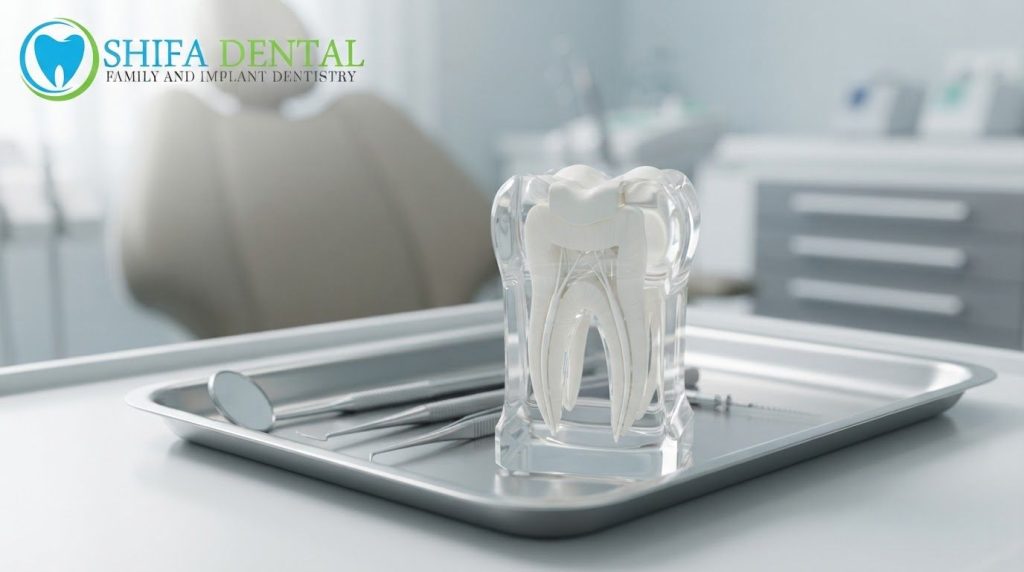
A Root Canal in Plano, TX is a common endodontic procedure that saves a tooth when the nerve inside becomes infected or damaged. Most patients recover within a week, and modern techniques mean the procedure is far less uncomfortable than its reputation suggests. If you’re experiencing severe tooth pain, sensitivity, or swelling in the Plano or North Dallas area, a root canal may be the treatment that stops the pain and preserves your natural tooth.
What Is a Root Canal and Why Do You Need One in Plano?
Inside every tooth is a chamber filled with soft tissue called the pulp. The pulp contains nerves, blood vessels, and connective tissue that nourished your tooth when it was developing. Once your tooth is fully mature, the tooth can survive without the pulp because it continues to be nourished by tissues surrounding the root.
When decay, trauma, or repeated dental procedures damage the pulp, bacteria can invade and cause infection. If left untreated, this infection spreads to the bone and tissues around the root, leading to an abscess, bone loss, and eventually tooth loss. A root canal in Plano, TX stops this process by removing the infected pulp, cleaning the root canal system, and sealing it to prevent future infection. The goal is simple: save your natural tooth and eliminate the pain.
Patients in Plano and surrounding North Dallas communities—including Allen, Frisco, McKinney, and Richardson—often delay root canal treatment because of fear or cost concerns. Modern endodontic techniques, combined with local anesthesia and sedation options, have made the procedure far more comfortable than many expect. At Shifa Dental’s Plano location, our experienced team uses advanced technology to make the process as pain-free and efficient as possible.
When Do You Need a Root Canal? Common Symptoms
Not all tooth pain signals the need for a root canal, but certain warning signs should prompt you to contact your dentist right away. Understanding these symptoms can help you seek treatment early, before complications develop.
Persistent Tooth Pain That Won’t Go Away
The most common indicator is deep, throbbing tooth pain that lingers even after you stop eating or drinking. This pain may be localized to one tooth or radiate to your jaw, ear, or temple. Unlike the sharp sting of a cavity or temporary sensitivity, root canal pain typically persists for hours or days and may worsen when lying down (because blood pressure increases in the tooth).
Prolonged Sensitivity to Hot or Cold
If a tooth hurts when you drink hot coffee or eat ice cream, and the pain lingers long after the temperature stimulus is gone, the pulp may be inflamed. Normal sensitivity usually subsides within seconds; lingering sensitivity lasting 30 seconds or more suggests deeper nerve involvement.
Swollen or Tender Gums Near the Tooth
Infection inside the tooth can cause the gums around it to swell, feel tender, or appear darker. In some cases, a small pimple-like bump forms on the gum—a sign that pus is draining from the infected root. This is an abscess and requires immediate professional attention.
Tooth Discoloration or Darkening
When the pulp dies, the tooth may turn gray, brown, or black over time. This discoloration occurs because dead tissue inside the tooth oxidizes. If you notice one tooth darkening compared to its neighbors, have it evaluated by a dentist in Plano right away.
Pain When Chewing or Biting
If biting down on a specific tooth causes sharp pain, the root or surrounding bone may be infected. This pain is often worse in the morning or after chewing hard foods.
How Does Root Canal Treatment Work?
Understanding the step-by-step process can ease anxiety about the procedure. A root canal in Plano, TX typically unfolds as follows:
Step 1: Diagnosis and X-Rays
Your dentist begins by taking X-rays to visualize the tooth’s interior and the surrounding bone. These images reveal the extent of infection, the shape and number of root canals (teeth can have 1 to 4 canals), and whether the infection has spread to the bone. This diagnostic phase is crucial for planning the treatment.
Step 2: Anesthesia and Isolation
Your dentist will numb the tooth and surrounding area with local anesthesia—the same numbing used for filling cavities. Once you’re comfortable, a thin sheet of latex rubber (called a rubber dam) is placed over the tooth to keep it dry, clean, and isolated from saliva and bacteria in your mouth. This barrier is essential for treatment success and your comfort.
Step 3: Pulp Removal and Cleaning
Your dentist creates a small opening in the crown (top) of the tooth to access the pulp chamber. Using specialized instruments called files, they carefully remove the infected or damaged pulp tissue from inside the tooth and from each root canal. The canals are then cleaned, shaped, and treated with antimicrobial medication to eliminate bacteria.
Step 4: Filling the Canals
Once the canals are clean and dry, they’re filled with a biocompatible rubber-like material called gutta-percha, which is sealed in place with an adhesive cement. This filling prevents bacteria from re-entering the tooth. A temporary filling is placed in the access hole to protect the tooth until a permanent restoration (filling or crown) can be placed.
Step 5: Restoration and Follow-Up
A tooth that has undergone root canal treatment is more brittle than a healthy tooth because it no longer receives nutrients from the pulp. Most endodontists and dentists recommend placing a crown on the tooth to protect it and restore full function. You’ll return to your Plano dentist within 2–4 weeks to have the temporary filling removed and the permanent restoration placed. Some teeth may also receive a post (a small metal or plastic rod placed in the root canal) to help support the crown.
Root Canal Treatment Timeline: How Long Does It Take?
One of the most common questions patients ask is: “How long will this take?” The answer depends on several factors, but here’s a realistic timeline:
| Phase | Duration | Details |
|---|---|---|
| Initial Appointment | 60–90 minutes | Diagnosis, X-rays, numbing, pulp removal, canal cleaning, temporary filling. |
| Recovery Period | 3–7 days | Mild soreness subsides; you can return to normal activities immediately. |
| Follow-Up Appointment | 2–4 weeks later; 30–60 minutes | Temporary filling removed; permanent filling or crown placed. |
| Crown Placement (if needed) | 1–2 weeks additional | If a crown is recommended, it’s fabricated in a lab and cemented at a separate appointment. |
Most patients can return to work or school the same day as their root canal appointment. You may experience mild soreness or sensitivity for a few days, but this is manageable with over-the-counter pain relief and gradually improves.
Root Canal Success Rates: Will It Work?
One of the most reassuring facts about modern endodontic treatment is its high success rate. According to peer-reviewed research and clinical data from the American Association of Endodontists, root canal treatment has a success rate exceeding 95% when performed by trained specialists using modern techniques and proper follow-up care.
Several factors influence success:
- Complexity of the tooth: Front teeth (incisors) are simpler and have higher success rates than molars, which often have multiple curved canals.
- Timing of treatment: Early intervention before infection spreads to the bone improves outcomes.
- Proper restoration: Placing a crown after root canal treatment significantly extends tooth survival. Teeth left with only a temporary filling are more likely to fail.
- Specialist vs. general dentist: Endodontists (specialists in root canal treatment) have slightly higher success rates than general dentists, though both are effective.
- Patient compliance: Following post-treatment care instructions and attending follow-up appointments ensures the best outcome.
With proper care, a tooth treated with a root canal can last a lifetime. Studies show that 97% of treated teeth survive 10 years, and many last 20+ years or longer.
Root Canal Recovery: What to Expect After Treatment
Recovery from a root canal in Plano, TX is typically straightforward, but knowing what to expect helps you prepare mentally and physically.
First 24 Hours After Treatment
Immediately after your appointment, the numbing medication will wear off within a few hours. You may experience mild soreness, tenderness, or a slight ache at the treatment site. This is normal and expected. The tooth may feel “high” when you bite—as if it’s slightly raised compared to your other teeth—but this usually resolves within a day or two. Avoid chewing on the treated tooth until the permanent restoration is in place.
Days 2–7: Gradual Improvement
Most patients feel significantly better by day 3. Any mild discomfort or sensitivity typically subsides by day 5 to 7. You can resume normal eating, brushing, and flossing once the temporary filling is in place (your dentist will advise on this). Avoid very hot or very cold foods for a few days, and stick to softer foods if chewing causes discomfort.
Pain Management
Over-the-counter pain relievers like ibuprofen or acetaminophen are usually sufficient. If prescribed antibiotics, take them exactly as directed, even if you feel better. Completing the full course prevents infection from returning.
When to Contact Your Dentist
Contact Shifa Dental’s Plano office at (469) 507-3786 if you experience severe pain that worsens after 3 days, persistent swelling, difficulty swallowing, or signs of allergic reaction. These are rare but require prompt attention.
Root Canal Cost in Plano, TX: What Will You Pay?
Cost is often a major concern for patients considering endodontic treatment in Plano, TX. The final price depends on several factors, and understanding these helps you budget and explore financing options.
Factors That Affect Root Canal Cost
- Tooth location: Front teeth (incisors) are typically least expensive because they have one root and one canal. Premolars are moderate, and molars are most expensive because they often have 2–3 roots and multiple canals requiring more time and expertise.
- Complexity: Severely curved or calcified canals, previous treatment failure, or post placement increases cost.
- Specialist vs. general dentist: Endodontists typically charge more than general dentists, but their expertise can mean better outcomes.
- Location and practice: Costs vary between Plano, Garland, and surrounding North Dallas areas, and between individual practices.
- Restoration (crown): A crown placed after root canal treatment is an additional expense, though highly recommended.
Typical Cost Breakdown
Based on market data from North Dallas dental practices, root canal treatment alone (not including crown) typically ranges as follows:
| Tooth Type | Typical Cost Range | Notes |
|---|---|---|
| Front Tooth (Incisor) | Lower range | Single root and canal; simpler procedure. |
| Premolar | Mid-range | Often 1–2 roots; moderate complexity. |
| Molar | Higher range | Usually 2–3 roots and multiple canals; most time-intensive. |
| Crown (recommended after root canal) | Additional cost | Essential for long-term tooth survival; material varies. |
Insurance Coverage
Most dental insurance plans cover root canal treatment at 50–80% after your deductible is met, classifying it as a major restorative procedure. Coverage varies by plan—some limit benefits per year, and some require a waiting period for major services. Contact your insurance provider or have Shifa Dental’s team verify your benefits before treatment. We accept most major insurance plans, including children’s Medicaid and CHIP for families in the Plano and North Dallas area.
Financing Options at Shifa Dental
If cost is a barrier, Shifa Dental offers several affordable options:
- 0% Interest Financing: Spread payments over time without interest charges.
- CareCredit: A healthcare credit card that offers flexible payment plans.
- Shifa Dental Saving Plan: An in-house membership plan for uninsured patients, offering significant discounts on all procedures, including root canals.
- No Hidden Fees Policy: All costs are quoted in writing before treatment begins, so there are no surprises.
Shifa Dental also offers a free second-opinion consultation on root canals and other major procedures. If you’ve been quoted a high price elsewhere, bring your estimate to our Plano location, and our experienced dentists will review your case at no charge.
Root Canal vs. Extraction vs. Other Options
When facing a severely damaged or infected tooth, patients sometimes wonder if extraction (pulling the tooth) is a simpler or cheaper alternative to endodontic treatment. Here’s how the options compare:
| Option | Cost | Recovery | Long-Term Outcome |
|---|---|---|---|
| Root Canal + Crown | Moderate to high | Less than a week | Preserves natural tooth; 95%+ success rate; lasts 10–20+ years. |
| Extraction | Lower (initially) | 1–2 weeks | Tooth is lost; requires replacement (implant, bridge, or denture). |
| Implant (after extraction) | High (most expensive) | 3–6 months | Artificial tooth; requires bone integration; 95%+ success rate. |
| Bridge or Denture | Moderate to high | 2–4 weeks | Artificial tooth; requires ongoing maintenance and adjustment. |
The bottom line: While extraction may seem cheaper upfront, replacing a lost tooth with an implant, bridge, or denture typically costs more in the long run and involves multiple procedures. Saving your natural tooth through a root canal is usually the most cost-effective and functional choice. Natural teeth also preserve jaw bone, which is lost over time after extraction.
How to Prepare for Your Root Canal Appointment in Plano
Being prepared can reduce anxiety and help your appointment go smoothly:
- Bring insurance information: Have your dental insurance card and photo ID ready so we can verify coverage and eligibility.
- Arrive 10–15 minutes early: This gives us time to complete paperwork and answer any last-minute questions.
- Eat a light meal beforehand: You may feel numb for a few hours after the appointment, so eating before helps you avoid accidentally biting your cheek or tongue.
- Avoid caffeine and alcohol: These can increase anxiety and interact with anesthesia or pain medication.
- Ask about sedation: If you’re anxious, ask about nitrous oxide (laughing gas) or oral sedation to help you relax. Shifa Dental offers sedation dentistry options.
- Arrange transportation: If you’re receiving sedation, arrange for someone to drive you home.
- Wear comfortable clothing: You’ll be reclined for 60–90 minutes, so loose, comfortable clothes are ideal.
- List your medications: Bring a list of all medications and supplements you take so your dentist can check for interactions.
Post-Treatment Care: Protecting Your Tooth After Root Canal
What you do after endodontic treatment in Plano, TX is just as important as the procedure itself. These steps protect your tooth and ensure long-term success:
Immediately After Treatment
- Avoid chewing on the treated tooth until the permanent restoration is placed.
- Don’t eat hard, sticky, or very hot foods for at least 24 hours.
- If prescribed antibiotics, take them exactly as directed.
- Use over-the-counter pain relief if needed (ibuprofen or acetaminophen).
Before Your Follow-Up Appointment
- Protect the temporary filling by avoiding hard or sticky foods that could dislodge it.
- Brush and floss gently around the tooth, but avoid putting pressure directly on it.
- Don’t skip your follow-up appointment. The permanent restoration is critical for tooth survival.
Long-Term Care
- Brush twice daily: Use fluoride toothpaste and a soft-bristled brush.
- Floss daily: Especially around the treated tooth and its crown.
- Avoid chewing on hard objects: Don’t chew ice, hard candy, or use your teeth as tools.
- Wear a mouthguard: If you play contact sports or grind your teeth at night, ask about a custom night guard.
- See your dentist regularly: Routine checkups and cleanings (every 6 months) help catch problems early and keep your treated tooth healthy.
Frequently Asked Questions About Root Canals in Plano, TX
Is a root canal procedure painful?
No. Modern root canal treatment is no more painful than having a filling placed. Your tooth is completely numbed with local anesthesia before the procedure begins, so you should feel pressure and vibration but not pain. If you experience any pain during treatment, tell your dentist immediately—they can administer more anesthesia. Many patients report that the pain relief they feel after the infected nerve is removed is worth any minor discomfort during the procedure.
How long does a root canal take?
Most root canal appointments take 60–90 minutes, depending on the complexity of the tooth and the number of canals. Front teeth are typically faster (60 minutes), while molars may take 90 minutes or longer. Your dentist will give you a better estimate during your initial consultation.
Will I need a crown after root canal treatment?
In most cases, yes. A tooth that has undergone endodontic treatment is more fragile because it no longer receives nutrients from the pulp. A crown protects the tooth from breaking and restores its full chewing function. Your dentist will recommend a crown based on the tooth’s location and condition. Front teeth sometimes can be restored with just a filling, but back teeth (molars and premolars) almost always need a crown.
Can a root canal fail?
Root canal treatment has a 95%+ success rate, but failure can occur in rare cases due to complex anatomy, missed canals, or incomplete sealing. If a root canal fails, retreatment (a second root canal) is often possible. Success rates for retreatment are slightly lower (75–85%) but still very good. Shifa Dental offers free second-opinion consultations if you’re considering retreatment.
How much does a root canal cost without insurance?
Cost varies based on tooth location and complexity, but typical ranges are available through a consultation. A root canal in Plano, TX is quoted in writing before treatment with no hidden fees. Shifa Dental offers 0% interest financing, CareCredit, and our in-house Saving Plan for uninsured patients. Call our Plano office at (469) 507-3786 for a personalized estimate.
What’s the difference between a root canal done by a dentist vs. an endodontist?
Endodontists are specialists who have completed an additional 2–3 years of training focused exclusively on root canal treatment and related procedures. They typically have higher success rates and handle complex cases, but both general dentists and endodontists can perform root canals effectively. If your general dentist recommends referring you to a specialist, it’s often because your case is unusually complex. Shifa Dental can refer you to a trusted endodontist if needed, or our experienced team can handle most cases in-house.
Why Choose Shifa Dental for Root Canal Treatment in Plano?
If you’re experiencing tooth pain or have been told you need a Root Canal in Plano, TX, choosing the right dental practice matters. Here’s what sets Shifa Dental apart:
- Experience and expertise: Our Plano team has years of experience with root canal treatment and complex endodontic cases.
- Modern technology: We use digital imaging, rotary instruments, and advanced techniques to ensure thorough cleaning and sealing of the root canal system.
- Sedation options: Anxious about dental procedures? We offer nitrous oxide and oral sedation to help you relax.
- Saturday and emergency appointments: We know tooth pain doesn’t wait for business hours. Our Plano location is open Saturdays, and we accommodate same-day emergency appointments when possible.
- Transparent pricing and financing: No hidden fees. All costs are quoted upfront, and we offer 0% financing, CareCredit, and our Saving Plan for uninsured patients.
- Free second-opinion consultation: If you’ve been quoted a high price elsewhere, bring your estimate to Shifa Dental for a free professional review.
- Multilingual staff: Our team speaks English, Urdu, Punjabi, Telugu, Kannada, and Spanish to serve our diverse North Dallas community.
- Most insurance plans accepted: Including children’s Medicaid and CHIP.
When to Contact Shifa Dental for Root Canal Treatment
If you’re experiencing persistent tooth pain, sensitivity, swelling, or any symptoms mentioned in this article, don’t wait. Early treatment prevents complications and saves your tooth. Contact Shifa Dental Plano office today to schedule a consultation or discuss your concerns with our team.