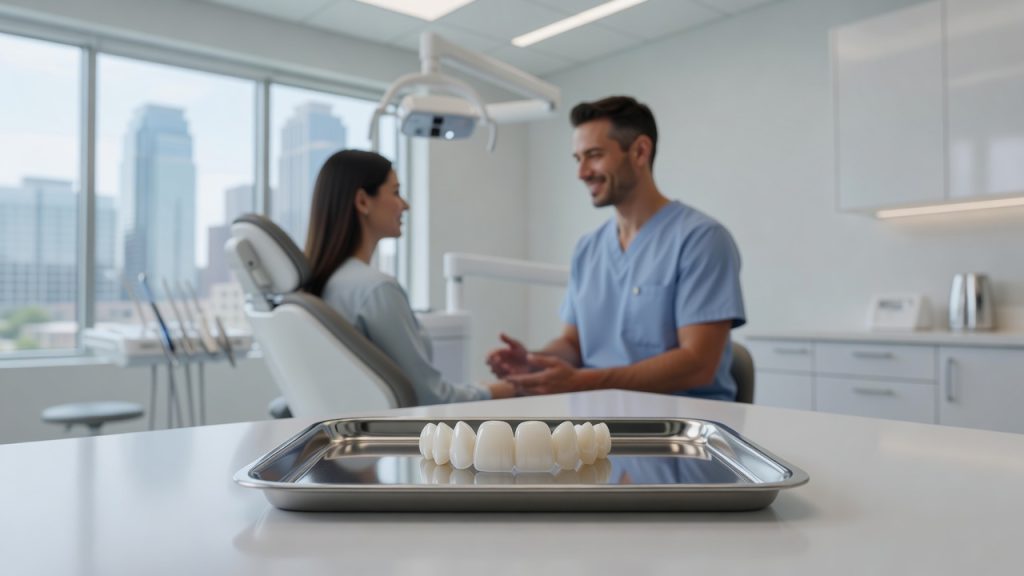



A Smile Makeover in Plano TX combines cosmetic and restorative dental treatments into a plan tailored to your teeth, gums, bite, and goals. It may involve whitening, bonding, veneers, Invisalign, or other care—but there is no single package that suits everyone. A dentist first checks your oral health and discusses what you would like to change, then explains appropriate options, trade-offs, timing, and fees before treatment begins. For patients in Plano, Allen, Frisco, McKinney, and nearby North Dallas communities, that personalized approach can help balance appearance with comfort and long-term tooth health. You can ask for subtle refinements or a more comprehensive plan; the aim is a natural-looking result that fits your face and preserves healthy tooth structure wherever possible.
What Does a Smile Makeover in Plano, TX Include?
A smile makeover is a coordinated set of dental services chosen to address the concerns that matter to you. Those concerns can include discoloration, uneven edges, chips, gaps, worn teeth, tooth shape, or the way the teeth meet when you bite. The plan might involve one treatment or several staged procedures. It is not necessarily extensive, and it should not be based on a photograph or trend alone.
Your dentist considers both the visible smile and the structures supporting it. That includes enamel, the hard outer tooth layer; periodontal tissues, meaning the gums and supporting bone; and occlusion, the way upper and lower teeth come together. A tooth that looks out of line may be affected by crowding or bite forces, while a dark tooth may have a cause that needs diagnosis rather than cosmetic masking. An examination helps distinguish appearance concerns from problems that require restorative or periodontal care.
Which concerns can cosmetic dentistry address?
- Color: Surface stains or some deeper discoloration may respond to dentist-supervised whitening; other causes may need a different approach.
- Small chips or gaps: Composite bonding can reshape or repair a limited area using tooth-colored resin.
- Tooth shape or visible surface flaws: Veneers may cover the front surface of selected teeth when clinically appropriate.
- Crowding or spacing: Invisalign or another orthodontic option may reposition teeth rather than camouflage their alignment.
- Uneven gum display: Gum contouring may be discussed in selected cases after a careful assessment of gum health and tooth proportions.
These examples are possibilities, not a diagnosis. A dentist can determine whether the concern is cosmetic, functional, or a combination, and whether a conservative option can meet your goals.
How Do the Main Smile Makeover Treatments Differ?
Whitening: changing natural tooth color
Professional whitening uses bleaching agents to lighten natural teeth. The American Dental Association notes that whitening does not change the color of restorations such as crowns, veneers, or fillings. If you have visible restorations, discuss their location before whitening so the final shade can be planned consistently. Tooth sensitivity or gum irritation can occur, and the dentist can help assess whether whitening is suitable for you and how to use it safely. The ADA’s patient guidance on teeth whitening is a useful starting point for questions to bring to your visit.
Bonding: repairing or reshaping a limited area
With dental bonding, a dentist applies and shapes tooth-colored composite resin, then hardens it and refines the surface. It can be a conservative option for certain chips, small gaps, or uneven edges. Bonding often preserves more natural tooth structure than treatments that require reshaping, but resin can stain, wear, or chip and may need repair. The location and size of the area, your bite, and habits such as nail biting can affect whether it is a good fit.
Veneers: changing the visible front surface
Veneers are thin shells bonded to the front of teeth to adjust visible color, shape, or surface appearance. Porcelain and composite materials have different handling, appearance, and maintenance considerations. In many cases, placing a veneer requires removing some enamel; once enamel is removed, the change is generally irreversible. The ADA’s MouthHealthy veneer overview and Cleveland Clinic’s patient information explain why it is important to discuss tooth preparation, alternatives, and care before choosing this option. Veneers do not prevent decay, so the underlying tooth and gumline still need routine attention.
Invisalign and other orthodontic options: moving teeth
Clear aligners and braces aim to move teeth into a healthier or more attractive position over time. They may be considered when spacing or crowding is central to your concern, rather than covering the appearance with restorative material. Suitability depends on the bite and the type of movement needed; some cases require a different orthodontic approach. Shifa Dental’s Invisalign program can be discussed as part of a broader cosmetic plan, but an orthodontic evaluation is needed before anyone can estimate an individual treatment course.
For a smile makeover in Plano, TX, treatment sequence matters. If whitening is planned alongside bonding or veneers, the dentist may coordinate shade selection so restorations are not chosen before the natural teeth reach the intended color. If alignment is part of the plan, moving teeth may come before final cosmetic restorations. There is no universal sequence: the exam, your goals, and the condition of your teeth guide the order.
How Can You Compare Smile Makeover Options?
The table below is a conversation aid rather than a recommendation. Actual suitability depends on an in-person evaluation, and one treatment may not address every concern.
| Option | Often considered for | Important trade-offs to discuss |
|---|---|---|
| Professional whitening | Staining or a generally darker natural tooth shade | Does not change existing restorations; sensitivity may occur; the cause of discoloration matters. |
| Composite bonding | Selected small chips, gaps, or shape adjustments | May require maintenance and can stain or chip; ask how the bite affects the repair. |
| Porcelain or composite veneers | Visible front-surface color or shape concerns in suitable teeth | May involve enamel removal; treatment is not automatically reversible; maintenance and replacement planning matter. |
| Invisalign or braces | Spacing or crowding when tooth position is a key concern | Requires an orthodontic assessment, consistent follow-through, and retention planning after active movement. |
| Gum contouring | Selected gum-line or gum-display concerns | Not appropriate for every smile; periodontal health and the relationship between gums and teeth must be assessed. |
What Should Plano Patients Know About Smile Makeover Costs and Insurance?
There is no reliable single price for a smile makeover: the total depends on which services are clinically appropriate, how many teeth are involved, the materials selected, and whether health-related treatment needs to come first. A smile makeover in Plano, TX should begin with an examination and a written, itemized estimate—not a generic package price. Ask which parts are elective, which are needed to restore function or health, and what could change the plan after diagnostic records are reviewed.
Dental insurance commonly distinguishes between preventive, restorative, and cosmetic services. Coverage varies by plan, and a procedure that improves appearance may not be covered even if a related restorative service is. Before beginning, ask the office to review your benefits and explain any exclusions, waiting periods, or annual limits in your specific policy. A pre-treatment estimate from an insurer is not always a final payment guarantee, so confirm the patient’s responsibility with the dental office as well.
Shifa Dental says it provides cost information before treatment, with no hidden fees. Patients can ask about 0% interest financing, CareCredit, and the Shifa Dental Saving Plan for people without insurance. Eligibility and terms depend on the option and patient circumstances, so request the details in writing. The Plano office accepts most insurance plans, including children’s Medicaid and CHIP; staff can help clarify whether a particular plan is accepted and what services may be eligible.
How Do You Prepare for a Smile Consultation?
Arriving with a clear idea of what you hope to change can make a consultation more productive. Bring a list of concerns and questions, along with your current medication and dental history information. If you have examples of the kind of natural-looking smile you prefer, you can share them, while remembering that another person’s teeth and facial features are not a direct template for your treatment.
During a consultation, your dentist may review your dental and medical history, examine your teeth and gums, assess your bite, and recommend photographs, scans, or radiographs when clinically indicated. You should have the chance to talk about treatment alternatives, the sequence of care, expected maintenance, potential sensitivity, and what happens if a proposed treatment is postponed. Digital images or mockups can support a discussion, but they are planning aids rather than a guarantee of an exact final appearance.
- Which of my concerns can be addressed without removing healthy enamel?
- Do I need treatment for decay, gum inflammation, or bite problems first?
- What are the conservative alternatives, and what are their limitations?
- How will the proposed work affect my existing fillings, crowns, or other restorations?
- What maintenance, repairs, or replacement might be needed later?
- Can I receive an itemized written estimate and discuss financing before deciding?
You do not need to commit to treatment at the first visit. A good plan should make the choices understandable, give you time to consider them, and explain what is optional versus clinically important. If you want another perspective on a major procedure, Shifa Dental offers free second-opinion consultations for implants, braces, root canals, and other major procedures.
How Can You Protect Your Results?
Cosmetic dental work still relies on healthy teeth and gums. Brush with fluoride toothpaste, clean between your teeth, and keep up with professional examinations and cleanings at the interval your dentist recommends. Let the office know if a restoration feels rough, loose, or uncomfortable, or if your gums bleed regularly. A change in the bite after treatment also deserves an assessment rather than repeated self-adjustment.
Teeth are not tools: avoid using them to open packaging or bite hard objects. If you clench or grind, mention it during planning because excess force can affect bonding, veneers, and natural teeth. A dentist may discuss a protective appliance when appropriate. For orthodontic treatment, follow the wear instructions and ask about retainers; teeth can shift after active movement if retention is not maintained.
Contact a dentist promptly for persistent tooth pain, swelling, a broken restoration, or bleeding gums that do not settle. Facial swelling with trouble breathing or swallowing needs urgent medical attention. These symptoms do not establish a diagnosis, but they should not be ignored while you are planning elective cosmetic care.
What Should You Know Before Choosing a Smile Makeover in Plano, TX?
The best starting point is a health-first consultation, not a predetermined menu of procedures. A customized Smile Makeover in Plano TX can combine appearance goals with the condition of your enamel, gums, bite, and existing dental work. The most useful plan is one that explains why each step is proposed, what can be preserved, what maintenance is involved, and what the total fees will be before you choose to proceed.
Frequently Asked Questions
How do I know if a smile makeover in Plano, TX is right for me?
If you want to change tooth color, shape, spacing, or gum display, a consultation can help determine which options fit your oral health and goals. An examination is necessary to confirm whether cosmetic care is appropriate and whether any underlying dental concerns should be addressed first.
Does a smile makeover always include veneers?
No. A plan may involve whitening, bonding, orthodontics, gum contouring, restorative care, or a combination, and some patients need only one service. Veneers are one option, but their benefits and enamel-preparation requirements should be weighed against more conservative alternatives.
Can whitening change the color of my crowns or fillings?
No. Whitening affects natural tooth structure, not the shade of existing crowns, veneers, or fillings. Discuss the location of visible restorations with your dentist before whitening so the shade plan can account for them.
Is a smile makeover permanent?
Some components, such as enamel preparation for veneers, are irreversible, while other treatments may need maintenance or replacement over time. Your dentist should explain the expected care needs and alternatives for each proposed procedure before you make a decision.
Where can I discuss smile makeover options near Plano?
Shifa Dental’s Plano office is at 5509 Pleasant Valley Dr #90A, Plano, TX 75023. Call (469) 507-3786 to ask about a consultation, insurance, and payment options, or use the online booking link below.
Schedule a Smile Consultation at Shifa Dental Plano
If you are exploring a smile makeover in Plano, TX, Shifa Dental can review your goals, oral health, treatment choices, and fees with you before you decide. The Plano office is at 5509 Pleasant Valley Dr #90A, Plano, TX 75023; call (469) 507-3786. Hours are Monday–Thursday, 9 AM–5 PM, and Saturday, 9 AM–3 PM; the office is closed Friday and Sunday. Saturday appointments, walk-ins, transparent estimates, multilingual staff, and financing options help patients plan care around real-life needs. Book online at https://www.flexbook.me/shifaplano. Shifa Dental also serves patients at its Garland office, located at 1918 N Plano Rd, Garland, TX 75042; call (972) 992-1744.