
Dentures in Garland, TX offer a proven, affordable solution for missing teeth that restores your smile, ability to eat, and confidence in social settings. Whether you’re missing one tooth, several teeth, or an entire arch, modern dentures are custom-made to fit your unique mouth and look natural. At Shifa Dental in Garland, we help patients understand the types of dentures available, what to expect during the fitting process, and how to care for them long-term so they last for years.
What Are Dentures and Why Do Garland Patients Choose Them?
Dentures are custom-made removable prostheses (artificial teeth) that replace missing natural teeth and surrounding tissues. According to the American Dental Association, more than 36 million Americans are edentulous—meaning they have no natural teeth—and around 90% of them wear dentures. If you’re in Garland, TX or the surrounding North Dallas area and facing tooth loss, you’re not alone.
Tooth loss can happen for many reasons: severe decay, gum disease, injury, or simply the wear and tear of time. Whatever the cause, the gap left behind affects far more than your appearance. Missing teeth make it harder to chew, can alter your speech, and often lead to bone loss in the jaw over time. Dentures address all these issues—and they’re significantly more affordable than dental implants while still delivering excellent results when properly fitted and maintained.
At Shifa Dental’s Garland location (1918 N Plano Rd, Garland, TX 75042), we’ve fitted hundreds of patients with dentures that look natural, feel comfortable, and allow them to eat, speak, and smile with confidence again. Many of our Garland patients come to us after losing hope—and leave amazed at how much dentures can restore.
Types of Dentures: Complete, Partial, and Implant-Supported
Not all dentures are the same. Depending on how many teeth you’re missing and the health of your remaining teeth and jawbone, your dentist will recommend one of three main types. Understanding the differences helps you make an informed decision about your smile.
Complete (Full) Dentures
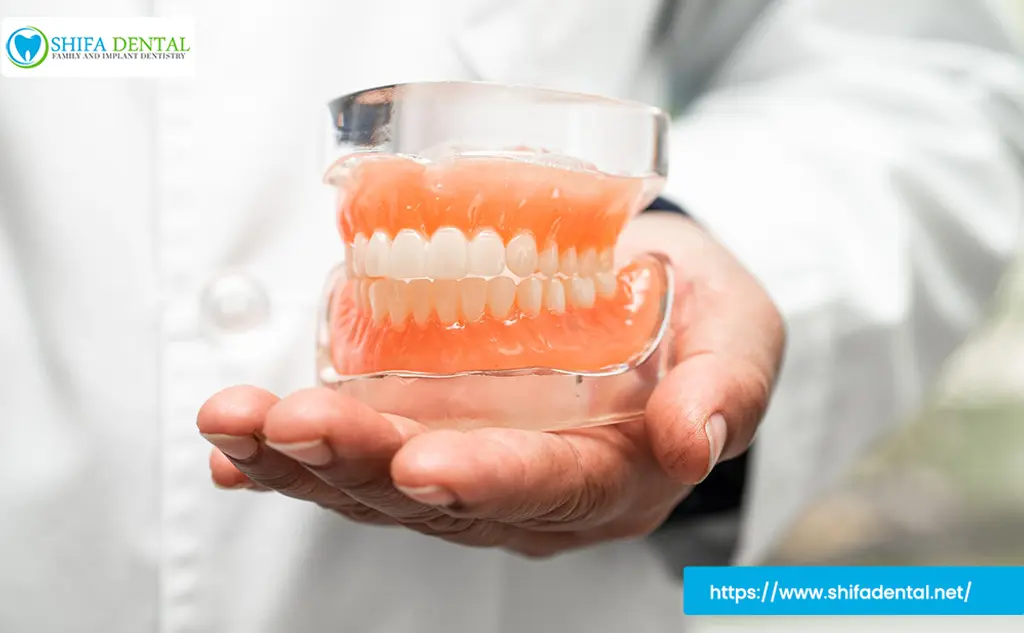
Complete dentures replace all teeth in either the upper arch (maxilla) or lower arch (mandible), or both. They sit directly on your gums and are held in place by natural suction (saliva) and, if needed, denture adhesive. Because they cover the entire arch, complete dentures also restore support to your facial muscles, which can sag when teeth are lost—helping you look younger and more vibrant.
Complete dentures require an adjustment period of 2–4 weeks as your mouth adapts to the new prosthesis. During this time, speech and chewing may feel awkward, but most patients report that comfort and function improve significantly after the first month. Complete dentures typically last 5–10 years with proper care, though they may need adjustments or relining as your jawbone changes shape over time.
Partial Dentures
Partial dentures replace several missing teeth while leaving your remaining natural teeth intact. They’re anchored to your remaining teeth using clasps or precision attachments, which means they’re often more stable than complete dentures and require less adjustment time. Partial dentures are ideal if you have a few healthy teeth left and want to preserve them—because keeping natural teeth, even if they’re not perfect, is always preferable to losing them.
Partial dentures come in two main materials: acrylic (less expensive, easier to adjust) and flexible nylon (more aesthetic, more durable). Many Garland patients prefer flexible partials because they’re thinner, more comfortable, and blend better with natural gums. Partial dentures also require daily cleaning and careful maintenance, as food particles can become trapped under the clasps.
Implant-Supported Dentures
Implant-supported dentures are the premium option. Instead of resting on your gums, they’re anchored to dental implants surgically placed in your jawbone. This design offers the highest stability, strongest chewing force, and best long-term bone preservation. Implant-supported dentures feel and function almost like natural teeth, and they don’t move or shift when you eat or speak.
However, implant-supported dentures require sufficient jawbone volume, multiple surgical procedures, and a longer treatment timeline (6–12 months from start to finish). They’re also the most expensive option. At Shifa Dental in Garland, we offer a free second-opinion consultation for patients considering implant-supported dentures, so you can explore all your options with confidence.
The Denture Fabrication Process: What to Expect
Creating custom dentures is both an art and a science. The process typically takes 3–6 weeks and involves several appointments where precise measurements, bite records, and shade matching ensure your dentures fit perfectly and look natural.
Appointment 1: Consultation & Impressions
Your Garland dentist will examine your mouth, discuss your goals, and take detailed impressions of your gums and remaining teeth (if applicable). These impressions are sent to a dental laboratory where a technician will craft your dentures.
Appointment 2: Bite Registration & Shade Selection
You’ll return to confirm your bite (how your upper and lower teeth meet) and select the shade and shape of your artificial teeth. This is where art comes in—your dentist will help you choose a tooth color and style that matches your skin tone and facial structure.
Appointment 3: Try-In
Before the dentures are finalized, you’ll try them in so your dentist can check the fit, bite, and appearance. Any adjustments are made at this stage—it’s your chance to speak up about comfort, aesthetics, or concerns.
Appointment 4: Final Delivery & Adjustment
Your finished dentures are delivered and inserted. Your dentist will show you how to insert and remove them, explain care instructions, and schedule a follow-up appointment to fine-tune the fit. Minor adjustments are normal in the first few weeks.
Denture Types & Materials Comparison Table
| Denture Type | Best For | Adjustment Period | Stability | Lifespan |
|---|---|---|---|---|
| Complete Dentures | All teeth missing in one or both arches | 2–4 weeks | Moderate (with adhesive) | 5–10 years |
| Partial Dentures (Acrylic) | Several missing teeth; natural teeth remain | 1–2 weeks | Good (clasps anchor to teeth) | 5–8 years |
| Partial Dentures (Flexible) | Several missing teeth; aesthetics important | 1–2 weeks | Good (clasps anchor to teeth) | 7–10 years |
| Implant-Supported Dentures | All teeth missing; want highest stability | Minimal (very stable) | Excellent (anchored to implants) | 10–15+ years |
Daily Denture Care: How to Keep Your Dentures Clean & Comfortable
Dentures don’t decay like natural teeth, but they require consistent daily care to stay clean, comfortable, and long-lasting. Neglecting denture hygiene can lead to staining, odor, fungal infections (denture stomatitis), and accelerated bone loss.
Daily Cleaning Routine
- Remove and rinse: After meals, remove your dentures and rinse them under warm running water to remove loose food particles.
- Brush gently: Use a soft-bristle denture brush (not a regular toothbrush) and a non-abrasive denture cleanser or mild soap to brush all surfaces—top, bottom, and clasps if you have a partial.
- Soak overnight: Place your dentures in a denture cleanser solution or plain water while you sleep. This keeps them moist, maintains their shape, and reduces bacterial growth. Never use hot water—it can warp the denture base.
- Clean your mouth: Even with dentures, brush your remaining natural teeth (if any) and your gums daily. Use a soft toothbrush and gentle circular motions to stimulate blood flow and remove plaque.
What to Avoid
- Don’t use abrasive cleaners, bleach, or powdered household cleaners—they damage the denture material.
- Don’t place dentures in hot or boiling water—this causes warping and permanent damage.
- Don’t sleep without removing your dentures (except on rare occasions)—your gums need air circulation to stay healthy.
- Don’t overuse denture adhesive. The American College of Prosthodontists recommends only 3–4 pea-sized dots per denture. If you need more than that, your dentures likely need relining.
Professional Maintenance
Visit your Garland Dentist every 6–12 months for a denture check-up. Your dentist can professionally clean your dentures, check for cracks or damage, and assess whether relining is needed. As your jawbone shrinks over time (a natural process called resorption), your dentures may become loose—relining adjusts the fit without replacing the entire denture.
How Long Do Dentures Last? When to Replace Them
With proper care, complete and partial dentures typically last 5–10 years. Implant-supported dentures can last 10–15+ years because they’re anchored to implants and experience less stress. However, several factors signal that replacement is due:
- The denture feels loose or unstable, even with adhesive.
- Chronic sores, irritation, or persistent candida (yeast) infection develops under the denture.
- The denture is cracked, broken, or missing teeth.
- It’s been more than 5 years since fabrication (per American College of Prosthodontists guidelines).
- Your bite has shifted or your remaining natural teeth have changed.
- The denture is visibly stained, discolored, or no longer matches your natural teeth.
If you notice any of these signs, schedule a consultation with your Garland dentist. Shifa Dental offers same-day emergency appointments for denture adjustments and repairs—call (972) 992-1744 to book.
Cost of Dentures in Garland, TX & Financing Options
The cost of dentures varies depending on the type, materials, and complexity of your case. Here’s what you can typically expect in the Garland and North Dallas area:
- Complete dentures (one arch): Budget-friendly options are available; premium custom dentures cost more due to superior materials and fit.
- Partial dentures (acrylic): Generally less expensive than complete dentures because they use fewer materials and preserve remaining teeth.
- Partial dentures (flexible nylon): More costly than acrylic but offer better aesthetics and durability.
- Implant-supported dentures: Significantly more expensive due to surgical implant placement, but offer unmatched stability and longevity.
At Shifa Dental in Garland, we believe quality dental care should be accessible. That’s why we offer:
- Transparent, no-hidden-fee pricing: We quote all costs upfront before you commit to treatment.
- 0% interest financing: Spread your denture cost over manageable monthly payments.
- CareCredit: A flexible healthcare credit card accepted at our Garland office.
- Shifa Dental Saving Plan: Uninsured patients get discounts on dentures and other services.
- Insurance coverage: We accept most insurance plans, including children’s Medicaid and CHIP, and maximize your benefits.
Call Shifa Dental Garland at (972) 992-1744 for a free consultation and pricing quote.
Adjusting to New Dentures: What the First Few Weeks Look Like
It’s normal to feel awkward wearing dentures for the first time. Your mouth is adjusting to a foreign object, and your muscles need time to learn how to hold them in place. Here’s what to expect:
Week 1: Speech may sound slightly different (a lisp or slur). This is temporary as your tongue learns to position itself around the dentures. Practice speaking slowly and reading aloud.
Week 2–3: Eating becomes easier. Start with soft foods (soup, eggs, mashed potatoes) and gradually introduce firmer foods. Avoid sticky or hard foods that could dislodge your dentures.
Week 4+: Most patients report significant improvement in comfort and function. Denture sores (minor ulcers from friction) typically resolve, though your dentist can adjust the denture to prevent them.
Pro Tip: If you experience persistent sores, excessive looseness, or severe discomfort beyond the first month, contact your Garland dentist immediately. Minor adjustments can make a huge difference.
Common Denture Problems & Solutions
Even with excellent care, denture wearers occasionally face challenges. Here are the most common issues and how to address them:
Dentures Feel Loose or Slip When Eating/Speaking
Cause: Poor fit, bone resorption, or inadequate denture adhesive.
Solution: Schedule a reline appointment with your Garland dentist. A soft or hard reline adjusts the fit without replacing the denture.
Denture Stains or Discoloration
Cause: Coffee, tea, red wine, tobacco, or improper cleaning.
Solution: Professional cleaning by your dentist removes stubborn stains. Daily soaking in denture cleanser prevents future discoloration.
Mouth Sores or Irritation Under the Denture
Cause: Ill-fitting denture, yeast infection, or allergic reaction to denture material.
Solution: Remove the denture and allow gums to air out. Apply a soft-tissue conditioner (available over-the-counter) and see your dentist within a few days. Persistent sores may require relining or replacement.
Denture Odor
Cause: Bacterial or fungal buildup from inadequate cleaning or overnight soaking in water instead of cleanser.
Solution: Soak dentures daily in an ADA-approved denture cleanser solution, brush thoroughly, and maintain oral hygiene. Rinse your mouth after meals.
Cracked or Broken Denture
Cause: Dropping the denture, biting on hard objects, or material fatigue over time.
Solution: Contact Shifa Dental Garland immediately. We can often repair minor cracks same-day. Severe breaks may require replacement.
Dentures vs. Other Tooth Replacement Options
Dentures aren’t your only option for replacing missing teeth. Here’s how they compare to alternatives:
Dentures vs. Dental Bridges
Bridges are fixed (non-removable) prostheses that span the gap left by missing teeth, anchored to adjacent natural teeth. Bridges look and feel natural but require grinding down healthy neighboring teeth. Dentures preserve remaining teeth but require daily removal and care. Bridges typically last 10–15 years; dentures last 5–10 years.
Dentures vs. Dental Implants
Implants are surgically placed artificial tooth roots topped with crowns. They’re the most lifelike and durable option (20+ years) but require sufficient jawbone, multiple surgeries, and the highest cost. Dentures are non-surgical, more affordable, and suitable for patients with severe bone loss. Many patients choose dentures first and implants later if desired.
Dentures vs. Implant-Supported Dentures
Implant-supported dentures combine the best of both worlds: the affordability and simplicity of dentures with the stability and function of implants. They’re an excellent middle-ground option if you have the jawbone volume and budget for a few implants (usually 2–4 per arch).
Frequently Asked Questions About Dentures in Garland
How long does it take to get dentures in Garland, TX?
From your first consultation to final delivery, the process typically takes 3–6 weeks. Shifa Dental prioritizes efficiency without sacrificing quality—we’ll give you a specific timeline during your consultation.
Will dentures feel natural, and can I eat normally with them?
Modern dentures are designed to look and feel as natural as possible. While they may never feel exactly like natural teeth, most patients report excellent chewing function within 4–6 weeks of adjustment. Avoid very hard, sticky, or crunchy foods, but you can enjoy most normal foods comfortably.
Can I sleep in my dentures?
It’s best to remove your dentures at night and soak them in cleanser solution. This allows your gums to rest, reduces bacterial growth, and extends denture life. However, occasional overnight wear (such as during travel) won’t cause harm—just prioritize regular removal and cleaning.
How much do dentures cost in Garland, TX, and does insurance cover them?
Costs vary based on type and materials, but Shifa Dental offers transparent pricing, 0% financing, CareCredit, and a Saving Plan for uninsured patients. Most dental insurance plans cover a portion of denture costs (typically 40–50%). Call us at (972) 992-1744 for a free quote and insurance verification.
What if my dentures break or need adjustment?
Shifa Dental Garland offers same-day emergency appointments for denture repairs and adjustments. Minor cracks can often be fixed the same day. If you experience a denture emergency, call (972) 992-1744 during business hours or visit our office at 1918 N Plano Rd, Garland, TX 75042.
Are there alternatives to dentures if I don’t like them?
Yes. Dental implants, bridges, and implant-supported dentures are alternatives. Shifa Dental offers a free second-opinion consultation for major restorative procedures, so you can explore all options with confidence. Call us to discuss what’s best for your situation.
Conclusion: Restore Your Smile with Dentures in Garland
Dentures have transformed the lives of millions of people—restoring not just their smiles, but their ability to eat, speak, and feel confident in social situations. Whether you need complete dentures, partial dentures, or implant-supported dentures, the key to success is choosing an experienced, patient-centered dental practice that prioritizes your comfort and goals.
At Shifa Dental in Garland, we’ve helped countless North Dallas patients transition to dentures with care, expertise, and compassion. Our team understands the emotional and practical aspects of tooth loss, and we’re committed to making the process as smooth and stress-free as possible. We offer transparent pricing, flexible financing, same-day emergency appointments, and multilingual staff fluent in English, Urdu, Punjabi, Telugu, Kannada, and Spanish.
If you’re considering dentures or have questions about your current dentures, we invite you to schedule a free consultation with Shifa Dental in Garland. Let us show you how modern dentures can restore your smile and your confidence.