
Restoring Your Smile with Dental Implants in Plano, TX
A smile is more than just a physical attribute; it is a cornerstone of your confidence, a vital tool for communication, and a key component of your overall health. However, for many residents in the North Dallas area, missing teeth can make it difficult to share that smile with the world. Whether due to injury, decay, or age, tooth loss is a common challenge that affects professionals in Plano and families in Garland alike. Dental implants in Plano, TX, have become the gold standard for restorative care, offering unmatched stability and longevity. Modern dentistry has provided a solution, close to natural teeth as possible: dental implants.
At Shifa Dental, we understand that choosing a tooth replacement option is a significant decision. You aren’t just looking for a “quick fix”—you are looking for a permanent solution that allows you to eat your favorite Texas BBQ, speak clearly during a business presentation in Richardson, and feel proud when posing for photos at a family gathering in Frisco.
In this comprehensive guide, we will explore everything you need to know about dental implants, from the technical components of the procedure to the long-term benefits for your jaw health. Our goal is to provide the educational clarity and clinical credibility you need to make an informed choice for your oral health.
What are Dental Implants? A Technical Overview
To understand why dental implants are so effective, it is helpful to look at their anatomy. Unlike dentures, which sit on top of the gums, or bridges, which rely on neighboring teeth for support, a dental implant is a standalone system integrated directly into your anatomy. It consists of three primary parts:
- The Implant Post: This is a small, screw-like cylinder, made of medical-grade titanium. It is surgically placed into the jawbone, where it acts as a synthetic tooth root. Titanium is used because of its unique “biocompatible” properties, allowing it to fuse with the bone through a process called osseointegration.
- The Abutment: Once the post has successfully integrated with the bone, a small connector piece called an abutment is attached. This piece sits just above the gum line and serves as the anchor for your final restoration.
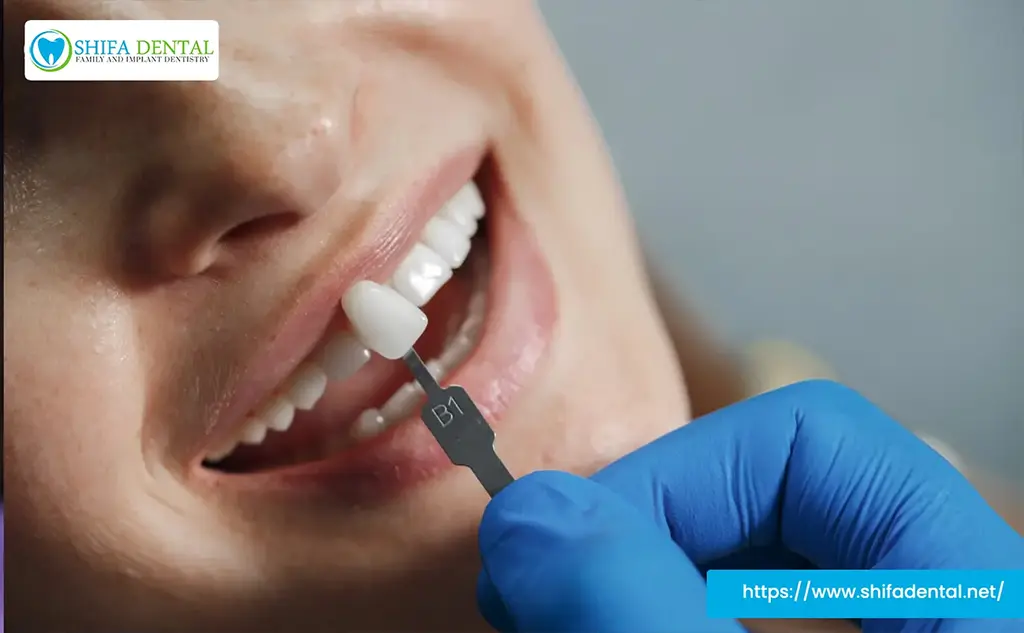
- The Custom Crown: The visible part of the implant is the prosthetic crown. At Shifa Dental, these crowns are custom-crafted to match the shade, shape, and size of your surrounding natural teeth. The result is a restoration that is virtually indistinguishable from the teeth you were born with.
This three-part system provides a level of security that traditional methods simply cannot match. For patients in Allen and North Dallas, this means no more worrying about slipping dentures or the dietary restrictions that often come with missing teeth.
Materials for Your Custom Crown | (Porcelain vs. Zirconia)
When it comes to the final step of your implant journey—the choice of crown material—it’s crucial. At Shifa Dental, we evaluate the location of the missing tooth and your bite force to recommend the best option for our patients in Plano and Garland.
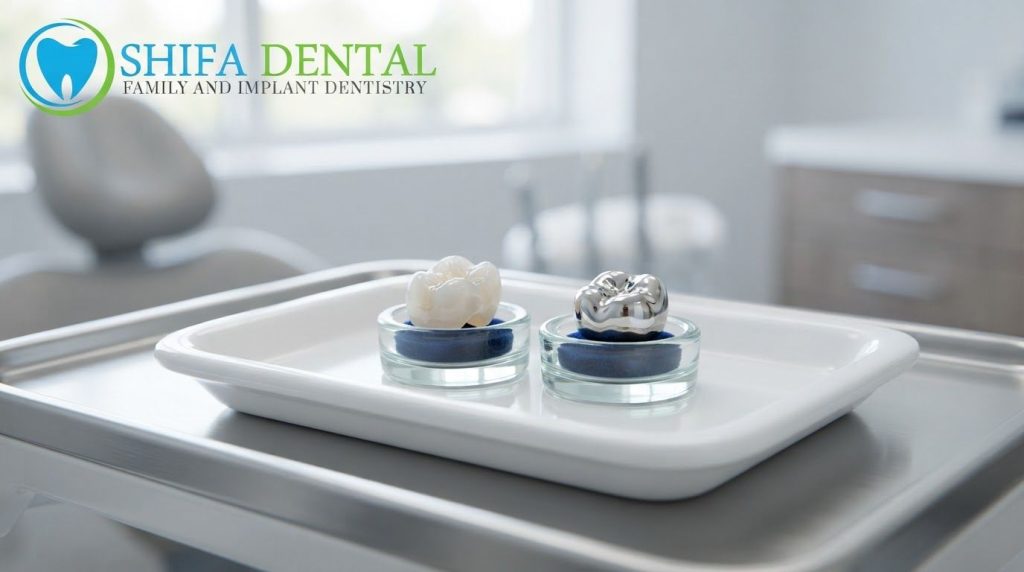
Porcelain (E-Max or Feldspathic): Porcelain is renowned for its superior aesthetics. It has a translucency that perfectly mimics natural tooth enamel, making it the ideal choice for front teeth (the “aesthetic zone”). While modern porcelain is very strong, it can be more prone to chipping than metal-based or zirconia options if subjected to extreme grinding. For our patients in Plano who want a “red-carpet” smile, high-quality porcelain is often the preferred choice.
Zirconia: Known as “ceramic steel,” zirconia is incredibly durable. It is a monolithic material, meaning it is milled from a single crystal block. This makes it virtually unbreakable. We often recommend zirconia for molars and premolars, where the chewing forces are highest. While older zirconia was very opaque, modern “high-translucency” zirconia offers a great balance between strength and beauty. For patients in Garland who may struggle with bruxism (teeth grinding), zirconia provides the peace of mind that their restoration will withstand daily wear and tear.
Advanced Technology in Implant Dentistry in Plano
The success of a dental implant depends heavily on precision. At our modern clinics serving the Richardson and Allen areas, we utilize cutting-edge technology to ensure the best outcomes.
3D CBCT Scans: Traditional 2D X-rays are insufficient for implant planning. We use Cone Beam Computed Tomography (CBCT) to create a three-dimensional map of your jaw. This allows us to see the exact location of nerves, sinuses, and bone density, ensuring the implant is placed in the safest, most stable position possible.
Digital Impressions: Say goodbye to the messy, “goopy” trays that cause gagging. We use intraoral scanners to create a digital 3D model of your mouth. This data is sent to the lab to create a crown that fits with micron-level accuracy, reducing the need for adjustments later.
Surgical Guides: In many cases, we use 3D data to print surgical guides. This device fits over your teeth during surgery and acts as a GPS for the dentist, ensuring the implant is placed at the perfect angle and depth.
Bone Grafting: Building a Strong Foundation
A common hurdle for patients in McKinney or Frisco who have been missing teeth for several years is bone loss. If the jawbone is too thin or soft, it cannot support an implant. This is where bone grafting becomes essential. Bone grafting is a minor surgical procedure where we add specialized bone material to the site of the missing tooth.
There are several types of grafts, including autografts (bone from your own body), allografts (human donor bone), and xenografts (bovine bone). Over several months, your body replaces the graft material with its own living bone. While this adds time to the overall process, it ensures that your implant has a rock-solid foundation. We often perform “socket preservation” at the time of extraction to prevent the need for more extensive grafting later on. If you have been told in the past that you aren’t a candidate for implants due to bone loss, modern grafting techniques may change that answer.
Steps of The Dental Implant Procedure
- Initial Consultation: We perform a comprehensive exam, including 3D imaging, and discuss your medical history. This is where we create a customized plan for our patients in Plano and Garland.
- Site Preparation & Grafting (If Needed): If the bone is insufficient, we perform the grafting procedure and allow it to heal.
- Implant Placement: In a comfortable, outpatient procedure, the titanium post is placed into the jawbone. Most patients find this less uncomfortable than a tooth extraction.
- Osseointegration (Healing Phase): Over the next 3 to 6 months, the bone fuses with the implant. You may wear a temporary restoration during this time so you are never without a tooth.
- Abutment Placement: A small connector is attached to the implant, and the gums are allowed to heal around it for about two to three weeks.
- Final Restoration: Your custom-made porcelain or zirconia crown is attached, completing your smile.
Recovery Timeline | What to Expect Week-by-Week?
Understanding the recovery process helps alleviate anxiety. Here is a general timeline for our North Dallas patients:
Days 1–3: Expect some minor swelling and tenderness. This is easily managed with over-the-counter pain relief and cold compresses. We recommend a soft food diet—think smoothies, yogurt, and mashed potatoes. Avoid using straws, as the suction can disturb the surgical site.
Week 1: Swelling usually subsides by day 4 or 5. You can begin to reintroduce slightly firmer foods, but continue to avoid chewing directly on the implant site. If you had sutures, they may be removed or will begin to dissolve during this time.
Weeks 2–4: The soft tissue (gums) will be mostly healed. You will feel back to normal, but remember that the bone is still working hard to fuse with the implant. Maintaining excellent oral hygiene—gentle brushing and rinsing—is vital to prevent infection.
Months 1–3: This is the “silent” phase of healing. While you won’t feel anything happening, the osseointegration process is reaching its peak. We will have periodic check-ins to monitor the progress via X-rays before moving to the final crown stage.
Comparing Your Tooth Replacement Options
Choosing the right restoration depends on your specific needs, the number of missing teeth, and your budget. Below is a comparison of the most common solutions offered in the Plano and Garland areas.
| Feature | Single Dental Implant | Traditional Bridge | All-on-4 (Full Arch) |
|---|---|---|---|
| Longevity | 25+ years to life | 7–15 years | 20+ years |
| Bone Preservation | Excellent | None | Excellent |
| Impact on Nearby Teeth | None | Requires crowning healthy teeth | None |
| Stability | High (Permanent) | Moderate | High (Fixed) |
Cost and Insurance for Dental Implants in Plano and Garland, TX
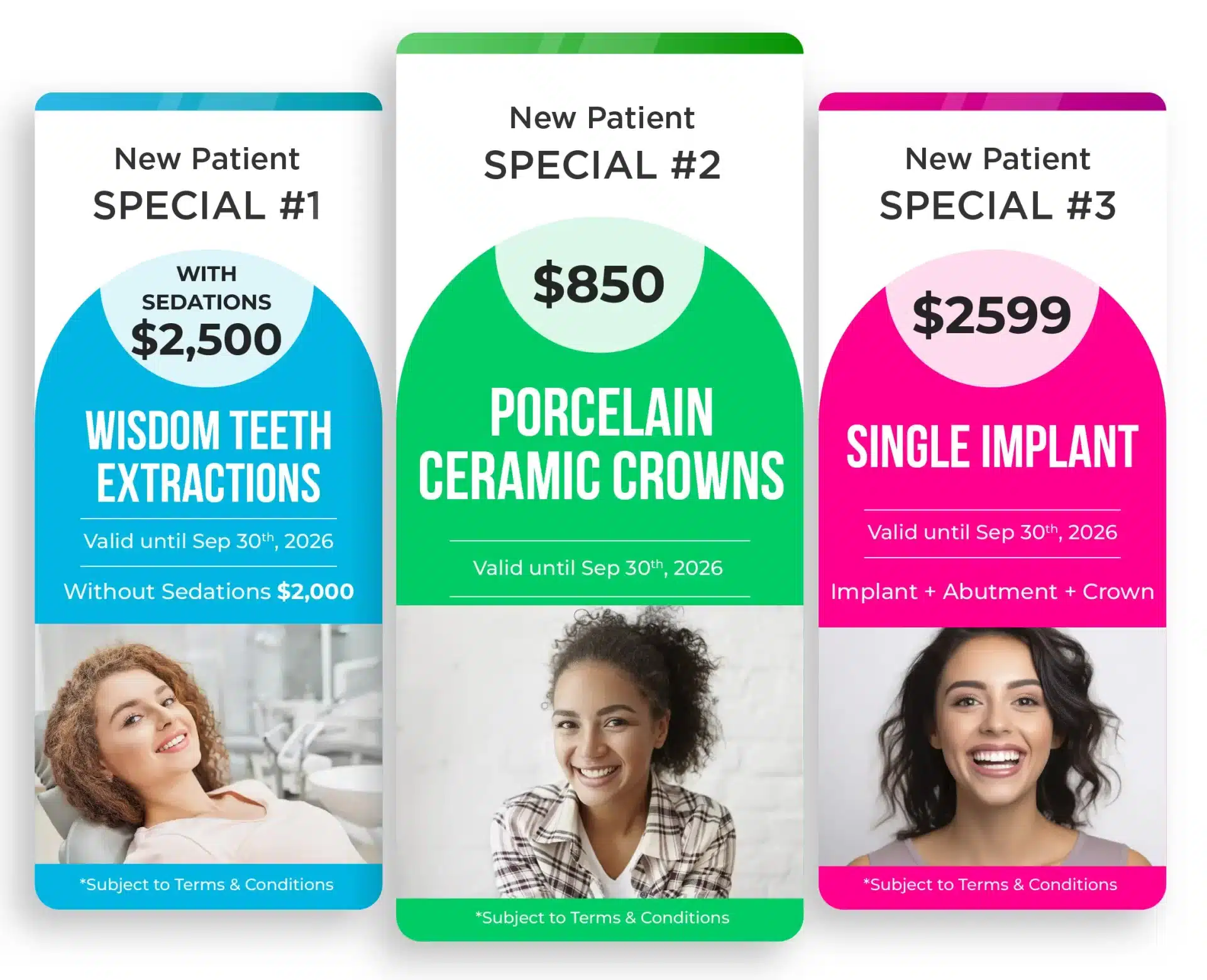
We believe in transparency regarding the financial side of your care. The cost of dental implants can vary based on the complexity of the case, the need for preparatory extractions or grafting, and the type of restoration chosen. In the Plano and Garland areas, you can generally expect the following price ranges:
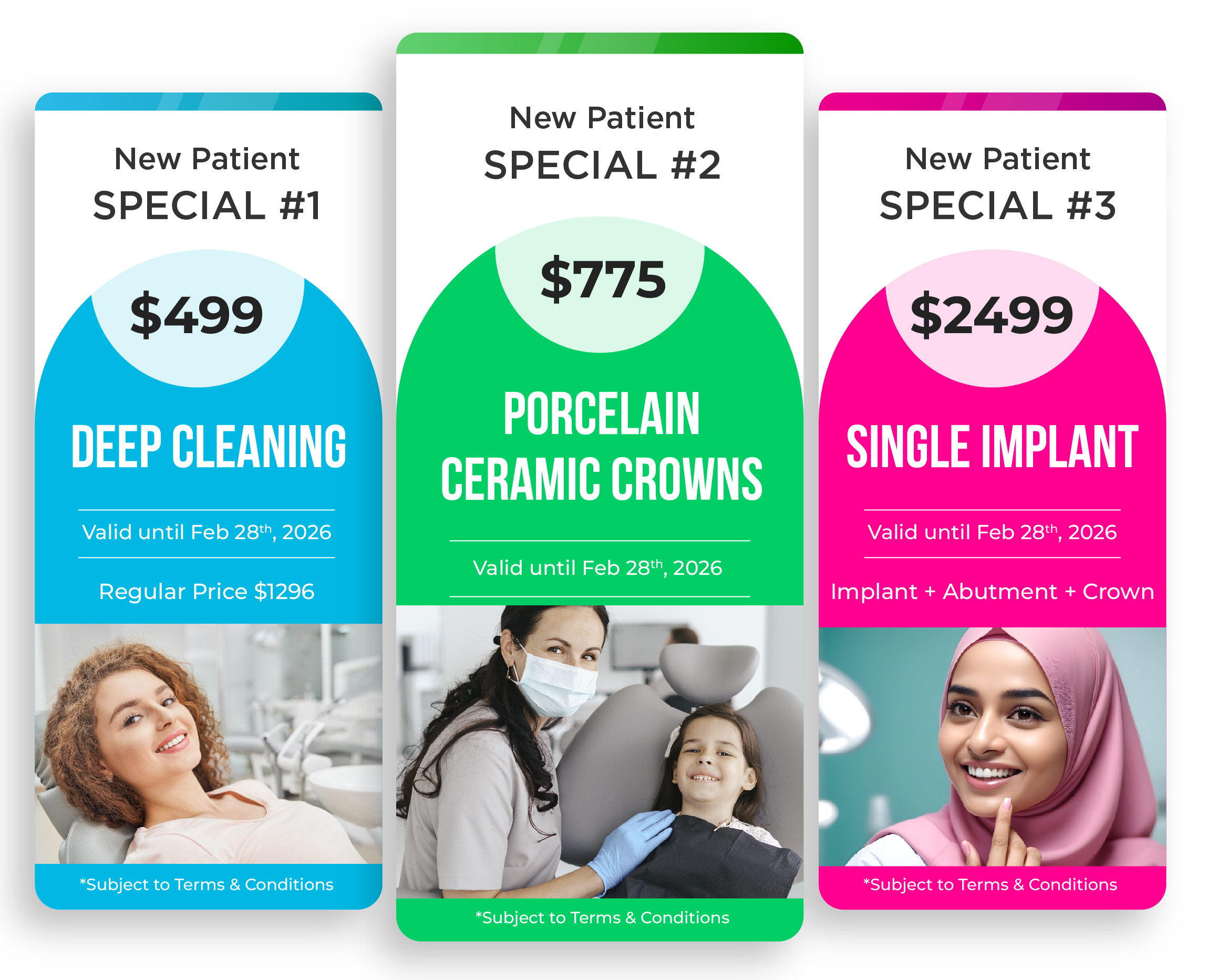
- Single Dental Implant: Typically ranges from $3,000 to $7,000 per tooth. This includes the post, abutment, and crown.
- All-on-4 Full Arch Restoration: This life-changing procedure starts at approximately $15,000+ per arch, providing a full set of fixed teeth on just four implants.
Many insurance plans now offer partial coverage for the restorative portion of the implant (the crown). Our team is highly experienced in navigating insurance benefits to maximize your coverage. For those without insurance, or for costs not covered, we offer the Shifa Dental Saving Plan.
The Shifa Dental Saving Plan is an in-house membership program designed to make high-quality care accessible. Members receive significant discounts (often 20% to 50% off) on major procedures like dental implants, crowns, and bone grafting. There are no waiting periods, no deductibles, and no “missing tooth clauses” that often plague traditional insurance. This plan has been a game-changer for retirees and small business owners in Plano who want the best dental technology without the insurance headache.
Why Choose Shifa Dental?
Residents of Plano, Garland, and North Dallas have many choices for dental care. At Shifa Dental, we strive to provide a unique experience that combines clinical excellence with genuine compassion. Here is what sets us apart:
- Saturday Hours: We know our patients are busy professionals and parents. We offer Saturday appointments to ensure you don’t have to miss work or school for your implant consultations.
- Multilingual Staff: Communication is vital in healthcare. Our team is proud to serve our diverse community with staff members who speak English, Urdu, Punjabi, Telugu, Kannada, and Spanish, ensuring you feel heard and understood.
- Free Second Opinions: Are you unsure about a treatment plan you received elsewhere? We offer free second opinions to help you feel confident in your dental decisions.
- No Hidden Fees: We provide all costs upfront before treatment begins, ensuring total transparency for our patients in North Dallas.
FAQ
1. Does the procedure hurt?
Most patients report that the procedure involves less discomfort than a tooth extraction. We use local anesthesia to numb the area completely, and many patients find that over-the-counter pain relief is sufficient during the brief recovery period.
2. Can I get implants if I smoke?
Smoking significantly increases the risk of implant failure because it restricts blood flow to the gums and bone, slowing the healing process. We strongly advise patients to quit or significantly cut back on tobacco use before and after the procedure to ensure the best results.
3. Is there an age limit for dental implants?
There is no upper age limit! As long as you are in good general health and have sufficient bone density, you can receive an implant. However, we do not place implants in children or teenagers whose jawbones are still growing.
4. How do I clean my dental implant?
You treat it just like a natural tooth! Brush twice a day and floss daily. We often recommend using a water flosser or specialized “interproximal” brushes to clean around the abutment more effectively. Regular cleanings at our Plano or Garland offices are also essential.
5. Can medical conditions like diabetes affect implants?
Controlled diabetes is usually not a barrier to dental implants. However, uncontrolled diabetes can impair healing and increase the risk of infection. We work closely with your primary care physician to optimize your health before surgery.
6. How long does the whole process take?
On average, the process takes 4 to 9 months. This allows for the necessary bone healing and integration. While it requires patience, the result is a permanent tooth that can last the rest of your life.
Ready to Reclaim Your Smile?
If you are tired of hiding your smile or struggling with the discomfort of missing teeth, it’s time to explore the permanent solution of dental implants. Whether you are a professional in the heart of Plano, a family in Garland, or a resident of North Dallas, Richardson, or Allen, Shifa Dental is here to guide you toward a healthier, more confident future.
Don’t let another day go by feeling self-conscious about your teeth. Our warm, expert team is ready to provide the clinically credible care you deserve.
Contact Shifa Dental today:
- Plano Office: 5509 Pleasant Valley Dr #90A, Plano, TX 75023 — (469) 507-3786
- Garland Office: 1918 N Plano Rd, Garland, TX 75042 — (972) 992-1744
- Online Booking: Schedule Your Consultation Online
Take advantage of our free second-opinion consultation for implants and our flexible 0% interest financing options!