

Dental Implants in Garland, TX are a permanent solution to replace missing teeth with a restoration that looks, feels, and functions like a natural tooth. Unlike bridges or dentures, implants are surgically anchored directly into your jawbone, offering unmatched stability and longevity. Most implants have a success rate exceeding 95%, and with proper care, they can last a lifetime. At Shifa Dental in Garland, we specialize in comprehensive implant dentistry—from single-tooth replacements to full-arch All-on-4 restorations—serving families and professionals throughout North Dallas, including Allen, Frisco, McKinney, and Richardson.
What Are Dental Implants in Garland, TX?
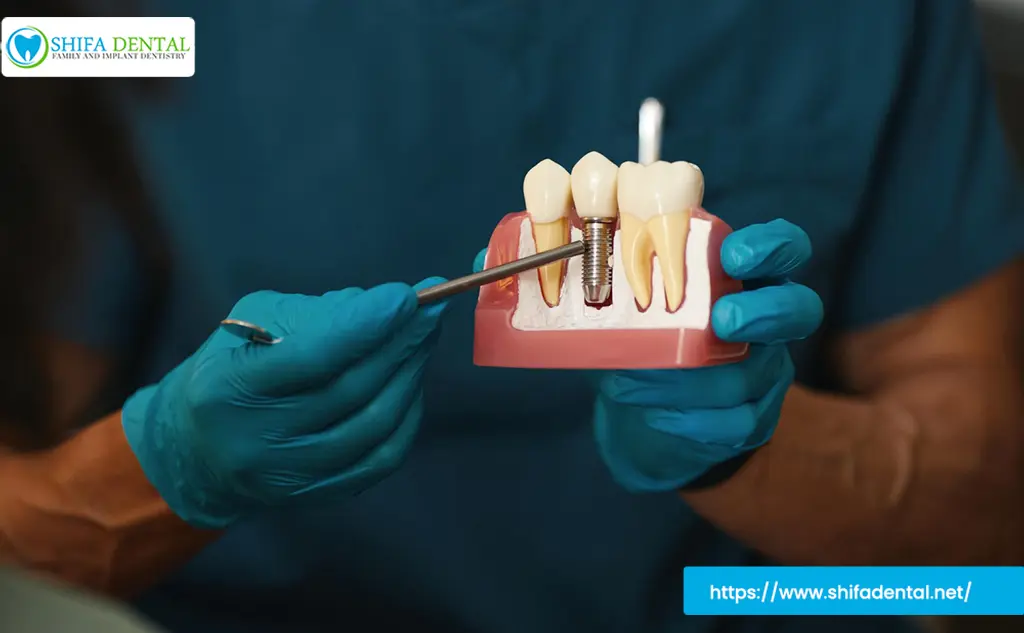
An implant is a small titanium or zirconia screw that replaces the root of a missing tooth. Your dentist surgically places it into your jawbone, where it fuses over time—a process called osseointegration. Once fully integrated, the implant serves as an artificial root that supports a custom-made crown, bridge, or denture. This three-part structure (implant body, abutment, and crown) mimics the anatomy of a natural tooth, restoring both function and appearance.
Garland residents and North Dallas families choose this option because it offers superior longevity compared to traditional bridges or dentures. Unlike a bridge, which requires grinding down adjacent healthy teeth, or a denture, which can shift and require adhesives, implants stand alone and preserve bone structure. Shifa Dental’s experienced implant team uses advanced 3D imaging and surgical protocols to ensure precise placement and optimal outcomes.
Why Choose Implants Over Other Tooth Replacement Options?
When you lose a tooth, the underlying jawbone begins to resorb (shrink) because it no longer receives stimulation from chewing forces. Bridges and dentures sit on top of the gum and cannot prevent this bone loss. In contrast, implants stimulate the bone like a natural tooth root, halting resorption and maintaining your facial structure and bite alignment.
Here’s how the main tooth replacement options compare:
| Option | Longevity | Bone Preservation | Maintenance | Natural Feel & Function |
|---|---|---|---|---|
| Dental Implants | 25–30+ years (often lifetime) | Excellent—stimulates bone | Brush, floss, regular checkups | Excellent—indistinguishable from natural teeth |
| Fixed Bridge | 10–15 years | Poor—bone resorbs beneath | Special floss, regular cleanings | Good—but gum recession common |
| Removable Denture | 5–10 years (frequent adjustments) | Poor—accelerated resorption | Daily removal, soaking, cleaning | Fair—may slip, affect speech/eating |
| All-on-4 Implants | 25–30+ years | Excellent—stimulates bone | Brush, floss, regular checkups | Excellent—fixed, stable, natural |
The Implant Procedure Timeline in Garland
Understanding the timeline helps you plan your treatment and set realistic expectations. The full process typically spans 3–9 months, depending on your bone density, healing rate, and whether bone grafting is necessary.
Phase 1: Initial Consultation & Assessment (Week 1)
At Shifa Dental in Garland, your first visit includes a comprehensive exam, 3D CBCT (cone-beam computed tomography) scan, and discussion of your goals. We evaluate jawbone density, height, and width to determine if you’re a candidate without additional grafting. If bone volume is insufficient, we may recommend a bone graft before implant placement. This consultation is free if you’re considering a major procedure—part of Shifa Dental’s commitment to transparent, patient-centered care.
Phase 2: Implant Placement Surgery (Weeks 4–6)
Once you’re cleared for surgery, your Garland dentist will numb the area, make a small incision in the gum, and carefully drill the implant site to the precise depth and angle. The titanium or zirconia implant body is then screwed into the bone. The gum is sutured, and you’ll receive post-operative care instructions. Most patients experience mild discomfort (managed with over-the-counter pain relief) and swelling that subsides within 3–5 days.
Phase 3: Osseointegration (3–6 Months)
This is the critical healing phase where your jawbone fuses with the implant surface—a process called osseointegration. During this time, the implant must remain undisturbed. You’ll avoid chewing directly on the implant site and attend follow-up appointments to monitor healing. Osseointegration typically takes 3–4 months in the lower jaw and 4–6 months in the upper jaw, depending on bone quality.
Phase 4: Abutment Placement & Crown Fabrication (Weeks 16–20)
Once osseointegration is complete, your Garland dentist will uncover the implant, place an abutment (the connector piece), and take precise impressions or digital scans for your custom crown. The crown is fabricated in a dental lab to match your natural teeth in shape, shade, and bite. This phase typically takes 2–4 weeks.
Phase 5: Crown Placement & Final Adjustments (Week 20–24)
Your custom crown is carefully cemented or screwed onto the abutment. Your dentist checks your bite, makes any necessary adjustments, and provides final care instructions. You’ll schedule regular checkups to monitor the restoration’s long-term health.
Implant Materials: Titanium vs. Zirconia
The choice of implant material affects durability, biocompatibility, and aesthetics. Both titanium and zirconia are excellent options, and your Garland dentist will recommend the best choice based on your bone density, aesthetic needs, and medical history.
Titanium Implants
Titanium is the gold standard in implant dentistry. It’s lightweight, biocompatible (your body won’t reject it), and has been used successfully for over 40 years. These restorations have the highest success rate and integrate reliably with bone. They’re ideal for patients with metal allergies (pure titanium is hypoallergenic) and work well in areas where some metal visibility is acceptable (the dark titanium can show slightly at the gum line if gum recession occurs).
Zirconia Implants
Zirconia is a ceramic material that’s white, tooth-colored, and increasingly popular for aesthetic cases. It’s biocompatible, metal-free, and won’t cause allergic reactions. These ceramic implants integrate with bone similarly to titanium (3–6 months) and have comparable success rates. However, zirconia is slightly more brittle and requires careful surgical technique. It’s an excellent choice for patients with metal sensitivities or those prioritizing aesthetic outcomes, particularly in the front of the mouth where gum visibility is high.
Success Rates & Longevity of Dental Implants in Garland
One of the strongest reasons to choose dental implants in Garland is their proven track record. Clinical research shows that these restorations have a 95–98% success rate over 5–10 years. Large-scale studies indicate that implant survival rates exceed 98% at the 3-year mark, with many implants functioning well beyond 25–30 years—often for a lifetime.
Success depends on several factors:
- Surgeon expertise: Precise placement angle, depth, and bone preparation are critical.
- Patient bone quality: Denser bone integrates faster and more reliably.
- Oral hygiene: Brushing, flossing, and regular professional cleanings prevent infection and bone loss.
- Smoking status: Smokers have higher failure rates due to reduced blood flow and immune response.
- Medical conditions: Uncontrolled diabetes, autoimmune disorders, and osteoporosis can affect integration.
- Medication use: Certain medications (e.g., bisphosphonates) may require special considerations.
At Shifa Dental in Garland, our experienced implant dentists use advanced 3D imaging, computer-guided surgery, and evidence-based protocols to maximize your success rate. We also screen for risk factors during your consultation and provide personalized recommendations.
Common Risks & Complications
While these restorations have excellent safety and success rates, it’s important to understand potential complications. Most are preventable or manageable with expert care and diligent aftercare.
Implant Failure (Early or Late)
Early failure occurs within the first few months if osseointegration doesn’t happen. This is rare (less than 5% of cases) and is usually due to poor bone quality, excessive heat during drilling, smoking, or infection. Late failure can occur months or years later, often due to peri-implantitis (see below). If an implant fails, your Garland dentist can remove it, allow the bone to heal, and place a new one—often with bone grafting to strengthen the site.
Peri-Implantitis
This is inflammation and infection of the tissues around the implant, similar to gum disease. It’s caused by poor oral hygiene, smoking, or uncontrolled diabetes. Early signs include redness, swelling, bleeding, or discomfort around the restoration. If caught early, peri-implantitis can be treated with professional cleaning, antibiotics, and improved home care. Advanced cases may require surgical intervention or implant removal.
Infection at the Surgical Site
Post-operative infection is uncommon (less than 2% of cases) when proper sterile technique and aftercare instructions are followed. Your Garland dentist may prescribe antibiotics before or after surgery if you’re at high risk.
Nerve or Sinus Damage
Careful surgical planning using 3D imaging minimizes the risk of damaging the inferior alveolar nerve (which runs through the lower jaw) or the maxillary sinus (above the upper teeth). Damage is rare but can cause numbness or sinus issues. Experienced surgeons like those at Shifa Dental use computer-guided techniques to avoid these structures.
Bone Loss Around the Implant
Some bone resorption is normal after implant placement, but excessive loss can compromise long-term stability. This is prevented through proper oral hygiene, regular professional cleanings, avoiding smoking, and maintaining good overall health.
Eligibility & Candidacy for Implant Treatment
Most people are candidates for this procedure, but certain factors must be evaluated:
You May Be a Good Candidate If You Have:
- One or more missing teeth.
- Adequate jawbone height and density (or willingness to undergo bone grafting).
- Good overall health (no uncontrolled medical conditions).
- Healthy gums (free of active periodontal disease).
- Commitment to excellent oral hygiene and regular dental visits.
- Realistic expectations about the timeline and outcomes.
Factors That May Affect Candidacy:
- Smoking: Significantly increases failure risk; quitting improves outcomes.
- Uncontrolled diabetes: Impairs bone healing; well-controlled diabetes is usually acceptable.
- Advanced bone loss: May require bone grafting before implant placement.
- Certain medications: Bisphosphonates (for osteoporosis) may require modifications.
- Autoimmune disorders: May affect healing; requires careful evaluation.
- Recent radiation therapy: May compromise blood supply; special protocols may be needed.
Age is not a barrier—both younger patients (once jaw growth is complete, typically age 18+) and seniors are excellent candidates. At Shifa Dental in Garland, we offer free second-opinion consultations to evaluate your specific situation and discuss options.
Aftercare & Long-Term Maintenance
Your success with this treatment depends heavily on post-operative care and long-term maintenance. Here’s what to expect:
Immediate Post-Operative Period (First 2 Weeks)
- Rest and avoid strenuous activity for 3–5 days.
- Apply ice for the first 24 hours to reduce swelling.
- Take prescribed antibiotics and pain medications as directed.
- Eat soft, cool foods; avoid hot foods, alcohol, and smoking.
- Gently rinse with warm salt water after meals (starting day 2).
- Avoid touching or disturbing the surgical site.
Osseointegration Phase (3–6 Months)
- Avoid chewing directly on the implant site.
- Continue excellent oral hygiene (gentle brushing and flossing of other teeth).
- Attend all follow-up appointments to monitor healing.
- Avoid smoking, as it impairs bone healing.
- Maintain a healthy diet rich in protein and vitamins to support bone integration.
Long-Term Care (After Crown Placement)
- Daily hygiene: Brush twice daily with a soft toothbrush; floss or use a water flosser daily.
- Avoid hard foods: Don’t chew on ice, hard candy, or use your implant to open bottles.
- Professional cleanings: Visit your Garland dentist every 6 months for professional cleaning and monitoring.
- Regular checkups: Annual X-rays help detect bone loss or other issues early.
- Manage risk factors: Quit smoking, control diabetes, and maintain overall health.
- Address gum disease: Treat any signs of gum disease promptly to protect your restoration.
With proper care, this treatment can last 25–30 years or longer. The crown may need replacement after 10–15 years due to normal wear, but the implant itself often remains stable for a lifetime.
Single Implants vs. All-on-4: Which Is Right for You?
If you’re missing multiple teeth or an entire arch, you have two main options: individual implants or All-on-4 (a specialized implant technique).
Individual Implants
One implant per missing tooth. Best for patients with a few missing teeth scattered throughout the mouth. Requires adequate bone at each implant site. Highly aesthetic and functional. Each restoration is placed and restored independently.
All-on-4 Implants
Four strategically angled implants support a full arch of 10–12 teeth. Best for patients missing an entire upper or lower arch or multiple consecutive teeth. Requires less total bone (implants are angled to maximize available bone). More cost-effective than individual implants for full-arch replacement. Provides a fixed, permanent restoration that looks and functions like natural teeth. Often completed in one surgical visit with a temporary prosthesis.
Shifa Dental in Garland specializes in both approaches and offers free second-opinion consultations to help you decide which is best for your situation.
Cost & Insurance for Treatment in Garland
This treatment represents an investment in your long-term oral health and quality of life. While the initial cost is higher than bridges or dentures, the longevity and benefits often make them the most cost-effective option over time.
Most dental insurance plans classify implants as a major service and cover a portion (typically 50%) of the cost, though coverage varies widely. Some plans have annual maximums or waiting periods. Medicare does not cover implants, but some Medicare Advantage plans may offer limited coverage.
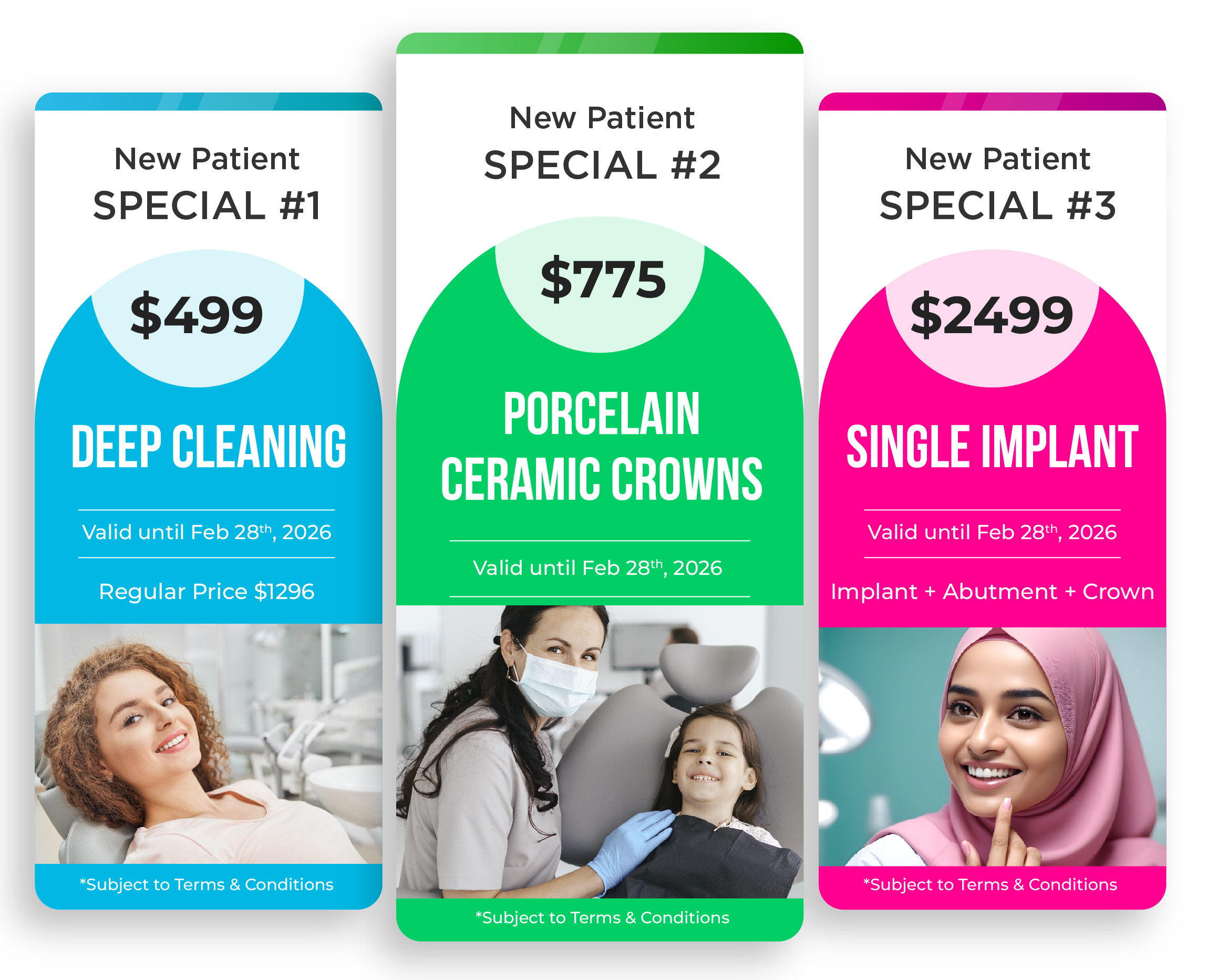
At Shifa Dental in Garland, we accept most insurance plans and are committed to transparent pricing—no hidden fees. We also offer several affordability options to make treatment accessible:
- Shifa Dental Saving Plan: For uninsured patients, our in-house savings plan offers significant discounts on implants and other major procedures.
- 0% Interest Financing: Spread costs over 12–24 months with no interest.
- CareCredit: Third-party financing with flexible payment terms.
- Free Second-Opinion Consultation: Evaluate your options before committing to treatment.
We recommend scheduling a consultation to discuss your specific costs and financing options. Call Shifa Dental’s Garland office at (972) 992-1744 for a personalized quote.
Why Choose Shifa Dental in Garland for Your Implant Treatment?
Shifa Dental has earned a reputation as a top-rated family and cosmetic dental practice serving Garland and North Dallas communities. Here’s why patients trust us with their restorations:
- Expert implant dentists: Our team is trained in advanced implant surgery, bone grafting, and All-on-4 techniques.
- 3D imaging & computer-guided surgery: We use state-of-the-art technology for precise implant placement and optimal outcomes.
- Comprehensive care: From consultation through long-term maintenance, we manage every step of your journey.
- Free second opinions: Unsure about treatment? Get a no-obligation expert evaluation.
- Multilingual staff: We speak English, Urdu, Punjabi, Telugu, Kannada, and Spanish to serve our diverse community.
- Flexible scheduling: Saturday and same-day emergency appointments available.
- Transparent pricing & financing: No hidden fees; multiple payment options to fit your budget.
- Sedation options: Anxious about surgery? We offer sedation dentistry for your comfort.
Frequently Asked Questions About Implant Treatment in Garland
How long do implants last?
With proper care and maintenance, they typically last 25–30 years or longer—often for a lifetime. The crown may need replacement after 10–15 years due to normal wear, but the implant itself remains stable. Success depends on excellent oral hygiene, regular professional cleanings, and avoiding smoking and other risk factors.
Are implants painful?
The surgery itself is not painful because your dentist uses local anesthesia to numb the area. You may feel pressure or vibration but not pain. After surgery, mild discomfort (similar to a sore muscle) is normal for 3–5 days and is managed with over-the-counter pain relief. Sedation options are available if you’re anxious about the procedure.
Can I get implants if I have bone loss?
Yes, in most cases. If you don’t have enough bone height or width, your Garland dentist may recommend bone grafting before implant placement. Bone grafting is a common procedure that adds bone material to strengthen the implant site. It typically adds 3–6 months to your overall timeline but significantly improves success rates.
What’s the typical cost of this treatment?
Cost varies based on the number of implants, whether bone grafting is needed, and the type of restoration (single crown, bridge, or All-on-4). Shifa Dental offers transparent pricing with no hidden fees and multiple financing options including 0% interest plans and CareCredit. Call us at (972) 992-1744 for a personalized estimate.
What happens if my implant fails?
Implant failure is uncommon (less than 5% of cases) but can occur due to poor bone integration, infection, or peri-implantitis. If an implant fails, your Garland dentist can remove it, allow the bone to heal, and place a new one—often with bone grafting to strengthen the site. This is usually covered by an implant warranty at Shifa Dental.
Can I get implants if I smoke?
Smoking significantly increases implant failure risk by reducing blood flow and impairing bone healing. We strongly recommend quitting before surgery. If you’re unable to quit, discuss this with your Garland dentist, as special precautions may be needed. Quitting even a few weeks before surgery and after crown placement dramatically improves your success rate.
Conclusion: Restore Your Smile with Dental Implants in Garland
Dental implants in Garland offer a permanent, natural-looking solution to missing teeth that restores both function and confidence. With success rates exceeding 95% and lifelong longevity, they represent an investment in your oral health and quality of life. Whether you’re missing a single tooth or an entire arch, Shifa Dental’s expert implant team can create a personalized treatment plan tailored to your needs and budget.
If you’re ready to explore this option, or if you’d like a free second-opinion consultation, contact Shifa Dental today. Our Garland office is conveniently located at 1918 N Plano Rd, Garland, TX 75042, and we’re here to answer your questions and guide you toward a healthier, more confident smile.