

Veneers in Plano TX offer a proven, transformative solution for creating a flawless smile. Whether you’re dealing with stained, chipped, gapped, or misaligned teeth, porcelain and composite veneers can reshape your appearance in just a few appointments. At Shifa Dental in Plano, we specialize in cosmetic veneer procedures that blend clinical expertise with artistic precision, helping North Dallas families and professionals achieve the confident, radiant smile they’ve always wanted. This guide explains what veneers are, how they work, material options, costs, and why they’ve become one of the most popular cosmetic dentistry choices in Plano, TX and surrounding communities.
What Are Veneers in Plano, TX, and How Do They Work?
Veneers are ultra-thin shells—typically 0.5 to 1 millimeter thick—made from porcelain or composite resin that are custom-bonded to the front surface of your teeth. Think of them as a cosmetic “facelift” for your smile. Unlike crowns, which cover the entire tooth, veneers cover only the visible front surface, preserving more of your natural tooth structure.
Your dentist in Plano will prepare your tooth by gently removing a thin layer of enamel (usually about 0.5 millimeters), take precise impressions, and send them to a laboratory where custom veneers are fabricated to match your exact specifications—shade, shape, size, and translucency. Once the veneers are ready (typically 1–2 weeks), you’ll return for final placement. Your dentist will bond the veneers using a special adhesive, check your bite and alignment, and polish everything to perfection.
The result is a dramatically improved smile that looks completely natural. Because veneers are custom-made and tooth-colored, they blend seamlessly with your existing teeth and facial features. Unlike teeth whitening or bonding, which address only color, veneers can correct shape, size, gaps, chips, wear, and even minor misalignment—making them one of the most versatile cosmetic dentistry options available in North Dallas.
Porcelain vs. Composite Veneers: Which Material Is Right for You?
When considering veneers in Plano, TX, you’ll need to choose between two main material options. Each has distinct advantages and trade-offs:
Porcelain Veneers: The Gold Standard
Porcelain veneers are the most popular and durable option. They’re made from dental-grade ceramic that closely mimics the light-reflecting properties of natural tooth enamel, creating an exceptionally realistic appearance. Porcelain is highly stain-resistant, doesn’t require the same level of ongoing maintenance as composite, and maintains its color and luster for years.
Advantages of Porcelain Veneers:
- Exceptional longevity: 10–15 years or longer with proper care and excellent oral hygiene.
- High success rates: Research shows 93–96% survival rates at 10 years, with some veneers lasting 20+ years.
- Stain-resistant: Porcelain resists discoloration from coffee, tea, red wine, and smoking far better than composite.
- Natural appearance: Porcelain’s translucency and light-reflecting properties closely match natural tooth enamel.
- Minimal maintenance: No periodic polishing or resin touch-ups needed; regular brushing and flossing suffice.
- Durable bond: Once bonded, porcelain veneers rarely chip or debond if you avoid hard foods and grinding.
Disadvantages of Porcelain Veneers:
- Higher upfront cost compared to composite veneers.
- Requires more tooth preparation (enamel removal), which is irreversible.
- Longer timeline: Requires lab fabrication (1–2 weeks) and multiple appointments.
- If a veneer breaks or chips, it must be replaced entirely—it cannot be easily repaired.
Composite Veneers: A Faster, More Affordable Alternative
Composite veneers are made from tooth-colored resin material that your dentist applies and sculpts directly onto your tooth during a single appointment. This “direct” approach means no lab work or waiting—you can walk out with a transformed smile in one visit.
Advantages of Composite Veneers:
- Faster placement: Completed in a single appointment (or two if multiple teeth are involved).
- More affordable: Lower upfront cost compared to porcelain veneers.
- Minimal tooth preparation: Requires less enamel removal than porcelain, preserving more natural tooth structure.
- Reversible: Composite can be removed or modified more easily if needed.
- Immediate results: No waiting for lab fabrication; see your new smile the same day.
- Repairable: Chips or wear can often be patched or polished rather than replaced entirely.
Disadvantages of Composite Veneers:
- Shorter lifespan: Typically last 5–7 years before needing replacement or significant touch-ups.
- More prone to staining: Composite resin stains more easily than porcelain, especially with coffee, tea, and red wine.
- Requires ongoing maintenance: Periodic polishing and resin touch-ups may be needed to maintain appearance.
- Less durable: More susceptible to chipping or wearing over time compared to porcelain.
- Slightly less natural appearance: While tooth-colored, composite doesn’t reflect light quite like porcelain.
Comparison Table: Porcelain vs. Composite Veneers
| Factor | Porcelain Veneers | Composite Veneers |
|---|---|---|
| Lifespan | 10–15 years (sometimes 20+) | 5–7 years |
| Cost Per Tooth | Mid-to-high investment | Lower upfront cost |
| Placement Time | 2–3 appointments over 2–3 weeks | 1–2 appointments (same day possible) |
| Stain Resistance | Excellent; resists most stains | Good; more prone to staining |
| Tooth Preparation | Moderate enamel removal (~0.5 mm) | Minimal or none (prepless options) |
| Repairability | Must replace if broken; no repair | Can be patched or polished |
| Natural Appearance | Exceptional; mimics enamel perfectly | Very good; nearly indistinguishable |
| Success Rate at 10 Years | 93–96% | Not typically measured; replaced before 10 years |
The Veneer Procedure: What to Expect at Your Plano Dental Appointment
Understanding each step of the veneer process can help ease anxiety and set realistic expectations. Here’s what happens when you get veneers in Plano, TX at Shifa Dental:
Step 1: Consultation and Smile Design
Your first appointment is a comprehensive consultation. Your dentist will examine your teeth, gums, bite, and facial structure, then discuss your aesthetic goals. Modern cosmetic practices use digital smile design technology—your dentist will show you a preview of your potential results on a computer screen before any work begins. This allows you to collaborate on the final outcome and make adjustments before treatment starts.
Your dentist will also assess whether you’re a good candidate for veneers. If you have active gum disease, severe tooth decay, or significant bite problems, these may need to be addressed first. During this visit, you’ll also discuss material options (porcelain vs. composite), timeline, cost, and financing.
Step 2: Tooth Preparation
At your second appointment, your dentist will prepare your teeth by removing a thin layer of enamel from the front surface—typically about 0.5 millimeters, roughly the thickness of a fingernail. This is done under local anesthesia, so you’ll feel no pain, only vibration and water spray. The amount of enamel removed is carefully calculated to accommodate the veneer thickness while maintaining tooth strength.
If you’re choosing composite veneers, your dentist will apply the resin material directly and sculpt it to shape during this same appointment. For porcelain veneers, your dentist will take detailed impressions of your prepared teeth using either traditional putty or digital 3D scanning technology. These impressions are sent to a dental laboratory where your custom veneers are fabricated over 1–2 weeks.
Before you leave, your dentist will place temporary veneers (usually made of acrylic) to protect your prepared teeth and maintain your smile’s appearance while the permanent veneers are being made.
Step 3: Veneer Fabrication (Porcelain Only)
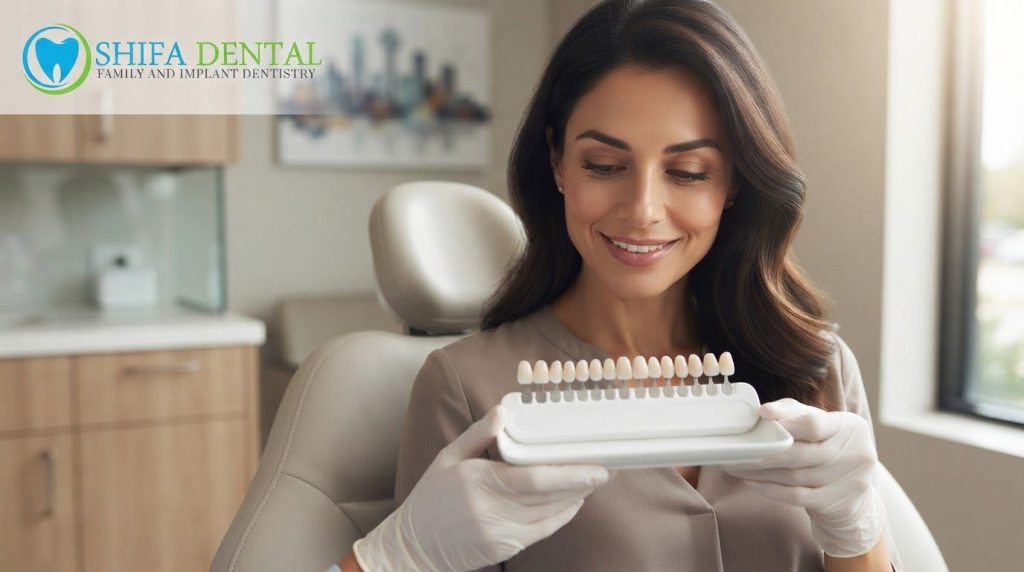
At the laboratory, a dental technician uses your impressions to create custom veneers that match your exact tooth shade, shape, and size. They may use a shade guide to ensure the color matches your natural teeth or achieves your desired level of whitening. The technician also adjusts the translucency and surface texture to create a natural, lifelike appearance. This process typically takes 1–2 weeks.
Step 4: Final Placement and Bonding
At your final appointment, your dentist will remove the temporary veneers and carefully clean your prepared teeth. The permanent veneers are tried in to check fit, color, and bite alignment. Your dentist may make minor adjustments if needed. Once everything is perfect, the veneers are permanently bonded to your teeth using a special adhesive, and a curing light hardens the bond. Your dentist will check your bite one more time to ensure your teeth meet properly when you close your mouth.
The entire final appointment typically takes 1–2 hours. Once you leave, your new smile is complete and ready to show off.
Timeline From Consultation to Final Smile
The total timeline for your treatment depends on the material you choose:
| Phase | Porcelain Veneers | Composite Veneers |
|---|---|---|
| Consultation & Design | 1 appointment (30–60 min) | 1 appointment (30–60 min) |
| Preparation & Impressions | 1 appointment (45–90 min) | Combined with placement (same appointment) |
| Lab Fabrication | 1–2 weeks (while you wear temporaries) | N/A (no lab work) |
| Final Placement & Bonding | 1 appointment (60–90 min) | Completed in preparation appointment |
| Total Time | 2–3 weeks (3 appointments) | 1–2 days (1–2 appointments) |
How Long Do Veneers Last? Durability and Longevity
One of the most common questions patients ask is: “How long will my veneers last?” The answer depends on material, care, and your habits.
Porcelain veneers are exceptionally durable. Research published in peer-reviewed dental journals shows survival rates of 93–96% at 10 years, with many veneers lasting 15–20 years or longer. Some patients report their porcelain veneers lasting 20+ years with excellent care. The key factors affecting longevity are:
- Oral hygiene: Excellent brushing and flossing prevent gum disease, which can compromise the veneer bond.
- Diet: Avoiding hard foods (nuts, ice, hard candy) and very hot/cold foods prevents chipping and thermal stress.
- Grinding and clenching: If you grind your teeth at night, ask your dentist about a night guard to protect your veneers.
- Avoiding staining habits: While porcelain resists staining, the underlying tooth structure and bonding line can stain if you smoke or consume staining beverages regularly.
- Regular dental visits: Professional cleanings and checkups catch problems early before they affect your veneers.
Composite veneers typically last 5–7 years before they need touch-ups, polishing, or replacement. They’re more prone to wear, staining, and chipping, so they require more maintenance. However, their shorter lifespan also means you can update your smile more frequently if your aesthetic preferences change.
Cost and Financing: Making Your Investment Affordable
Veneers are a significant cosmetic investment, but they offer transformative results that can boost confidence for years. Understanding typical costs and your financing options helps you make an informed decision.
Typical Veneer Costs in Plano and North Dallas
Porcelain veneers typically represent a mid-to-high investment per tooth, while composite veneers are more affordable upfront. Most patients choose veneers for their front teeth (typically 6–10 teeth) to create a “smile makeover.”
The total cost for a full smile makeover with veneers in Plano, TX depends on:
- Number of teeth: Most patients veneer 6–10 front teeth; some choose more for a complete smile.
- Material: Porcelain costs more upfront but lasts longer; composite costs less but requires more frequent replacement.
- Complexity: Teeth requiring more reshaping or color correction may cost slightly more.
- Additional procedures: If you need whitening, bonding, or gum contouring alongside veneers, costs increase.
- Your dentist’s experience: Highly experienced cosmetic dentists may charge more, but often deliver superior aesthetic results.
Insurance Coverage for Veneers
Most dental insurance plans do not cover veneers because they’re considered cosmetic (elective) rather than medically necessary. However, in rare cases where a veneer is used to restore a broken tooth that could otherwise require a crown, insurance may cover part of the cost. Always check your specific plan or ask your dentist to verify coverage before treatment.
Affordable Veneer Options at Shifa Dental in Plano
At Shifa Dental, we believe everyone deserves a beautiful smile. That’s why we offer multiple financing and affordability options to make veneers accessible:
- 0% Interest Financing: Spread your veneer cost over 6, 12, or 24 months with zero interest if paid in full within the promotional period.
- CareCredit Healthcare Credit Card: A flexible payment card accepted at our office, with promotional financing options.
- Shifa Dental Saving Plan: Our in-house membership plan for uninsured patients, offering significant discounts on all cosmetic procedures including veneers.
- Transparent Pricing: We quote all veneer costs upfront—no hidden fees or surprise bills. You’ll know exactly what you’re paying before treatment begins.
- Free Second-Opinion Consultation: Unsure about a veneer treatment plan? We offer a complimentary consultation to review your options and answer all your questions.
Call our Plano office at (469) 507-3786 or visit https://www.flexbook.me/shifaplano to discuss financing options and schedule your veneer consultation.
How to Care for Your Veneers: Maintenance Tips for Long-Lasting Results
Once your veneers are placed, proper care ensures they stay beautiful and last as long as possible. Here are essential maintenance guidelines:
Daily Oral Hygiene
- Brush twice daily: Use a soft-bristled toothbrush and non-abrasive toothpaste. Avoid whitening toothpaste, which can be too abrasive for veneers.
- Floss daily: Gently floss between your teeth and under the gum line, being careful not to pull too hard on the veneer edges.
- Use a water flosser: If traditional floss is difficult, a water flosser (like a Waterpik) is gentler on veneers.
- Avoid aggressive brushing: Don’t scrub hard; gentle, circular motions are best for protecting the veneer bond.
Dietary Habits to Protect Your Veneers
- Avoid hard foods: Don’t bite down on nuts, ice, hard candy, popcorn kernels, or bones. These can chip or crack veneers.
- Be cautious with sticky foods: Taffy, caramel, and chewing gum can potentially dislodge veneers if you bite down hard.
- Limit staining foods and drinks: While porcelain resists staining, the bonding line and underlying tooth can stain. Limit coffee, tea, red wine, and dark sodas, or drink through a straw.
- Avoid very hot and very cold foods: Extreme temperature changes can cause thermal stress on the veneer bond.
Nighttime Protection
- Wear a night guard if you grind: If you grind or clench your teeth at night, ask your dentist about a custom night guard. Grinding can damage veneers and the underlying teeth.
- Avoid using your teeth as tools: Don’t open packages, bottles, or use your teeth to hold things. This is a common cause of veneer damage.
Regular Professional Care
- Visit your dentist every 6 months: Regular checkups allow your dentist to monitor your veneers for any issues and catch problems early.
- Professional cleanings: Avoid abrasive dental tools on veneers; ask your hygienist to use gentle techniques.
- Address bite problems: If your bite feels off or you notice uneven wear, tell your dentist. Bite correction can prevent veneer damage.
Veneers vs. Other Cosmetic Options: Which Is Best for Your Smile?
Veneers are one of several cosmetic dentistry options available. Here’s how they compare to alternatives:
Veneers vs. Teeth Whitening
Teeth Whitening: Addresses color only; takes 1–2 hours; results last several months to over a year; most affordable cosmetic option.
Veneers: Address color, shape, size, gaps, and alignment; take 2–3 weeks; results last 10–15+ years; higher investment but more transformative.
Best choice: If your only concern is tooth color, professional whitening is faster and cheaper. If you want to reshape or resize teeth, veneers are necessary.
Veneers vs. Dental Bonding
Dental Bonding: Uses composite resin applied directly to the tooth; completed in one appointment; costs less; lasts 3–5 years; can be easily removed or modified.
Veneers: Custom-made shells (porcelain or composite); more durable; last longer; more expensive; require tooth preparation.
Best choice: Bonding is ideal for small chips or minor cosmetic issues. Veneers are better for comprehensive smile makeovers or if you want long-term durability.
Veneers vs. Crowns
Crowns: Cover the entire tooth; used to restore damaged or decayed teeth; last 10–15 years; require significant tooth preparation; typically covered by insurance if medically necessary.
Veneers: Cover only the front surface; preserve more natural tooth structure; used primarily for cosmetic enhancement; require less tooth preparation.
Best choice: If a tooth is severely decayed or damaged, a crown is necessary. If the tooth is healthy and you want cosmetic improvement, veneers preserve more tooth structure.
Veneers vs. Invisalign
Invisalign: Straightens misaligned teeth; takes 12–18 months; addresses bite and alignment; results are permanent if you wear your retainer; doesn’t change tooth color or shape.
Veneers: Can improve minor misalignment and change color/shape; faster (2–3 weeks); don’t correct severe bite problems; require ongoing maintenance.
Best choice: For significant misalignment or bite problems, Invisalign is necessary. For minor cosmetic improvements, veneers offer faster results.
Why Choose Shifa Dental for Your Smile Transformation?
At Shifa Dental in Plano , we specialize in cosmetic dentistry procedures that transform smiles. Here’s why North Dallas families and professionals trust us with their veneer treatments:
- Expert Cosmetic Dentists: Our team has extensive experience designing and placing beautiful, natural-looking veneers. We understand both the science and the art of smile aesthetics.
- Digital Smile Design: We use advanced technology to show you a preview of your results before treatment begins, ensuring you’re completely confident in your new smile.
- Personalized Treatment Plans: Every smile is unique. We customize your veneer plan based on your specific goals, facial features, and budget.
- Transparent Pricing: No hidden fees. We quote all veneer costs upfront so you know exactly what to expect.
- Flexible Financing: 0% interest financing, CareCredit, and our Shifa Dental Saving Plan make veneers affordable for every budget.
- Free Second-Opinion Consultation: Unsure about a veneer treatment plan? We offer a complimentary consultation to review your options.
- Convenient Hours: Saturday appointments and same-day consultations available. We know life is busy.
- Multilingual Staff: Our team speaks English, Urdu, Punjabi, Telugu, Kannada, and Spanish, ensuring every patient feels heard and understood.
- Compassionate Care: We understand that cosmetic dentistry is personal. Our warm, patient-centered approach ensures you feel comfortable and supported throughout your treatment.
Frequently Asked Questions About Your Veneer Treatment
How much do veneers cost in Plano, TX?
Porcelain veneers typically represent a mid-to-high investment per tooth; composite veneers cost less upfront. Most patients choose to veneer 6–10 front teeth for a complete smile makeover. The exact cost depends on the number of teeth, material, complexity, and your dentist’s experience. At Shifa Dental, we provide a detailed quote during your consultation and offer flexible financing options including 0% interest plans and CareCredit.
How long do veneers last?
Porcelain veneers typically last 10–15 years or longer with proper care, with success rates of 93–96% at 10 years. Composite veneers last 5–7 years before needing touch-ups or replacement. Longevity depends on your oral hygiene, diet, whether you grind your teeth, and how well you follow care instructions. Regular dental visits help catch any issues early.
Do veneers look natural?
Yes, modern veneers look completely natural when designed and placed by an experienced cosmetic dentist. Porcelain veneers closely mimic the light-reflecting properties of natural tooth enamel, creating an indistinguishable appearance. Composite veneers also look very natural, though they may not reflect light quite as realistically as porcelain. Digital smile design technology allows you to preview your results before treatment begins.
Are veneers painful?
The veneer procedure causes minimal discomfort. Your dentist will numb your teeth with local anesthesia before preparation, so you’ll feel pressure and vibration but no pain. Some patients experience mild sensitivity to temperature after placement, which typically resolves within a few days. If you’re anxious about dental work, Shifa Dental offers sedation dentistry options to help you relax.
Can veneers be removed or reversed?
Porcelain veneers cannot be easily removed because they’re permanently bonded to your teeth. However, if needed, a dentist can carefully remove them, though some damage to the underlying tooth may occur. Composite veneers can be removed more easily. Because veneer placement requires tooth preparation (enamel removal), the process is not fully reversible—your teeth will always need some form of restoration. This is why choosing an experienced dentist is important.
What if a veneer chips or breaks?
If a porcelain veneer chips or breaks, it typically must be replaced entirely. Composite veneers can often be patched or polished if they chip slightly. To prevent damage, avoid hard foods, don’t use your teeth as tools, and wear a night guard if you grind your teeth. If a veneer does break, contact Shifa Dental immediately for a replacement appointment.
Ready to Transform Your Smile?
If you’re considering Veneers in Plano TX, Shifa Dental is here to help you achieve the confident, radiant smile you’ve always wanted. Our experienced cosmetic dentists will guide you through every step—from initial consultation to final placement—ensuring you’re completely satisfied with your results.