

If the thought of sitting in a dental chair makes your heart race, you’re not alone—dental anxiety affects millions of Americans, and Sedation Dentistry in Garland TX offers a safe, proven solution to help you get the care you need without fear. Sedation dentistry uses medications to help patients relax during dental procedures, ranging from mild nitrous oxide (“laughing gas”) to deeper IV sedation, depending on your anxiety level and the complexity of treatment. Whether you’re facing a routine cleaning, a complex restoration, or extensive dental work, sedation dentistry in Garland can transform your experience from stressful to calm and comfortable.
What Is Sedation Dentistry in Garland, TX?
Sedation dentistry is a clinical approach that uses medications to help patients relax during dental treatment. Unlike general anesthesia, which renders you unconscious, sedation dentistry—also called conscious sedation—keeps you awake and responsive while deeply relaxed. Your dentist in Garland monitors your vital signs throughout the procedure, ensuring your safety and comfort. The goal is simple: to reduce anxiety and fear so you can receive the dental care you need without emotional or physical distress.
For many patients in Garland, McKinney, Richardson, and surrounding North Dallas communities, sedation dentistry is the difference between avoiding the dentist entirely and finally addressing years of neglected dental health. Anxiety-driven avoidance can lead to more serious problems—cavities progress to root canals, minor issues become extractions—making sedation dentistry not just a comfort measure but a clinical necessity for your long-term oral health.
The Three Types of Sedation Dentistry: Which Is Right for You?
Nitrous Oxide (Minimal Sedation / “Laughing Gas”)
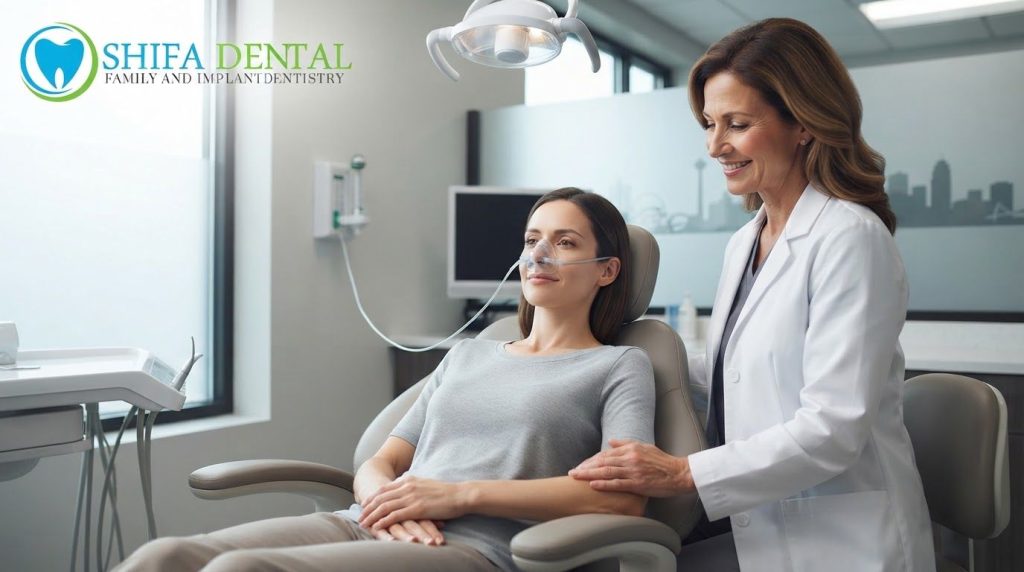
Nitrous oxide is the mildest form of sedation, delivered through a small mask that covers your nose. You breathe a mixture of nitrous oxide and oxygen, and within seconds to minutes, you feel a pleasant sense of calm and relaxation. You remain fully awake, can hear and respond to your dentist, and retain full awareness of what’s happening. The American Dental Association confirms that nitrous oxide is safe and effective for managing pain and anxiety in dentistry.
Key advantages: minimal side effects, rapid onset and offset, no recovery time (you can drive yourself home and return to work immediately), and it’s suitable for mild to moderate anxiety. The main limitation is that it may not be deep enough for patients with severe dental phobia or those undergoing lengthy, invasive procedures.
Oral Sedation (Moderate Sedation)
Oral sedation involves taking a prescribed medication (usually a benzodiazepine like triazolam or lorazepam) 30–60 minutes before your appointment. You’ll feel drowsy and relaxed, though you can be aroused with verbal or physical stimulation. Many patients report little to no memory of the procedure—not because they were unconscious, but because the medication affects short-term memory formation.
Advantages include deeper relaxation than nitrous oxide, suitability for moderate to severe anxiety, and the ability to complete complex procedures in a single visit. The trade-off: you need someone to drive you home, recovery takes 2–8 hours, and you should avoid important decisions or work for the rest of the day.
IV Sedation (Deep Sedation / Twilight Sleep)
IV sedation delivers medications directly into your bloodstream through an intravenous line, allowing your dentist to adjust the depth of sedation in real time. You’ll be deeply relaxed, often with little memory of the procedure. Your dentist monitors your oxygen levels, heart rate, and blood pressure continuously. IV sedation is the most controlled and profound form of conscious sedation available in a dental office.
This option is ideal for patients with severe dental phobia, those undergoing complex surgical procedures (extractions, implant placement, bone grafting), or those with medical conditions that complicate dental care. Recovery is longer—typically 24 hours for full alertness—and you’ll need someone to drive you and stay with you for several hours after treatment.
Is Sedation Dentistry Safe? What the Clinical Evidence Says
Yes, sedation dentistry is safe when administered by a trained, licensed dentist following American Dental Association and state guidelines. Dentists who offer sedation complete specialized training (typically 14+ hours of continuing education) in pharmacology, airway management, and emergency protocols. They monitor your vital signs—oxygen saturation, heart rate, blood pressure, and respiratory rate—throughout the procedure using modern equipment.
Serious complications are rare. The most common side effects are mild: drowsiness, dry mouth, or brief memory gaps (which resolve within hours). Allergic reactions or adverse drug interactions are uncommon, especially when your dentist reviews your medical history and current medications before treatment.
Patients with certain medical conditions—uncontrolled sleep apnea, severe heart disease, uncontrolled diabetes, or pregnancy—may not be candidates for deeper sedation, but your dentist will assess your individual health profile during a consultation. This is why the pre-sedation evaluation is so important: it ensures the chosen sedation level is appropriate for your medical and dental needs.
Who Are Good Candidates for Sedation Dentistry in Garland?
Sedation dentistry benefits a wide range of patients:
- Adults with dental anxiety or phobia: If you’ve avoided the dentist for years due to fear, sedation dentistry can help you finally address dental problems and establish regular care.
- Patients with a strong gag reflex: Sedation relaxes the muscles and nervous system, reducing the gag reflex and making treatment more tolerable.
- Those undergoing extensive or complex procedures: Sedation allows your dentist to work more efficiently and comfortably for longer periods—useful for multiple extractions, implant placement, or full-mouth restorations.
- Patients with special needs: Children with dental anxiety, adults with autism, or those with intellectual disabilities often benefit from sedation to receive necessary care.
- Individuals with low pain tolerance: Even if you’re not anxious, you may prefer sedation if you have a low pain threshold or difficulty sitting still for long procedures.
- Pediatric patients: Children with dental fear or those requiring extensive treatment can receive age-appropriate sedation, though protocols differ from adults.
If any of these descriptions fit you, a consultation with your Garland dentist can determine whether sedation is right for your situation.
What to Expect During Your Appointment
Before Your Appointment
You’ll meet with your dentist to discuss your anxiety, medical history, current medications, and allergies. Your dentist will explain the sedation options, answer your questions, and recommend the level that best suits your needs. You’ll receive pre-appointment instructions—for example, if you’re having oral or IV sedation, you may need to fast for 4–6 hours before your appointment.
During the Procedure
Your dentist will place a blood pressure cuff, pulse oximeter, and sometimes a capnograph (to monitor breathing) to track your vital signs continuously. If you’re receiving nitrous oxide, the mask goes on and you breathe normally—relaxation begins within minutes. For oral sedation, the medication was taken before you arrived, and you’ll be drowsy when you arrive at the office. For IV sedation, your dentist will place an IV line and administer sedative medications, adjusting the depth as needed.
Throughout the procedure, your dentist talks to you, monitors your vital signs, and ensures your comfort. You may drift in and out of awareness; many patients report that the procedure felt like it took only minutes, even though it lasted an hour or more.
After Your Appointment
For nitrous oxide, you’ll recover within 15–30 minutes and can drive yourself home. For oral or IV sedation, you’ll spend 30–60 minutes in the recovery area while the medication wears off. You must have a responsible adult drive you home, and you should rest for the remainder of the day. Avoid important decisions, operating machinery, or consuming alcohol for 24 hours after oral or IV sedation.
Sedation Dentistry Comparison: Nitrous vs. Oral vs. IV
| Sedation Type | Depth of Relaxation | Onset Time | Recovery Time | Best For |
|---|---|---|---|---|
| Nitrous Oxide | Minimal; you stay awake and aware | 30 seconds–2 minutes | 15–30 minutes; can drive home | Mild to moderate anxiety, short procedures, patients who need to drive |
| Oral Sedation | Moderate; drowsy, limited memory | 30–60 minutes (taken before arrival) | 2–8 hours; requires driver | Moderate to severe anxiety, longer procedures, patients without a driver |
| IV Sedation | Deep; minimal awareness, amnesia | 5–10 minutes (after IV placed) | 24 hours for full recovery; requires driver and caregiver | Severe phobia, complex surgical procedures, extensive work |
Sedation Dentistry Pricing and Financing in Garland, TX
The cost of sedation dentistry varies depending on the type of sedation, the complexity of your procedure, and the length of treatment. Nitrous oxide is typically the most affordable option, while IV sedation is the most expensive due to the additional training, monitoring equipment, and clinical oversight required.
Most dental insurance plans cover a portion of sedation costs, especially when it’s medically necessary (for example, if you have severe anxiety that prevents you from receiving needed care). However, coverage varies widely—some plans cover nitrous oxide fully, others partially, and some don’t cover deeper sedation at all. You’ll want to check with your insurance provider or ask Shifa Dental’s team in Garland to verify your coverage before your appointment.
If you’re uninsured or underinsured, Shifa Dental offers several affordability options: the Shifa Dental Saving Plan (for uninsured patients), 0% interest financing, and CareCredit, which allows you to spread payments over time. Your dentist can also discuss which sedation level offers the best balance of comfort and cost for your specific needs—sometimes a lighter sedation option can accomplish your treatment goals at a lower price point.
Preparing for Sedation Dentistry: Questions to Ask Your Garland Dentist
Before your sedation dentistry appointment in Garland, ask your dentist these key questions:
- Which sedation level do you recommend for my anxiety level and procedure? Your dentist should explain why one option is better suited to your needs than another.
- What are your credentials and experience with sedation? Ask about their training, how many sedation procedures they perform annually, and whether they have emergency training (like ACLS certification).
- What monitoring will you use during my procedure? Modern offices use pulse oximetry, capnography, and blood pressure monitoring.
- What are the specific pre-appointment instructions? Fasting requirements, medication timing, and what to wear (loose clothing for IV placement).
- Who will drive me home, and what recovery support will I need? Ensure you have a responsible adult available, especially for oral or IV sedation.
- What is your emergency protocol? Your dentist should have emergency medications and oxygen on hand and be trained to manage complications.
- What does sedation dentistry cost, and what does my insurance cover? Get a written estimate before treatment.
Common Concerns About Sedation Dentistry: Myths vs. Facts
Myth: “Sedation dentistry is dangerous.”
Fact: Sedation dentistry is safe when administered by a trained dentist in a controlled clinical setting. Serious complications are extremely rare. Your dentist monitors your vital signs continuously and is trained to manage any emergencies.
Myth: “I’ll be unconscious and won’t know what’s happening.”
Fact: With conscious sedation (nitrous oxide, oral, or IV), you remain conscious and can respond to your dentist’s instructions. You may not remember much of the procedure, but you’re never completely unconscious (unless you’re having general anesthesia, which is rare in a dental office).
Myth: “Sedation dentistry is only for people with severe phobias.”
Fact: While sedation dentistry is excellent for anxiety, it also benefits patients with low pain tolerance, strong gag reflexes, difficulty sitting still, or those undergoing lengthy procedures.
Myth: “Sedation dentistry will make me miss my appointment and need to reschedule.”
Fact: With proper sedation, your dentist can often complete treatment more efficiently in one visit, even for complex cases. This actually saves you time and multiple appointments.
Sedation Dentistry for Children in Garland
Pediatric sedation dentistry follows different protocols than adult sedation, with dosages carefully calibrated by weight and age. Nitrous oxide is commonly used for anxious children, and oral sedation is appropriate for more significant anxiety or extensive treatment. IV sedation in children is less common but available when needed for complex cases.
Pediatric sedation allows young patients with dental fear to receive necessary care without trauma, and it often helps them develop a more positive relationship with dental visits as they grow. If your child is anxious about dental appointments, ask Shifa Dental’s Garland team about pediatric sedation options.
When to Choose Sedation Dentistry in Garland: Real-World Scenarios
Scenario 1: Years of Avoidance You haven’t been to the dentist in 10 years because of anxiety. Your teeth likely need extensive work—cleanings, fillings, possibly extractions or root canals. Sedation dentistry allows your dentist to address multiple problems in one or a few appointments, rather than spreading treatment across many visits that trigger anxiety each time.
Scenario 2: Dental Implant Surgery You’re ready for a dental implant to replace a missing tooth, but the thought of oral surgery makes you nervous. IV sedation allows you to sleep through the procedure while your dentist places the implant precisely and comfortably.
Scenario 3: Your Child’s First Cleaning Your child is 5 years old and terrified of the dentist. Nitrous oxide sedation can help them relax during their cleaning and exam, making the experience less traumatic and more likely to foster good dental habits long-term.
Scenario 4: Wisdom Tooth Extraction You need all four wisdom teeth removed, which typically requires 30–60 minutes of surgical work. Oral or IV sedation makes the experience tolerable and helps your dentist work efficiently.
Frequently Asked Questions About Sedation Dentistry in Garland, TX
How much does sedation dentistry cost in Garland, TX?
Sedation costs vary by type and procedure complexity. Nitrous oxide is the most affordable; oral and IV sedation cost more due to additional training and monitoring. Your dentist will provide a written cost estimate during your consultation. Most dental insurance covers at least a portion of sedation costs.
Can I drive home after sedation dentistry?
Yes, after nitrous oxide—you can drive immediately. After oral or IV sedation, you must have a responsible adult drive you home and stay with you for several hours. You should not drive or operate machinery for 24 hours after deeper sedation.
Is sedation dentistry covered by insurance in Garland?
Many insurance plans cover sedation dentistry, especially when it’s medically necessary. Coverage varies, so check with your insurance provider or ask Shifa Dental’s team to verify your benefits. Uninsured patients can use Shifa Dental’s Saving Plan, 0% financing, or CareCredit.
How long does recovery take after sedation dentistry?
Nitrous oxide recovery is 15–30 minutes. Oral sedation recovery is 2–8 hours. IV sedation recovery is typically 1–2 hours in the office, with full alertness returning over 24 hours. You should rest and avoid important decisions for 24 hours after oral or IV sedation.
Is sedation dentistry safe for older adults?
Yes, sedation dentistry can be safe for older adults, but your dentist will review your medical history, medications, and any health conditions carefully. Older adults may recover more slowly from deeper sedation, and some medications or conditions may require a lighter sedation option. Always disclose your full medical history.
Can I eat or drink before sedation dentistry?
For nitrous oxide, normal eating and drinking are fine. For oral or IV sedation, you’ll typically need to fast for 4–6 hours before your appointment (no food or drink). Your dentist will give you specific pre-appointment instructions based on the type of sedation you’re receiving.
Why Choose Shifa Dental in Garland for This Treatment?
Shifa Dental’s Garland location (1918 N Plano Rd, Garland, TX 75042) is experienced in providing safe, compassionate sedation dentistry for anxious patients of all ages. Here’s why Garland families and professionals trust Shifa Dental:
- Experienced, trained dentists: Our team has specialized training in sedation protocols and emergency management.
- Modern monitoring equipment: We use current vital-sign monitoring to ensure your safety throughout your procedure.
- Multilingual staff: Our Garland team speaks English, Urdu, Punjabi, Telugu, Kannada, and Spanish—ensuring clear communication about your anxiety and treatment plan.
- Flexible scheduling: We offer Monday, Friday, and Saturday appointments (10 AM–5 PM Mon/Fri, 10 AM–5 PM Sat), making it easier to fit sedation dentistry into your schedule.
- Transparent pricing: No hidden fees. You’ll know the total cost of your sedation dentistry upfront.
- Financing options: 0% interest financing, CareCredit, and our Shifa Dental Saving Plan make sedation dentistry affordable for uninsured and underinsured patients.
- Free second opinion: Unsure about sedation dentistry? Schedule a free consultation to discuss your anxiety and treatment options.
- Insurance accepted: We accept most insurance plans, including children’s Medicaid and CHIP.
Conclusion: Take the First Step Toward Comfortable Dental Care
Dental anxiety shouldn’t prevent you from receiving the care your teeth and gums need. Sedation Dentistry in Garland TX has transformed the experience for thousands of anxious patients, allowing them to finally address dental problems, maintain their oral health, and smile with confidence. Whether you choose the gentle relaxation of nitrous oxide, the deeper comfort of oral sedation, or the profound ease of IV sedation, your dentist will work with you to select the option that matches your anxiety level and treatment needs.
The first step is simple: schedule a consultation with Shifa Dental in Garland to discuss your anxiety and explore sedation dentistry options. Our team will listen to your concerns, answer your questions, and create a treatment plan that helps you feel safe and comfortable. You deserve dental care that doesn’t cause you stress—and with sedation dentistry, you can have it.