

A smile is more than just an aesthetic asset; it is a reflection of your health, confidence, and personality. For many residents in Plano, TX and Garland, TX, missing teeth can be a source of significant discomfort, dietary restrictions, and self-consciousness. Fortunately, modern restorative dentistry has evolved to offer a solution that is as close to natural teeth as possible: dental implants.
At Shifa Dental, we understand that choosing a tooth replacement option is a major decision. In this guide, we will explore everything you need to know about dental implants. Our goal is to empower our neighbors in Plano and Garland with the knowledge they need to make informed decisions about their oral health.
The Anatomy of a Dental Implant: A Triple-Component System
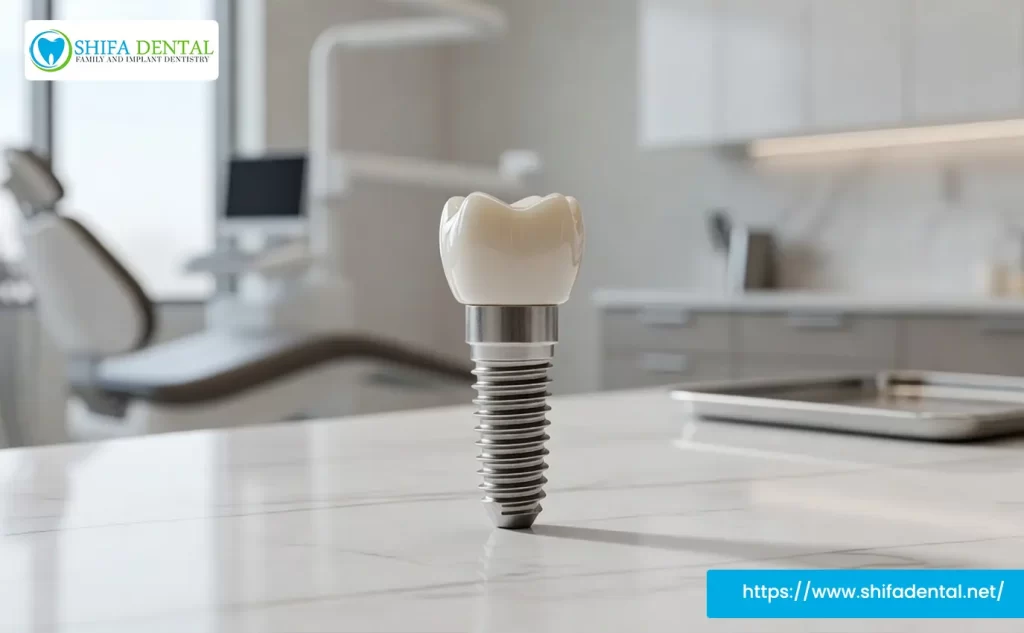
To understand why dental implants are so effective, it is essential to look at their structure. Unlike dentures, which sit on top of the gums, or bridges, which rely on adjacent teeth for support, a dental implant is an independent system that mimics the entire structure of a natural tooth. It consists of three primary components:
- The Implant Post (The Fixture): This is a small, screw-like post made of biocompatible material (usually titanium). It is surgically placed into the jawbone, where it acts as a replacement for the natural tooth root. This is the foundation of the entire restoration.
- The Abutment (The Connector): Once the implant post has integrated with the bone, a small connector piece called an abutment is attached. The abutment protrudes above the gum line and serves as the anchor for the final prosthetic tooth.
- The Prosthetic Crown (The Restoration): The crown is the visible part of the implant. It is custom-designed to match the color, shape, and size of your surrounding natural teeth. At Shifa Dental, we use high-quality materials to ensure that your new tooth is virtually indistinguishable from the rest of your smile.
The Biology of Osseointegration: Why Implants Last a Lifetime
The “magic” of dental implants lies in a biological process known as osseointegration. Discovered in the 1950s, this process describes the structural and functional connection between living bone and the surface of a load-bearing artificial implant. When a titanium post is placed in the jaw, the bone cells (osteoblasts) begin to grow and attach themselves directly to the surface of the metal.
This fusion creates a bond so strong that the implant becomes a permanent part of your anatomy. This is why dental implants boast a success rate of over 95% and can last for decades—or even a lifetime—with proper care. Furthermore, the presence of the implant post provides the necessary stimulation to the jawbone, preventing the bone loss (atrophy) that typically occurs when a tooth is missing. This helps maintain the natural shape of your face and prevents the “sunken” appearance often associated with long-term tooth loss.
Material Science: Titanium vs. Zirconia Implants
As technology in Plano, TX continues to advance, patients now have choices regarding the materials used for their implants. While titanium remains the gold standard, zirconia has emerged as a popular alternative. Understanding the differences is key to choosing the right option for your specific needs.
1. Titanium Implants
Titanium has been used in dental and medical implants for over 50 years. Its primary advantage is its exceptional biocompatibility and strength. Titanium is highly resistant to corrosion and has a proven track record of successful osseointegration. It is also incredibly durable, capable of withstanding the intense pressure of chewing for many years. For most patients in Garland, TX, titanium is the recommended choice due to its reliability and cost-effectiveness.
2. Zirconia Implants
Zirconia is a high-strength ceramic material (specifically zirconium oxide). It is often marketed as a “metal-free” alternative. The primary benefit of zirconia is its aesthetic superiority in specific cases. Because zirconia is naturally white and opaque, there is no risk of a dark metallic shadow showing through thin or receding gum tissue. This makes it an excellent choice for patients with thin gingival biotypes or those with metal sensitivities. However, zirconia implants are typically one-piece designs, which can offer less flexibility in placement compared to the two-piece titanium systems.
At Shifa Dental, we evaluate your bone density, gum thickness, and aesthetic goals to recommend the material that will provide the best long-term outcome for your smile.
Comparing Tooth Replacement Options
Choosing between implants, bridges, and dentures involves weighing factors such as longevity, cost, and impact on oral health. The following table provides a clear comparison to help you understand the landscape of restorative dentistry in the North Texas area.
| Feature | Dental Implants | Dental Bridges | Traditional Dentures |
|---|---|---|---|
| Longevity | 25+ years to lifetime | 7–15 years | 5–10 years |
| Bone Health | Prevents bone loss | Does not prevent bone loss | Can accelerate bone loss |
| Adjacent Teeth | No impact on other teeth | Requires crowning healthy teeth | Can put stress on anchor teeth |
| Maintenance | Brushing & flossing (like natural) | Special cleaning tools required | Daily removal and soaking |
| Stability | Fixed and permanent | Fixed but can fail over time | Can slip or click while speaking |
Month-by-Month Recovery Timeline: What to Expect
One of the most common questions we receive at our Plano, TX office is: “How long does the process take?” While every patient is unique, here is a general timeline of the recovery and restoration process.
Weeks 1–2: Initial Healing
Immediately following the surgery, the focus is on managing minor swelling and ensuring the surgical site remains clean. Most patients can return to work within 24–48 hours. During the first week, you will follow a soft-food diet (think smoothies, yogurt, and mashed potatoes) to avoid putting pressure on the implant. By the end of the second week, any sutures are typically removed or dissolved, and the gums will have largely healed over the site.
Months 1–3: The Fusion Phase
This is the most critical period, where osseointegration occurs. While you won’t “feel” anything happening, your jawbone is busy growing around the implant post. It is vital to maintain excellent oral hygiene during this time. We will schedule follow-up appointments at our Garland, TX location to monitor the progress via X-rays and ensure no signs of infection or instability are present.
Months 4–6: Final Restoration
Once osseointegration is complete, the final steps take place. We will attach the abutment and take digital impressions for your custom crown. Within a few weeks, your permanent crown is ready to be placed. After the final fitting, you can return to a normal diet and enjoy the full strength of your new tooth. The total process usually spans 4 to 9 months, depending on whether bone grafting was required.
Advanced Technology at Shifa Dental: Improving Accuracy and Comfort
We believe that technology is the key to minimizing discomfort and maximizing the success of dental implants for our patients in Plano, TX and Garland, TX. By investing in state-of-the-art equipment, we have transformed the implant experience into a precise, predictable, and virtually pain-free journey.
- CBCT 3D Imaging: Traditional 2D X-rays only show a flat view of your mouth. Our CBCT scanner provides a high-resolution 3D map of your jawbone, nerves, and sinus cavities. This allows us to plan the exact angle and depth of the implant placement before we even begin the procedure, avoiding complications and reducing surgery time.
- Digital Impressions: Say goodbye to messy, uncomfortable putty molds. We use intraoral scanners to create highly accurate digital maps of your teeth. These digital files are sent directly to our lab, ensuring a perfect fit for your custom crown and reducing the need for adjustments.
- Computer-Guided Surgery: Using the data from the CBCT scan, we can create a surgical guide that acts as a template during the procedure. This ensures “sub-millimeter” accuracy, which leads to faster healing times and less post-operative discomfort.
The Cost of Dental Implants: Market Rates in North Texas
Understanding the financial commitment is essential. While the upfront cost of implants is higher than other options, their longevity often makes them the most cost-effective solution over time. Below are the estimated market rates for dental implants in the Plano and Garland areas.
| Service Type | Estimated Market Rate (Per Tooth) |
|---|---|
| Single Dental Implant (Post only) | $1,500 – $2,500 |
| Abutment & Custom Crown | $1,200 – $2,000 |
| Bone Grafting (If needed) | $400 – $1,200 |
| Total Estimated Investment | $3,100 – $5,700 |
Conclusion
Dental implants are a life-changing investment. They offer more than just a “fix” for a missing tooth; they provide a permanent restoration of your ability to eat, speak, and smile with confidence. At Shifa Dental, we are proud to serve the Plano, TX and Garland, TX communities with expert care and the latest in dental technology.
Don’t let missing teeth hold you back any longer. Contact us today to schedule your comprehensive dental implant consultation. Let’s work together to restore your smile and your quality of life.
FAQs
One of the biggest concerns for patients in Garland, TX is pain. However, most patients report that the procedure is much easier than they anticipated.
Yes! In many cases, patients with insufficient bone density can still receive implants after a procedure called a bone graft.
Caring for an implant is remarkably similar to caring for natural teeth. You should brush twice a day, floss daily, and visit Shifa Dental for regular cleanings and checkups.
Ideally, you should seek an implant as soon as possible after losing a tooth. This prevents the surrounding teeth from shifting and minimizes bone loss.
While being a smoker doesn’t automatically disqualify you, we strongly recommend quitting or significantly reducing smoking before and after the procedure.